
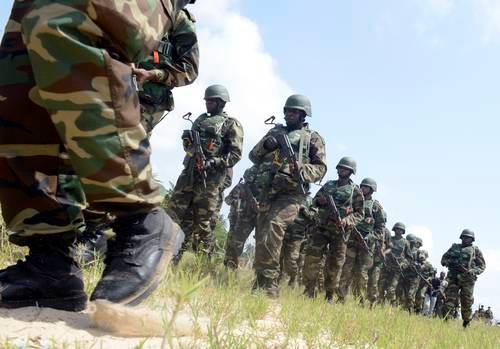
Troops of the Nigerian military have reportedly eliminated more than 30 fighters of the Islamic State West Africa Province following coordinated airstrikes in the Lake Chad region of Borno State.
According to security analyst Zagazola Makama, the operation was launched after “credible Intelligence, Surveillance and Reconnaissance (ISR) inputs” pointed to increased terrorist movements, including the transportation of supplies through waterways near Kaniram Island.
“An ISR platform was deployed to the general area where it established overhead presence and confirmed the sighting of approximately 31 boats dispersed along the riverbank, with associated human activity consistent with ISWAP fighters,” Zagazola said.
“Upon positive identification, the Air Component initiated precision strike operations in line with established Rules of Engagement and targeting protocols.”
He explained that the initial strike disrupted the group’s logistics network, destroying several boats used for transporting fighters and supplies.
“The first strike effectively disrupted the hub of terrorists and degraded their logistics capability by damaging several of the boats used for movement and supply across the waterways.
“Further ISR monitoring revealed attempts by the terrorists to regroup within nearby vegetation. Consequently, follow-on strikes were conducted.”
Subsequent operations reportedly targeted smaller groups attempting to regroup. A second strike killed about eight fighters, while a third attack neutralised roughly 15 others hiding under tree cover.
Zagazola added that a separate operation in Sowolwolo led to the killing of nine additional terrorists.
“In a related strike mission at Sowolwolo, military air assets engaged and neutralised nine additional terrorists identified within the area. Residual elements were observed fleeing in disarray, indicating loss of cohesion and command structure,” the publication said.
“The Nigerian Military Command reiterated that the operation illustrated its sustained commitment to precision targeting, minimising collateral damage while maximising operational impact against terrorist elements.”
The report noted that follow-up surveillance and air missions would continue alongside ground offensives to sustain the pressure on insurgents and limit their movements.
The military also reaffirmed its resolve to maintain air dominance in the region and restore stability across the north-east.