
Featured, Health
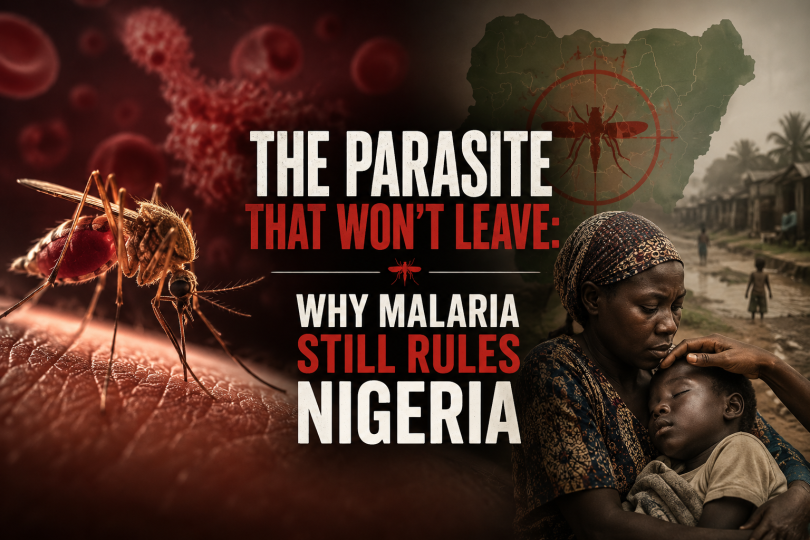
The nets are up, the drains are cleared, but the parasite refuses to leave. As the African Union’s 2024 Malaria Progress Report bluntly concludes, Nigeria and the continent face a “perfect storm of converging crises” including serious funding gaps, declining donor resources and increasing biological resistance and Africa is not on track to achieve its goal of eliminating malaria by 2030.
By Anthony Isibor
WHEN you walk into almost any home in Lagos, Abuja, Port Harcourt or Enugu, you will find them: panels stretched across window frames; a silent acknowledgment of an old enemy. Window nets have become as standard a feature in Nigerian urban households as running water and Mosquito-treated nets are no longer news.
Nigerians know their environments must be kept clean to curb the breeding of malaria-carrying insects. They know stagnant water must be removed. The awareness campaigns have worked. But here is the question that no one has answered honestly: are these efforts actually preventing the outbreak of malaria?
Studies, reports and decades of data suggest a devastating answer.
In 2024, according to the 2025 World Malaria Report published by the World Health Organization (WHO), Nigeria recorded the highest number of malaria cases and deaths of any country on earth; an estimated 68,466,000 cases, representing the world’s single largest national malaria burden.
The WHO Malaria Report also reveals that Nigeria accounts for 24.3% of the global estimated malaria cases and 30.3% of the estimated deaths, as well as an estimated 54.6% of malaria cases in West Africa in 2024.
The toll on children is particularly catastrophic. According to the same WHO report, Nigeria accounted for 38.6% of global malaria deaths in children aged under five years. In Nigeria’s case, that means tens of thousands of children who will never see their sixth birthday, not because a cure does not exist, but because the systems to deliver it remain broken.
Globally in 2024, there were an estimated 282 million malaria cases and 610,000 deaths, roughly 9 million more cases than the previous year. Nigeria’s share of that death toll was staggering. With global deaths standing at 610,000, Nigeria’s share translated to roughly 184,800 deaths in 2024, representing the highest malaria mortality burden in the world.
When the subject of Nigeria’s malaria failure comes up, officials often point to underfunding as the central problem. But data, however, tells a far more unsettling story: Nigeria has not been starved of money. It has been drowning in it and still losing.
Over the years, billions had been received in the fight against this deadly parasite, yet it continues to wreck great havoc in our society.
According to a 2024 report by the News Agency of Nigeria, citing the US President’s Malaria Initiative, PMI, the United States alone contributed $914 million to fight malaria in Nigeria between 2011 and 2024. That is nearly a billion dollars from a single donor over 13 years period, and that was before PMI’s budget was cut in 2025.
Since receiving its first grant from the Global Fund in 2003, ReliefWeb reports that Nigeria had been awarded grants worth US$980 million for malaria alone, making it one of the single largest recipients of Global Fund malaria grants on the entire continent. The Global Fund contribution, the US PMI contribution, World Bank loans, African Development Bank credits, and Islamic Development Bank financing together paint a picture of an extraordinary international investment.
According to the Severe Malaria Observatory, the Government of Nigeria also secured credits from three multilateral banks; the World Bank, the African Development Bank and the Islamic Development Bank, totaling $364 million to fund health sector interventions in 13 states for five years between 2020 and 2024.
Add these figures together, the Global Fund grants approaching $1 billion, the US PMI contribution of $914 million from 2011 to 2024, the $364 million in multilateral bank loans, contributions from the UK’s Foreign Commonwealth and Development Office, UNICEF, UNITAID, private sector actors, and Nigeria’s own domestic health budgets, and the total amount channelled into Nigeria’s fight against malaria since 2000 conservatively exceeds $3 billion.
Three billion dollars. And Nigeria still accounts for nearly one in every three malaria deaths on earth.
The question that demands answering is not whether the world has invested in Nigeria’s malaria problem. It has!.. The question is: compared to countries that actually defeated malaria, how does Nigeria’s investment and approach measure up?
What China Spent to Go from 30 Million Cases to Zero
China’s journey is the most instructive comparison. According to a peer-reviewed paper published in ScienceOpen on China’s malaria elimination programme, since 2010, the central and provincial governments and the Global Fund invested a total of 1.38 billion Chinese yuan as special funds to support the national malaria elimination programme at all levels. At current exchange rates, that is approximately $190 million USD for the final decisive decade of China’s elimination push.
According to WHO’s own feature story on China’s achievement, Global Fund support totaling over US$100 million was disbursed over a 10-year period to help end malaria in 762 counties. In that time, the number of malaria cases fell to fewer than 5,000 per year.
To be clear: China, a country of 1.4 billion people with 30 million annual malaria cases in the 1940s eliminated malaria with a final-phase investment smaller than what Nigeria receives in a single Global Fund grant cycle. The difference was not money. According to WHO’s account of China’s success, in 1955, China established a National Malaria Control Programme. Communities rallied to improve irrigation, reduce mosquito breeding grounds, use insecticide spraying and sleep under bed nets. Health authorities worked to locate and stop the spread of outbreaks. Critically, the programme mobilised 13 government ministries simultaneously. It was not a health ministry project. It was a national project.
Egypt’s Nearly 100-Year Campaign and What It Cost
Egypt’s story is even more striking. According to WHO, Egypt’s achievement follows a nearly 100-year effort by the Egyptian government and people to end a disease that has been present in the country since ancient times. Early efforts to reduce human-mosquito contact began in the 1920s when Egypt prohibited the cultivation of rice and agricultural crops near homes. The country designated malaria a notifiable disease in 1930 and opened its first malaria control station focused on diagnosis, treatment and surveillance.
According to reports, Egypt did not wait for donor money to begin. It built systems, surveillance infrastructure, vector control stations, cross-ministry coordination even decades before international health funding existed at scale.
A peer-review also found that the programme reduced malaria incidence by 96% over 15 years and achieved a 94% reduction in Anopheles mosquito density. Active surveillance led to the detection of 98% of cases within 48 hours of symptom onset, while treatment coverage reached 91%. Economic evaluations revealed a cost per disability-adjusted life year averted of just $24, with an estimated $1.5 billion saved in healthcare costs and productivity losses over 15 years.
Egypt spent relatively modest sums, but spent them precisely, systematically, and with near-100% implementation fidelity. The result, according to the WHO, was that Egypt became a malaria-free nation in 2024, with a programme that the WHO Director-General called “a testament to the commitment of the people and government of Egypt.”
According to a WHO Q&A on Egypt’s certification, in 2016, Egypt formed a High Committee for Integrated Vector Management with representatives from the Ministry of Agriculture, Ministry of Environment and Ministry of Water Resources and Irrigation, reinforcing an integrated approach to tackle vector-borne diseases with secured funding through synergy and coordination across ministries. WHO One committee. Multiple ministries. Secured funding. That was the architecture of Egypt’s final push to zero.
The Brutal Comparison
The WHO notes that since 2017, countries certified malaria-free include China (2021), El Salvador (2021), Azerbaijan (2023), Belize (2023), Cabo Verde (2024), Egypt (2024), Georgia (2025), Suriname (2025), and Timor-Leste (2025).
The money was never the whole story. China’s National Malaria Elimination Programme succeeded on a fraction of what Nigeria has received. Egypt won with a century of disciplined, government-owned, multi-sectoral effort. What both countries shared was something no foreign donor can purchase: political will that treated malaria as a national emergency, not a line item in a health ministry budget.
What emerges from this comparison is not a story of Nigerian poverty. It is a story of Nigerian inefficiency, fragmentation, and a fundamental mismatch between the money flowing in and the systems required to spend it well.
Nigeria has received more malaria funding than Egypt spent in a century of fighting the disease. It has received more Global Fund malaria grants than most countries on the continent. According to the WHO’s 2025 World Malaria Report, in 2024, US$3.9 billion was invested globally in the malaria response, yet it reached less than half of the 2025 funding target of US$9.3 billion set by the Global Technical Strategy. Nigeria absorbs a disproportionate share of that global pot and still leads the world in malaria deaths.
Worse still, a new threat has now emerged that puts even the gains at risk. According to the WHO, between 2010 and 2023, the USA contributed an average of 37% of global malaria financing. In 2025, an estimated 47% of USAID funding for the US President’s Malaria Initiative was cut. WHO, a decision that experts warn could reverse decades of progress and cost hundreds of thousands of lives. For Nigeria, which depended on that funding for interventions across 11 states reaching 56 million people, the implications are severe.
Nigeria has never lacked ambition on malaria, only execution. The country has cycled through strategic plans and bold declarations for over a decade, yet the parasite has consistently outpaced the promises.
According to Nigeria Health Watch, since 2013, the National Malaria Elimination Programme, NMEP, has been responsible for the oversight and management of all malaria control programmes and activities in the country. The National Malaria Strategic Plan 2014–2020 outlined five key interventions, including universal access to long-lasting insecticide-treated nets, indoor residual spraying, larval source management, and provision of preventive treatment for pregnant women.
The country then pivoted to its current framework. According to a study published in the scientific journal One Health Advances, the NMSP 2021–2025 aims to reduce malaria deaths to less than 50 per 1,000 births and achieve a parasite prevalence of less than 10% by 2025. The Nigeria End Malaria Council was established in 2022 to support the NMEP in achieving the malaria eradication goal by 2030.
But the 2025 targets have not been met either. Research in health journals show that in 2018, Nigeria’s under-5 mortality rate stood at 132 per 1,000 live births nationally, and as high as 252 deaths per 1,000 live births in Ogun State, numbers that underscore how far reality remains from ambitions.
Meanwhile, the NMEP’s own national coordinator has been blunt. According to reports by AllAfrica, he stated plainly: “We begin to talk about elimination when we begin to see one case in 1,000 people, but now we are still seeing 20 cases in 100 people, so we are still controlling.”
The insecticide-treated net has been the flagship tool of Nigeria’s anti-malaria campaigns. Millions have been distributed. Yet distribution and actual use are two entirely different things. According to the Severe Malaria Observatory, the proportion of the population that slept under an insecticide-treated net the previous night decreased from 43% to 36% between 2018 and 2021. In the same period, there were also decreases in the proportion of children under five, from 52% to 41% and pregnant women, from 58% to 50%, who slept under a net. Nigeria is distributing nets, and fewer Nigerians are using them.
The problem goes deeper. According to the same scientific review in One Health Advances, challenges to malaria elimination include poor accessibility to antimalarials, socio-cultural and behavioral approaches by community members, and data collection failures by community health workers, nurses, and doctors. Medicines are either unavailable or unaffordable in rural communities. Health records are incomplete, making it nearly impossible to track outbreaks or measure whether interventions are working.
Geography also plays a cruel role too. According to a 2025 report by vaccine organisation GAVI, Kebbi State, bordering both Benin and Niger in Nigeria’s northwest, has the highest malaria prevalence in the country at 49% of young children and the highest mortality rate. The state’s high prevalence has been linked to rice cultivation, since rice farming requires stagnant water, it is a perfect breeding ground for malaria-carrying mosquitoes.
The tools others used that Nigeria has mostly ignored
According to the Open Health Journal report on the South Africa Model on Malaria elimination, a walk into a house in rural KwaZulu-Natal, South Africa, in the early 2000s showed government workers spraying the actual walls and ceilings of homes with a powerful, long-lasting insecticide on a coordinated, community-wide scale; something Nigerian communities almost never see. They didn’t just sell nets at clinics. But praying systematically, house by house, community by community.
The question worth asking here is entirely valid: yes, some of the countries that made the most dramatic progress against malaria used a fundamentally different weapon and deployed it in a fundamentally different way. Studies and reports confirm this.
The technical name is Indoor Residual Spraying, or IRS. It is not the mosquito burned at night, nor the aerosol can we shake in your bedroom.
According to the United States Centers for Disease Control (CDC), IRS involves applying long-acting insecticides to walls and other surfaces of homes, where the chemical kills mosquitoes that come to rest on treated surfaces for several months. IRS does not directly prevent people from being bitten, rather, it kills adult mosquitoes after they have fed on blood and rested on a treated surface, shortening the mosquito’s lifespan and preventing further transmission of the malaria parasite. A very high proportion of households in an area ideally over 80% must be treated to protect a community.
That last point is very important. This is not a personal protection measure like a net. It is a community-level public health intervention. One house sprayed does nothing if the neighbouring house is not. The logic is collective. The execution must be national.
The most powerful insecticide used in IRS campaigns has been DDT, known as dichloro-diphenyl-trichloroethane. According to research published in PMC, the development of DDT as the first residual insecticide in the early 1940s brought about a radical change in malaria control strategies. First used against malaria by the US Army during World War II, DDT required only semi-annual or annual applications, meaning malaria control could be extended to large rural areas, though it needed strong central organisation to handle supply, transport, and distribution.
According to the CDC, from 1955 to 1969, the Global Malaria Eradication Programme used IRS with DDT as its primary means to control malaria globally. Although the programme failed to eradicate malaria worldwide, it did manage to eliminate the disease from certain areas and significantly reduce its prevalence in others. That campaign wiped malaria off the map of Europe, large parts of Asia, Latin America, and the United States.
Then environmental concerns about DDT, particularly its effect on wildlife and its persistence in ecosystems caused the world to largely abandon it. A study in PMC, almost 30 years ago, widespread indoor spraying with DDT and other insecticides to control malaria were phased out. The WHO is now recommending the use of indoor residual spraying not only in epidemic areas, but also in areas with constant and high rates of malaria transmission, which includes all of Africa. Malaria deaths, predictably, climbed back Up.
Perhaps no story illustrates this more vividly than South Africa’s KwaZulu-Natal province as revealed in a study published in PLOS Medicine, the rise in malaria in KwaZulu-Natal was dramatic, with a 15-fold increase in cases during the 1990s. Control efforts during that period used pyrethroid insecticides; the standard chemicals, which had replaced DDT, but the local mosquitoes had developed resistance to them.
The result was catastrophic. According to research published in PMC, malaria cases in KwaZulu-Natal increased from about 600 in 1991–1992 to more than 30,000 by 1999–2000.
Then South Africa made a decisive choice. According to a WHO-cited study in PMC, South Africa reintroduced DDT for indoor spraying in 2000 and has kept cases of and deaths from malaria at all-time lows since then, and is now moving towards elimination.
After DDT reintroduction, the number of malaria cases decreased to levels lower than those recorded before the epidemic, and the combination of an effective insecticide and effective antimalarial drugs resulted in a 91% decline in the malaria incidence rate. Leading to a 99.1% reduction in malaria cases from 41,786 in 2000 down to just 380 and a 98.5% reduction in deaths.
The DDT Question for Nigeria
So why is Nigeria not doing this at large scale? The honest answer is complicated, but not impossible.
According to the US Environmental Protection Agency, EPA, DDT is one of 12 pesticides recommended by the WHO for indoor residual spray programmes, particularly for use in African countries where malaria remains a major human health problem. It is up to individual countries to decide whether to use DDT.
However, DDT is banned for all uses in all countries that are signatories to the Stockholm Convention except for spraying inside buildings in developing countries where malaria is a problem. Nigeria signed the Stockholm Convention, but the exemption for indoor malaria spraying remains legally available. The door is open. Nigeria has simply not walked through it at scale.
Nigeria does run IRS programmes in some states, but coverage is thin and inconsistent. IRS pilots have been ongoing in Nigeria, but rejection by households has been a major setback to coverage, and coverage, according to the CDC, is everything, without over 80% of homes treated, the community-wide effect does not materialise.
A further problem identified across African IRS programmes is insecticide resistance. This is precisely why DDT’s unique chemistry matters: unlike standard pyrethroids, DDT has a powerful repellent and irritant effect even when it does not kill, driving mosquitoes out of treated homes entirely.
According to a commentary published in the International Journal of Maternal and Child Health and AIDS, China’s success involved multi-sector collaboration, not just the ministry of health, but finance, research, education, public security, the army, police, commerce, industry, information technology, customs, media, and tourism, all jointly fighting malaria. In Nigeria, malaria remains largely a health ministry problem, fought with health ministry tools.
GAVI’s reporting on Cabo Verde states that to achieve WHO certification, a country must record zero indigenous malaria cases for at least three consecutive years and demonstrate the ability to prevent reintroduction of transmission. Nigeria is not close to year one of that streak.
There is no single individual or sector to be blamed in Nigeria’s malaria story. The disease persists because of a convergence of failures, including an underfunded health system, climate conditions that favour mosquito breeding year-round, rapid urban population growth, weak surveillance infrastructure and a public that has largely normalised malaria as an unavoidable fact of life.
The answer lies in Nigeria’s ability to provide homegrown and lasting solutions, with particular focus on economic and social development as the foundation, and sustainable implementation within a robust health system, healthcare financing, poverty alleviation, multi-sectoral partnerships and good governance.
The nets on the windows are not nothing. They are a sign that Nigerians understand the threat. But window nets cannot compensate for a health system that cannot track a case from village to clinic to cure. And studies from South Africa, China, and a growing list of certified malaria-free nations make clear: they cannot replace the political will to go beyond personal protection measures and treat every wall, every ceiling, every community, the way the countries that beat this disease actually did it.
According to the 2025 World Malaria Report, progress in reducing the malaria mortality rate remains far off track globally and Nigeria sits at the very heart of that failure.
The question is not whether Nigeria can eliminate malaria. The science says it is possible. The question is whether Nigeria will choose to do what it actually takes?
A.I
May 19, 2026
Tags: 2025 World Malaria Report CDC malaria PMI President’s Malaria Initiative WHO WHO Malaria Report Why Malaria still rules Nigeria