
Featured
By Ogochukwu Idiagbon
BY all indications, Lagos is at a critical point in its waste management journey. As Nigeria’s commercial nerve centre and one of Africa’s fastest-growing megacities, the state continues to attract thousands of migrants daily in search of opportunities.
With an estimated population of over 25 million residents, the pressure on infrastructure — particularly waste management — has become enormous.
Statistics estimate that Lagos generates about 13,000 metric tonnes of waste daily.
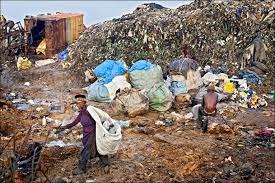
From highways to drainage channels and market clusters, mounting heaps of refuse have increasingly become visible reminders of a system struggling to keep pace with urban expansion.
Yet, despite the recurring environmental concerns, stakeholders believe the situation is not beyond redemption if government, residents and private operators work together through sustained reforms.
The President of the Association of Scrap and Wastepickers of Lagos (ASWOL), Friday Oku, believes that the solution lies largely in integrating informal waste operators into the formal system.
According to him, the dense population of Lagos naturally generates huge volumes of waste, making community-level collection and sorting critical.
He argued that formalising waste pickers and attaching them to Private Sector Participation, PSP, operators would improve collection efficiency and reduce indiscriminate dumping.
Oku also identified the ongoing transition around major dumpsites such as Olusosun as part of the current operational difficulties.
He noted that while government plans to open alternative sites, PSP operators still prefer existing locations despite accessibility challenges.
He further lamented the activities of illegal dumpers, particularly individuals who dispose of waste on roadsides and walkways at night, stressing that a stronger community-based monitoring structure could help tackle the menace.
On waste separation, Oku said households should be encouraged to sort recyclable materials from general waste.
According to him, recyclable items could generate income for residents while reducing the burden on PSP operators.
He added that emerging technologies converting organic waste into energy and manure present additional opportunities for sustainable waste management and economic growth.
For Mr Philip Jakpor, Executive Director of Renevlyn Development Initiative, Lagos must adopt proactive policies that reflect the realities of a rapidly expanding megacity.
He stressed that continuous public awareness campaigns, stricter enforcement of environmental laws and incentives for recycling are necessary to improve the system.
Jakpor argued that waste management processes in Lagos remain fragmented and poorly coordinated, thereby limiting public participation and efficiency.
He urged the government to create seamless systems for collection, sorting and recycling, especially for plastic waste, while promoting waste management as both an environmental responsibility and an economic activity.
Similarly, Michael Simire, Executive Director of Environmental Advocacy and Campaigns for Sustainability, ENVOCAS, said Lagos could overcome its waste crisis, but only through structural and long-term reforms.
According to him, a city of Lagos’ size will always generate enormous waste streams due to rapid urbanisation, informal settlements and intense commercial activities.
“The real issue is not whether waste will disappear completely, but whether Lagos can move from recurring waste crises to a sustainable and economically viable waste management system,” he said.
Simire identified poor waste segregation, weak collection infrastructure, inadequate landfill systems and policy inconsistency as major contributors to the problem.
However, he expressed optimism that the state could significantly improve conditions through stronger recycling systems, waste-to-energy projects, better urban planning, environmental education and technology-driven waste operations.
He emphasised that countries that succeeded in waste reforms treated waste management not merely as sanitation, but as critical public infrastructure and a viable economic industry.
Meanwhile, the Lagos Waste Management Authority has intensified enforcement and clean-up operations across major flashpoints in the state.
Over the weekend, combined teams from the Lagos Waste Management Authority and the Lagos State Ministry of the Environment and Water Resources cleared illegal structures and waste around the Alaba Rago setback along the Lagos-Badagry corridor.
The Managing Director of LAWMA, Muyiwa Gbadegesin, said the exercise was part of efforts to maintain cleaner public spaces and strengthen environmental sustainability across the state.
However, operators say access to dumpsites remains a major challenge for PSP operators, slowing evacuation turnaround times and affecting service delivery.
The stakeholders are therefore urging the government to accelerate work on transfer loading stations and other supporting infrastructure to improve operational efficiency.
Ultimately, experts agree that Lagos can overcome its waste management challenges, but not through periodic clean-up campaigns alone.
The task requires sustained political will, stronger infrastructure, public cooperation, enforcement of environmental laws and a deliberate shift towards viewing waste as a resource rather than a burden.
For a megacity like Lagos, the challenge may never completely disappear, but with the right reforms, it can certainly become manageable and sustainable.
F.O
Tags: lagos waste management