
Opinion
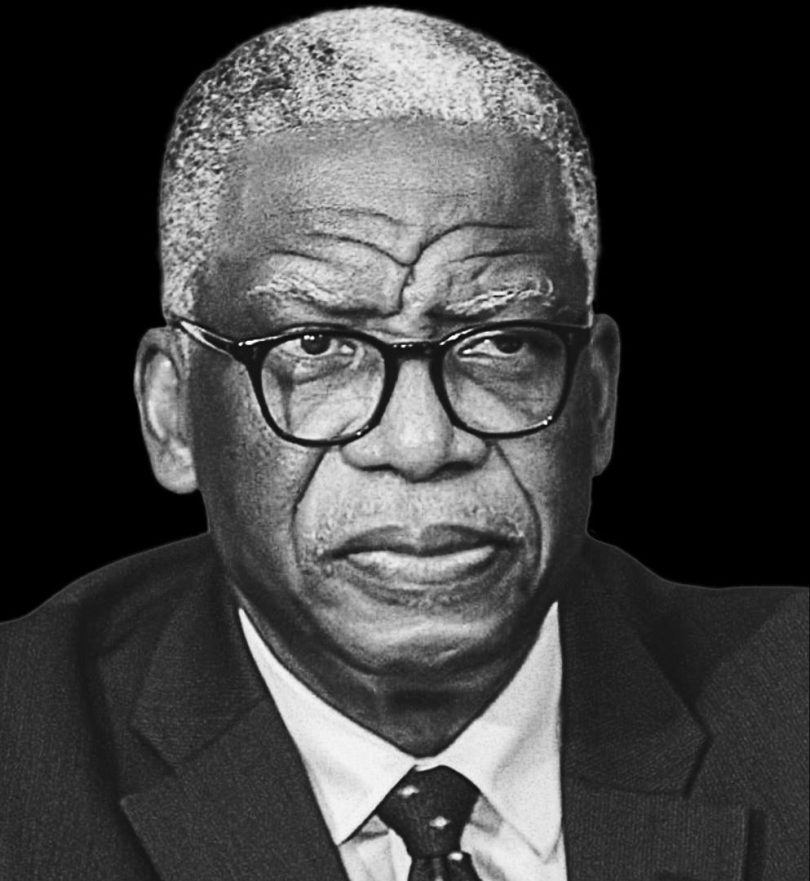
By Richard Ikiebe
BRITISH voters have delivered a massive jolt to their political establishment. The latest local council elections saw the demolition of the two old parties that have governed Britain for over a century, with voters migrating in significant numbers toward insurgent alternatives. The crisis is still unfolding.
It is messy and deeply humbling, particularly for the Labour Party leaders. But it is also democracy doing precisely what it is designed to do by forcing a tired political elite to reckon with its own obsolescence. Britain’s political turbulence, for all its drama, is a system renewing itself. The institutions are absorbing the shock. And somewhere in that churn, an emerging governing class is being tested and shaped.
In contrast, the urgent question Nigeria has avoided for too long is this: does the country have any mechanism, any at all, for the peaceful and organic replacement of a governing elite whose time has passed? The honest answer is no, and the consequences of that absence now define the country’s unsightly political condition.
Nigeria has repeatedly tried to clean its stables before, but the efforts often ended badly. In 1976, Generals Murtala Mohammed and Olusegun Obasanjo arrived with brooms, declaring war on the entrenched bureaucratic class. The “super permanent secretaries” (men who had quietly become the real power behind government), were swept out in a flurry of dismissals. The system shuddered, but did not transform. New occupants settled in and invented worse arrangements.
General Muhammadu Buhari, in 1983, took a blunter approach. His target was the political class itself, particularly those he found too loud, too Southern, or too powerful. Many of them ended up behind bars and were largely forgotten there. The military regime called it discipline; history has been less generous.
General Sani Abacha dispensed with even that pretence. He burned the ladder he had climbed, jailed Obasanjo, his former Chief of Staff, General Shehu Musa Yar’adua, and business mogul MKO Abiola, with the last two dying in custody. Abacha was also accused of sending killer squads after some of those he could not cage. The rest of Nigeria’s political class went quiet, licking its wounds and calculating the cost of visibility.
When Obasanjo returned in 1999 as an elected civilian president, he purged the (political) military class from office. It was, arguably, the most institutionally coherent of the transitions. His purge built nothing, but cleared the ground without planting.
A common mistake of the previous experiments was the belief that replacing people is the same thing as renewing a system. Vilfredo Pareto, the Italian sociologist, who spent decades studying how political classes rise and fall, distinguished between the mere rotation of elites and their genuine renewal.
According to him, rotation recycles faces, while renewal changes the quality, accountability, and orientation of the class itself.
Nigeria, across military and civilian governments alike, has mastered rotation. It has not begun to learn renewal. The problem, today, runs deeper than incompetent leadership. It is structural and has been quietly worsening for over two decades.
In the 27 years of the Fourth Republic, Nigeria’s governing elite has calcified in a singular survival strategy. It would rather absorb opposition than compete with it. When a rival becomes too prominent, the system does not defeat him on the merits. It buys him, pressures him, or renders the environment hostile enough that joining the ruling arrangement becomes more convenient than resisting it.
The result is a political landscape populated by alliances that make no ideological sense whatsoever. Men who once stood on opposite sides of fundamental questions about governance, economics, and national direction now share platforms, trade endorsements, and appear at the same rallies, bound together by nothing more principled than the shared need to remain relevant and protected.
Without ideology, political parties lack vision, and without vision, they cannot credential a new generation of leaders on merit. And without that credentialing process, no political system can produce the organic elite replacement that every maturing democracy requires. Italian political scientist Gaetano Mosca observed that in every society and every era, an elite minority has always governed.
The question is whether our elite minority is accountable, constrained by institutions, and capable of renewing itself. The honest answer on all three counts has been steadily worsening.
What we have is an ageing cohort that controls access, distributes patronage, and sets the terms of political survival. Those with genuine talent and ambition are not absent from the arena; they are simply made to understand that entry is available on one condition of total submission.
The British example is instructive. Their system is not perfect, but it demonstrates that even a deeply conservative political establishment can be compelled to renew itself when the institutional architecture is strong enough to demand it. Parties lose. Leaders resign. New faces earn their place through genuine competition. The system is self-correcting precisely because it retains what Nigeria’s political order has spent 25 years dismantling – functional parties, ideological distinctions, and elections that mean something.
Nigeria does not need another strongman arriving with a broom and borrowed moral authority, only to scatter the dirt in different directions. What Nigeria urgently needs is an architecture of elite renewal, succession pathways that reward merit, and an opposition with the spine to be a genuine alternative rather than a waiting room for defectors. The old order must end. If it does not, every future season of “change” will do what it has always done – re-costume the old cast and restart the same tired play.
Dr Richard Ikiebe is a Media and Management Consultant, Teacher and Chairman, Board of Businessday Newspaper
F.O
Tags: Democratic Promise Elite