
President Bola Tinubu has again removed a top official of a key oil and gas institution while the affected officer was out of the country on official duty, reinforcing a pattern that is drawing attention within policy and governance circles.
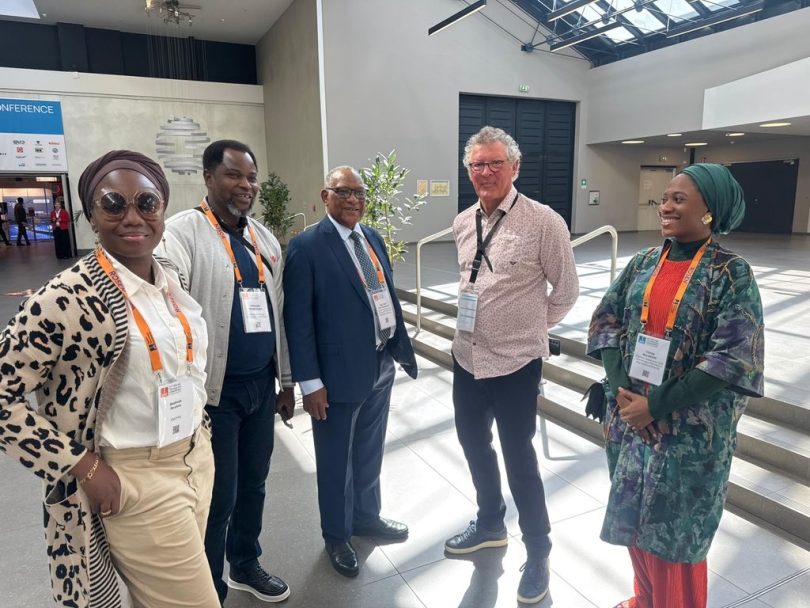
In the latest development, the president sacked Saidu Mohammed as Chief Executive Officer of the Nigerian Midstream and Downstream Petroleum Regulatory Authority (NMDPRA) while he was attending the Pipeline Technology Conference in Berlin.
Earlier on Wednesday, the NMDPRA had announced via X that Mohammed was leading the agency’s delegation to the conference holding from April 27 to 30, 2026.
However, barely two hours after the post, presidential spokesman Bayo Onanuga disclosed that Tinubu had removed him from office as NMDPRA boss and appointed Rabiu Abdullahi Umar as his replacement.
Mohammed’s removal comes just five months after his appointment in December 2025, following the resignation of Farouk Ahmed. His brief tenure had already attracted attention after he initially accepted a board role at Seplat Energy before opting to remain at the regulatory authority.
The development mirrors a similar decision taken in November 2025, when Tinubu removed Ogbonnaya Orji as Executive Secretary of the Nigeria Extractive Industries Transparency Initiative (NEITI) while he was also on a foreign assignment.
Musa Adar has been appointed to replace Ogbonnaya Orji, who had served as executive secretary since 2021.
The development was disclosed in a statement issued on Tuesday by the Director of Information and Public Relations at the Office of the Secretary to the Government of the Federation, Segun Imohiosen. He noted that the president approved both a redeployment and a new appointment affecting two federal agencies.
According to the statement, Adar was redeployed from his previous role as chairman of the National Inland Waterways Authority.
In both cases, the dismissals occurred without the officials being physically present in the country, raising questions about the administration’s approach to leadership changes in critical institutions within Nigeria’s extractive sector.
While Onanuga stated that the president appreciated Mohammed’s service while at NMDPRA and remains committed to strengthening leadership in regulatory agencies to drive energy security and reforms, the timing and manner of the removals, particularly during official international engagements, may fuel debate about governance norms, institutional stability, and communication within the executive arm.
The back-to-back instances suggest a governing style that prioritises swift executive action, even if it coincides with officials representing Nigeria abroad — a move some analysts say could have implications for institutional continuity and the country’s image in international engagements.