
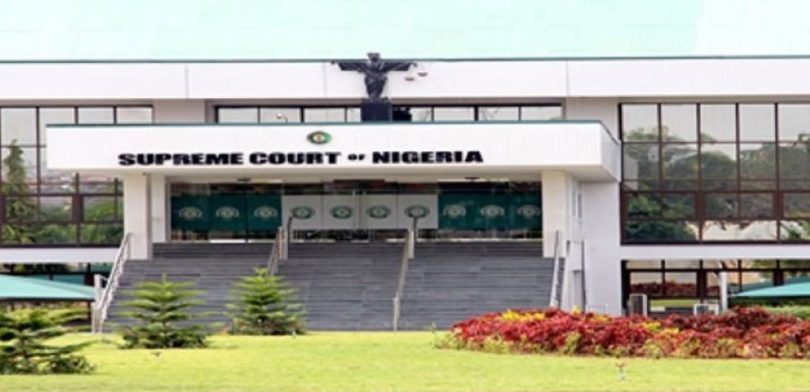
Nigeria’s political landscape faces a pivotal moment today as the Supreme Court prepares to deliver judgment on the protracted leadership crises within the African Democratic Congress (ADC) and the Peoples Democratic Party (PDP), a ruling widely seen as crucial to shaping opposition dynamics ahead of the 2027 general elections.
The anticipated verdict follows heightened political manoeuvring, including a reported late-night emergency strategy meeting by ADC leaders on Wednesday.
According to political commentator Imran Wakili, discussions centred on possible outcomes of the ruling and contingency plans for the opposition coalition, which has adopted the ADC as its primary platform. Notably absent from the meeting were prominent political figures Peter Obi and Rabiu Musa Kwankwaso.
Tensions escalated further after a Federal High Court in Abuja issued an order restraining the Independent National Electoral Commission (INEC) from recognising congresses conducted by a faction of the ADC aligned with David Mark. The court’s decision underscores the deepening internal divisions within the party and raises fresh uncertainty about its organisational structure.
Despite the setback, Mark expressed confidence in the party’s legal position, assuring members that the ADC would overcome its challenges and remain eligible to contest all elections in 2027. He confirmed that the party’s legal team had begun the process of appealing the ruling and seeking a stay of execution.
However, dissenting voices within the party have welcomed the High Court’s judgment. Former ADC presidential candidate Dumebi Kachikwu, alongside several state chairmen, endorsed the ruling, insisting it would prevent what they described as attempts to “hijack” the party.
The dispute, which centres on competing claims to leadership between Mark and a rival faction led by Nafiu Gombe, has been compounded by legal arguments over whether courts should intervene in internal party matters. While Mark has argued that such disputes fall خارج judicial jurisdiction, opposing parties maintain that constitutional breaches warrant judicial oversight.
Meanwhile, the urgency surrounding the Supreme Court’s decision is amplified by INEC’s electoral timetable. Political parties are required to submit membership registers by 10 May 2026, with party primaries scheduled between April and May. Campaigns for the 2027 elections are expected to begin in August.
Legal representatives for the ADC have warned that any delay in the court’s ruling could jeopardise the party’s participation in the elections, describing the situation as a “grave and irreversible risk” that could disenfranchise millions of supporters.
As political heavyweights from both ADC and PDP camps gather at the Supreme Court for the proceedings, today’s judgment is expected to have far-reaching implications, not only for party leadership structures but also for the broader balance of power in Nigeria’s opposition politics.