
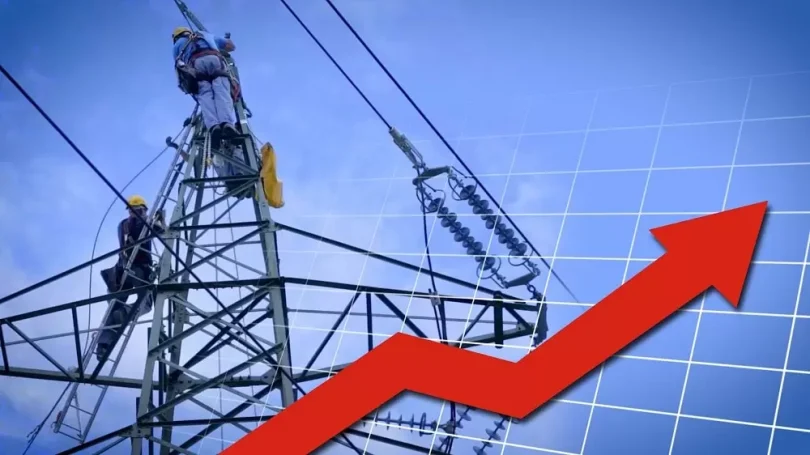
The Managing Director and Chief Executive Officer of the Transmission Company of Nigeria (TCN), Sule Ahmed Abdulaziz, has pledged to deliver a more efficient and reliable transmission network as he begins a second five-year term in office.
Abdulaziz, whose tenure was recently renewed by President Bola Tinubu, made the commitment during his first town-hall meeting with staff at the company’s corporate headquarters in Abuja.
Describing his reappointment as a renewed mandate, Abdulaziz said it comes with increased expectations in line with the Federal Government’s reform agenda for the power sector.
“This reappointment is not just a continuation. It is a call to greater responsibility. It is directly aligned with the directive and vision of Mr President under the Renewed Hope Agenda for the power sector,” he said.
“That agenda is clear: to implement practical, measurable and sustainable reforms that will significantly improve power delivery and ensure that the electricity sector becomes viable, reliable and beneficial to all Nigerians.”
Grid Capacity Rises To 8,700MW
Highlighting achievements under his leadership, the TCN boss said Nigeria’s transmission network has recorded steady growth over the past decade.
He noted that grid wheeling capacity increased from about 5,000 megawatts in 2015 to over 8,700 megawatts currently, driven by consistent investments in infrastructure.
According to him, this expansion includes the installation of multiple power transformers and the completion of several 330kV and 132kV transmission projects nationwide.
Abdulaziz also disclosed that the company has strengthened grid capacity through partnerships with international development institutions.
These include the World Bank Transmission Rehabilitation and Expansion Programme, projects supported by the African Development Bank, and collaborations with the Japan International Cooperation Agency and the Agence Française de Développement.
Providing further details, he revealed that TCN installed over 82 transformers within 23 months, including 15 units of 300MVA transformers deployed in the second half of 2025.
The installations covered key transmission stations such as Akangba, Lekki, Alagbon, Ikeja West, Osogbo, Ganmo, Jos, Gombe, Kumbotso, Asaba, Oke Aro, Benin, Alaoji, and Katampe.
He added that several high-capacity transformers had also been commissioned in substations, including Ajah, Egbin, Enugu, Onitsha, Kano, Abuja, and Jos.
“We have also successfully commissioned multiple high-capacity transformers across substations… strengthening transmission capacity and improving grid reliability. Our protection systems have been strengthened, system disturbances have reduced, and operational coordination across regions has improved significantly,” he said.
The TCN chief commended the company’s management team, union leaders and staff for their role in achieving the milestones.
He said the progress recorded over the years was the result of “hard work, dedication and resilience” rather than chance.
Focus On Stable Electricity Supply
Looking ahead, Abdulaziz said the focus of his second term would be to ensure that infrastructure investments translate into tangible benefits for Nigerians.
“In this new phase, we intend to go a step further. Our goal is simple, to work together as partners in driving the growth, stability, and success of this company.
“Infrastructure growth must now translate into what matters most to Nigerians, stable, reliable, and consistent bulk supply of electricity that would be delivered to distribution load centres for onward delivery to their customers,” he added.
Speaking at the event, the Executive Director, Human Resources and Corporate Services, Abiodun Afolabi Fadahunsi, said the town-hall meeting was designed to foster open communication between management and staff.
She noted that the initiative underscores the company’s commitment to transparency, inclusiveness and continuous improvement.
Fadahunsi added that in a critical sector like power transmission, it is essential for employees to remain aligned and informed in order to effectively meet evolving industry demands.