
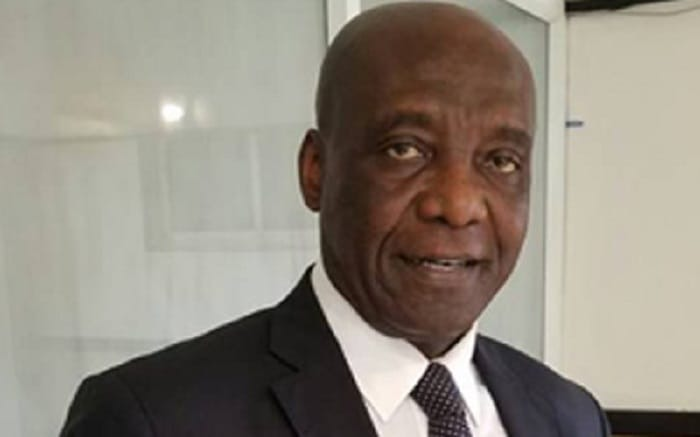

Former Department of State Services (DSS) official Dennis Amachree has offered a fresh account of the final hours of Nigeria’s late military Head of State, General Sani Abacha, claiming the former leader died after suffering a cardiac arrest during an intimate encounter at the Presidential Villa in Abuja.
The claims are contained in Amachree’s newly published memoir, DSS @40: My Journey Behind the Shield, excerpts of which were published by The Nation and later reported by Punch Newspaper.
According to Amachree, who served as Assistant Director of Operations and Intelligence at the Lagos DSS Command during Abacha’s administration, the long-standing conspiracy theories surrounding the former ruler’s death do not reflect what actually happened that night. Instead, he maintains that Abacha died after experiencing a sudden cardiac arrest in the early hours of June 8, 1998.
Providing what he described as a firsthand intelligence account, Amachree wrote that events began unfolding shortly after senior military officials left the Presidential Villa. He stated, “At approximately 2:40 a.m., shortly after Gen. Useni left, Abacha’s girlfriend, an Igbo lady (name withheld), arrived at the Aso Rock Guest House from the Nicon Noga Hilton Hotel.” According to his account, the woman later joined the late Head of State inside the residence.
Amachree further claimed that at about 4:05 a.m., Abacha suddenly suffered a fatal cardiac arrest while in the woman’s company. He alleged that after realizing the military ruler had become unresponsive, the woman panicked and quickly left the Presidential Villa before security personnel were informed about the emergency.
The retired intelligence officer also alleged that the woman was a pharmacist who had travelled to Abuja to attend a professional conference.
According to his version of events, she had accompanied her elder sister—whom he identified as Abacha’s girlfriend—to Aso Rock earlier that night before eventually finding herself with the late military leader.
Amachree insisted that the circumstances surrounding the incident were initially unknown to members of the Presidential security team because the woman had reportedly left before raising any alarm. He argued that this sequence of events contributed to the confusion that followed and later gave rise to numerous conspiracy theories that have persisted for nearly three decades.
Over the years, many Nigerians have speculated that Abacha may have died from poisoning, political assassination or a foreign intelligence operation. However, the former DSS official rejected those claims, insisting there was no elaborate plot behind the former ruler’s death. He maintained that the available facts pointed to a medical emergency rather than foul play.
The publication of Amachree’s memoir has already generated widespread reactions across social media, with many Nigerians debating whether his account finally answers lingering questions about one of the country’s most controversial political figures. While some believe the testimony of a senior intelligence officer deserves serious consideration, others argue that differing accounts over the years mean the debate is far from settled.
Abacha remains one of the most divisive leaders in Nigeria’s history. His administration is remembered by supporters for economic policies and infrastructure projects, while critics continue to cite allegations of human rights violations and the suppression of political opponents.
Although Amachree’s memoir offers one of the most detailed insider narratives yet about the night Abacha died, it is unlikely to end public debate completely. Instead, the revelations have revived national interest in an event that significantly altered Nigeria’s political landscape and paved the way for the country’s return to democratic governance in 1999.