
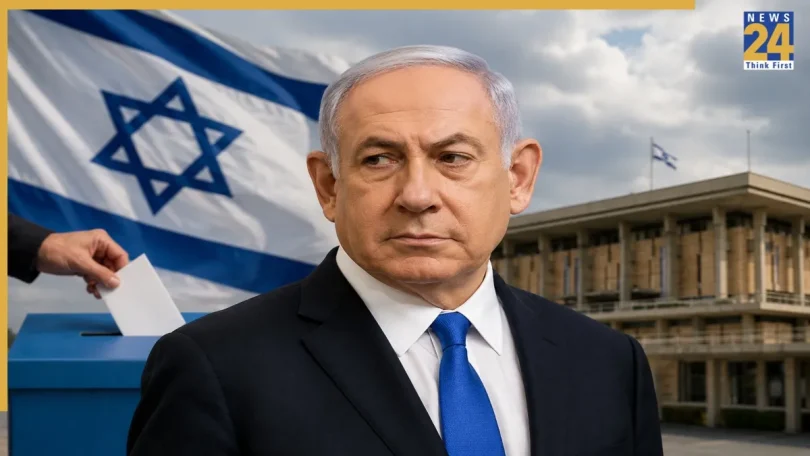
Israel will head to the polls on October 27, marking a significant moment in the country’s political history. The election will allow the current parliament to complete its full four-year term and will be the first national vote since the Hamas attack in October 2023, which triggered conflicts in Gaza, Lebanon and Iran.
PM Benjamin Netanyahu’s coalition confirmed on Sunday that parliamentary elections will take place on October 27.
Until now, there had been uncertainty over when Israelis would vote after parliament considered dissolving itself earlier this year. In May, lawmakers voted on a proposal to disband the Knesset, raising the possibility of an early election. However, the government has now decided to complete its full term before heading to the polls.
First Scheduled Election in Decades
The October election is expected to become a historic milestone for Israel’s political system. According to reports, it will be the first time in nearly 40 years that Israel has held parliamentary elections on their originally scheduled date. If the vote takes place as planned, Netanyahu’s government will also become the first Israeli administration in more than five decades to complete a full term in office.

A Tough Electoral Battle Ahead
Although Netanyahu has secured political stability by completing his government’s term, opinion polls suggest the upcoming election may be highly competitive.
Recent surveys indicate that his coalition of nationalist and religious parties could lose its parliamentary majority. Analysts say public opinion has shifted following the recent regional conflicts, including the war involving Iran.
Reports have also suggested that the 76-year-old prime minister’s approval ratings have declined in recent months.
Opposition Yet to Present a Clear Alternative
Despite signs of falling support for the governing coalition, Israel’s opposition parties have not yet united behind a single strategy or leadership.
Political observers believe this lack of a clear alternative could still work in Netanyahu’s favour, even if his coalition enters the election under pressure.
Security Challenges Continue to Shape Politics
Netanyahu returned to power in 2022 after forming what has been described as Israel’s most right-wing government. His leadership faced its biggest challenge when Hamas launched its surprise attack in October 2023, triggering a series of military conflicts across the region. The attack raised serious questions about Israel’s security preparedness and placed Netanyahu under intense political scrutiny.
The wars in Gaza, Lebanon and Iran have remained central issues throughout his current term and are expected to dominate the election campaign.
Corruption Case Still Hanging Over Netanyahu
Alongside political and security challenges, Netanyahu continues to face corruption charges that were first filed in 2019.
The Israeli prime minister has denied any wrongdoing. However, if convicted, he could face a prison sentence. The legal proceedings, combined with growing criticism over the government’s handling of regional conflicts, are likely to remain major issues as Israeli voters prepare to cast their ballots in October.
First published on: Jul 13, 2026 07:00 AM IST
Get Breaking News First and Latest Updates from India and around the world on News24. Follow News24 on Facebook, Twitter.
End of Article
Related Story


