
By Olutayo Adesina
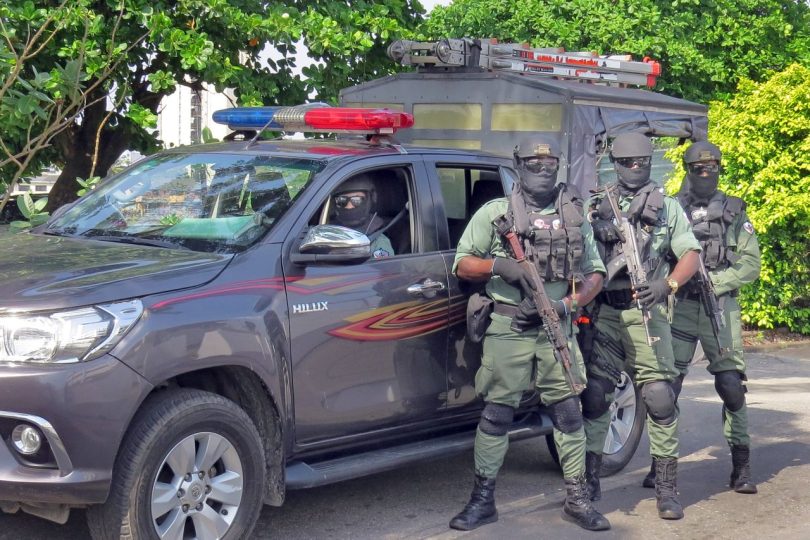
Nigeria is a country in travails. Africa’s most populous country has a troubled past and is no stranger to difficulties. Its present state appears quite worrisome. Its problems have no counterpart elsewhere in Africa. It is a country that has been operating on a frequency of panic, fear, and mutual suspicion. This is especially so in the aftermath of the serial abduction of men, women, and children. Seeing pupils, including toddlers, languishing in the forest and being dehumanised is horrendous. Nigerians are helpless. The state’s power is somewhat undermined by the rise of bandits and centrifugal forces spreading frenetically across the country. Nigerians have asked, to no avail, where our Special Forces are. From the east to the west, and from the north to the south, there are stories of death, agony, destruction, wailing, and unhappiness. People are disconsolate.
Recently, a former expatriate scholar, now advanced in age but who had once lived in Ibadan in the early to mid-1960s, engaged me in a deep, face-to-face, soul-searching conversation about Nigeria’s sad situation. His question has become even more pertinent in light of recent events in Oriire Local Government Area of Oyo State, where gunmen attacked three schools, and in Nigeria as a whole, where all manner of kidnappings, abductions, and insecurity have reared their heads. His concerns arose from the rising tide of lawlessness and the dangers it poses to public safety, national stability, and livelihoods. Rightly so. The enemy within is now much more ferocious than the external enemies we had prepared the Nigerian Army for over the years. The Nigerian Army is now deployed to confront the enemy within, which, so to speak, should be the concern of the police and the domestic intelligence services. It is obvious and saddening that the Nigeria Police Force is beyond its depth in bringing the country’s sad situation to heel. But we all know that policing a terrorised population of over 200 million cannot be a tea party. Nevertheless, it raises a pertinent question. Is it too late to revamp our security architecture?
On May 15, 2026, 39 students and seven teachers from some schools in Oriire Local Government were abducted; one teacher was killed in the process, while another, Mr Michael Oyedokun, was beheaded in captivity. Amid the problems caused by insecurity in the country, there have been calls to establish the State Police as a solution to insecurity and as an alternative to the overworked Nigeria Police Force. The mantra of self and community defence has also become frenetic. Almost everyone is invoking one solution or another. It is a cacophony out there. This was in the face of endemic terrorism, kidnapping, and intense criminality in the urban, rural, and ungoverned forest areas spread across the country. The cry for the dismantling of the centralised police force has also become extremely loud. Now, we are caught between history and the needs of the present. Insecurity in Nigeria led my elderly friend to ask me a single but pertinent question: ‘What happened to your [Police] Special Branch?’ He then went on to speak very highly of the yeoman services rendered by the Special Branch of the Nigeria Police Force, not only in intelligence matters but also in forestalling the breakdown of law and order within the country on a day-to-day basis. That is, beyond the politically induced problems fomented by our ruling elites.
Why did he ask me such a question? His nostalgia for the period he was describing had apparently kept him in touch with happenings in Nigeria and the frenetic changes in administrative matters and other aspects of Nigeria’s development. Despite his age, he has remained riveted to Nigerian issues. Although his attention was surely more focused on the northern part of the country, where he had spent more years during his sojourn in Nigeria, he spoke so highly of the Special Branch’s ability to infiltrate criminal gangs and get the job done with clinical efficiency. But we can argue that the country had a smaller population, that life was less brutish, and that people were still friendlier. The population of our criminals was very low indeed. Even then, he thinks the Special Branch should have been allowed to grow in tandem with the country’s changes rather than being dismantled.
In recent times, he has heard, as has everyone around the world, that Nigeria has become almost ungovernable, with crime multiplying at an alarming rate. The country has also developed a booming kidnapping economy, in which ransom payments have become an industry. What then is the Special Branch, and why did it come to the fore during our discussion? This is not an attempt to call for the restoration of the Special Branch. I am simply using it to understand what went wrong and how we may address the problems now staring us in the face.
The Special Branch was the unit of the police force responsible for internal security and intelligence in the country. In other words, it operated as the Secret Service. This was before that branch was excised from the police following the 1976 military coup to form the Nigerian Security Organisation (NSO) under Decree No. 27 of 1976. Later, General Babangida restructured the NSO, splitting it into three separate bodies, one of which became the State Security Service (SSS). Apparently, the police lost their incisors with the excision of intelligence work from the structure. For my elderly friend, the dismantling of the Special Branch may have contributed to the police force’s loss of control over the country’s overarching security. He then went on to critically examine, from an experiential perspective, the possible reasons for the large-scale insecurity assailing the country. But unlike him, we are at the mercy of ‘opinions’ that are neither far-reaching enough nor have any historical depth.
The looming breakdown of law and order in the country is obvious to everyone, near and far. But so is the police force’s lack of resolve to address the problems. In a recent article about Michael Oyedokun, the Mathematics teacher savagely killed by terrorists in the unfortunate Oriire incident, Lanre Ogundipe, the Public Affairs Analyst and former President of the Nigeria Union of Journalists, poignantly highlighted what should worry us all. The crisis before us, he proclaimed, is no longer about security failure. It is now a moral emergency. His stance further impelled me to work on this piece, given the widespread concern about our values and safety, and the calls for improved security measures across the country.
The question now is how to counteract the negative effects of insecurity and decay. How well have the State Security Service and the police cooperated to ensure the country’s safety and security? How effective is security cover across the country compared with the days when the police force jointly handled policing duties and intelligence services? But, like the elderly gentleman’s question, we can ask in a similar vein, what happened to our very efficient Criminal Investigation Department [C.I.D]?
The voices of reason and law are silent amid the wild excitement of crime, criminality, and insurgency. In what ways have the surviving old hands in the police force drawn the attention of the public and government to the lacuna in the handling of police duties in the country? In the face of looming anarchy, we must now step back to look at where things went wrong. We should attend to matters that provoke rebellion, such as the unjust and arbitrary use of public resources. Others include a lack of humane governance at all levels. The gentleman in question had asked me a pertinent and sensible question that I was unable to answer immediately, since I was neither a security expert nor someone who had paid significant attention to police matters.
Now, I realise that amid the confusion across the country, we must pay close attention to what has happened and is happening to the Nigeria Police Force. This becomes clearer when we look at the past and its relevance to the present and the future. All these embarrassments can be traced back to past errors and a lack of vision. The Special Branch of the Nigeria Police Force combined policing and intelligence-gathering.
With recent developments in the hitherto stable Oyo State, I decided to look more closely at his question, especially since it was in the same region where the elderly gentleman had lived safely for years. He had been quick to point out that it was not as if there were no thieves or criminals during that period; he told me the Police Special Branch had always been on top of the situation. But since he was also a frequent visitor to the northern part of the country, he was abreast of the Special Branch’s exploits in smashing criminal gangs there. But what happened to the Special Branch?
In a country that has become increasingly chaotic and unsafe, there are still those who remember Nigeria as a land of peace and prosperity. We have seen poor judgement in several ways among those who have governed us. Nigerians can dismantle anything. One of our professors in Ibadan (now deceased) was once quoted as paraphrasing the old hymn ‘All Things Bright and Beautiful’, written by Cecil Frances Alexander, while celebrating the beauty of God’s creation. In frustration, the professor mused, ‘All things bright and beautiful, Nigeria kills them all.’ Was his conclusion true and just? Or shall we take his remark as a mere wisecrack? Your guess is as good as mine. Lest I be accused of thinking in terms of structures and conditions that disappeared some decades ago and no longer exist, let me add that life is all about sowing and reaping. And for those who do not know history, it is also about making unpardonable mistakes and learning from them. This is drawing our attention to issues of national security, poverty, the collapse of values, and politics.
Now, back to the NPF. I know that many historians, including Professor Kemi Rotimi of the Obafemi Awolowo University, Ile-Ife, have delved deeply into the institutional history of the police. Yet there remains a significant gap in answering the Police Question. It is a major question indeed. The more you look, the less you see. It reminds me of a former British Prime Minister, William Gladstone, who, addressing frustration over the Irish problem in British history, asserted, “Each time I find an answer to the Irish question, they change the question.” We can see the NPF in the same light. The NPF has become Nigeria’s conundrum. Thus, until the relevant issues, processes, grievances, and structures are thoroughly understood, they are unlikely to be fully addressed or remedied. That is the issue with the Nigeria Police Force.
When Alozie Ogugbuaja, then a superintendent of police in the mid-1980s, began shouting out some of the foibles that were ruining the police force and the country, he was told by the powers that be that it was beyond him to speak out. In 1986, while giving his testimony before the Justice Mustapha Akanbi Tribunal probing the student riots in Nigeria, he pointed out that the rank and file of the police had been neglected and that the welfare of the police had been allowed to go into ruins. He was not only told to shut up but was also severely maltreated and shoved out of the force unceremoniously. The man and the campaign he undertook for a better police force have now been consigned to the dustbin of history. The chicken has now come home to roost.
A massive perception gap has assailed the police force in recent years. Few realise that this stems from the debilitation and emasculation the force has suffered. It has been deeply buffeted by poor pay, the collapse of police kitting (which left many policemen wearing tattered shoes and uniforms, though they look better now), unserviceable and poorly maintained vehicles, decrepit barracks, loss of firepower (thank God they eventually replaced their Mark IV rifles after years of derision and severe loss of life to better-armed hoodlums), loss of morale, decaying infrastructure, a decline in the standards of recruitment, promotion and advancement, the extremely insensitive nature of police decapitation in recent years, and extreme politicisation.
I am not sure that men and women in the police force themselves would deny this. It is little wonder that members of the public now deride officers and men of the force. But some of us who grew up in the 1970s still met a good police force and heard good stories about their exploits in the 1960s. The men and women of the Nigeria Police Force were brilliant. Their exploits, both locally and internationally, were heroic even into the 1990s. The Anti-Riot Unit (then known as the MOPOL, or more popularly as the ‘Kill and Go’) was well organised, effective, and disciplined. The use of the MOPOL during the Second Republic (1979-83) is a story for the future. They were later christened ‘kill and be arrested’ by Gen. Buhari in 1985.
Some of us, born in the 1960s and who grew up in the 1970s and 1980s, still remember a razor-sharp C.I.D. unit. The officers were smart and dutiful. Alagbon C.I.D. was extremely well known (is it still in operation?). The apocryphal (?) story is still told of the CID lady who infiltrated the stronghold of a group known as Agbekoya in the Western State of Nigeria. The CID also successfully dismantled numerous criminal groups across the country. But now that criminal groups and elements have ballooned out of control, one is no longer sure whether the CID (what do they call them now?) has the men, materials, time, support, funding, and patience to carefully plan such an infiltration. I do not have my facts at hand now, but I am sure they are doing their best under the circumstances.
But what happened to the police? The military began to tinker with the police, their equipment and morale. The police radio and communications system, in place since colonial days, was highly effective and modern. The army feared it, and during the military era it lost some of its effectiveness. The political elites also joined in, humiliating and emasculating the police for reasons best known to them. Seeing this, members of the public also joined in, deriding and emasculating the police to make them amenable to their whims. The loss of morale killed the NPF’s spirit and respectability. It became a bastion of corruption and inefficiency.
Finally, members of the police force themselves began to nail the force’s coffin shut from the inside. It became a crisis of self-immolation. Commentators assert that we now have a force that has been hollowed out and is almost beyond redemption. But is that so? Stories now abound of the bestial and inhumane conduct of our policemen on the roads, in the dark, in their cells, and even during riots and demonstrations. Yet many of our compatriots will quickly add that there are good and benevolent stories to tell about our policemen and women. I can identify with both sides of the spectrum.
We should now begin to confront our past. Nigeria has become a country where many reforms adopted by past governments have led to disaster or stunted growth and vision. We can count them. I must say that during the late 1980s and early 1990s, when General Ibrahim Babangida was huffing and puffing, slashing, cutting and joining together, I had misgivings about some of the institutions being put in place. But don’t get me wrong. Some of the programmes and institutions he introduced were quite good, but others, in retrospect, smacked of poor judgement. Since then, almost every government has followed his missteps in the so-called reforms. Our ruling elites have skewed public understanding of public issues while undermining the facts and realities of those issues. People in government have become adept at the blame game.
There is now a strident call for the creation of state police, amounting to mass hysteria. This is the same way people began to call for more universities without considering the impact on quality and relevance. What should we expect? This immediately raises more questions than it answers. Who really thinks for Nigeria? What is the quality of our think-tank, and how much history and sociology do they know? Our ruling elite must begin to look closely at the need to establish a Grand Strategy that looks beyond the immediate. Do we really think that the formation of state police will be an answer to the problems or the beginning of anarchy? I cannot yet answer this question. I have not undertaken a thorough study of society’s needs in the context of the civilisational collapse we are witnessing. But we should not yet be singing the NPF’s nunc dimittis.
There is still room to redeem the country and its decaying institutions. But beyond this, I have come to a realisation. My compatriots no longer have a sense of history, nor do they feel any need for it. Yet we must. Historians will do well to publish occasionally to help cultivate a more discerning public. We now have too many ‘educated illiterates.’ This is not good for the country. We should begin creating structures for real improvement across the country. When we eventually settle down to improve society’s knowledge base, do what is good and right in the country, and put the right people in the right places everywhere, we will focus on system reforms.
We urge changes at every level of government and society, or we should be prepared for the worst. There is now an urgent need to recognise the unpalatable truth that Nigerians of all classes have a claim to a livelihood in the land of their birth and to utilise its resources for the betterment of their lives. What is good for the leaders’ stomachs and their children is good for the citizens. We now need to develop a Grand Strategy for the Nigerian State. When that is done, we will return to a rephrased version of Alexander’s song and sing it with gusto: ‘All things bright and beautiful, Nigeria makes them all.’ That is in the long term.
Let us also consider another question before we conclude. Is the NPF beyond redemption? Don’t get me wrong. Those agitating for the formation of a State Police have the right to do so. The NPF is an existing institution that is decaying before our very eyes. Should we fix it or continue to excoriate it? Did we treat the institution well ab initio? The much-needed reform of our national police institution is a sine qua non for our progress as a nation and people. A major step in this direction is to treat our policemen and women as human beings, fair and square. They must have decent accommodation, welfare programmes for their wives and children, good and competitive pay for the rank and file, and, ultimately, recognition of an extremely robust life after service.
In the face of acute insecurity, poverty, economic decay and neglect, are we not expecting too much of the men and women of the NPF? Here, I am not suggesting overturning the security architecture on the ground. There is a missing rib on the side of the police that must be restored. That will give the NPF the essence and robustness needed to restore its stature. The humiliation of the Nigerian Police should stop first, and a massive effort should be put in place to ensure deep and profound reform of that institution, rather than the cosmetic reforms that have been put in place over the years. Such a step will hasten the emergence of the best among the men and women of that important national institution.
Professor Adesina teaches history at the University of Ibadan