
Media
By Wealth Ufford

THE Editor-in-Chief of ITREALMS Media, Remmy Nweke, has called for sustained collaboration among stakeholders in the Nigerian digital space, stressing the need for improvement in digital infrastructure, inclusion and responsible governance.
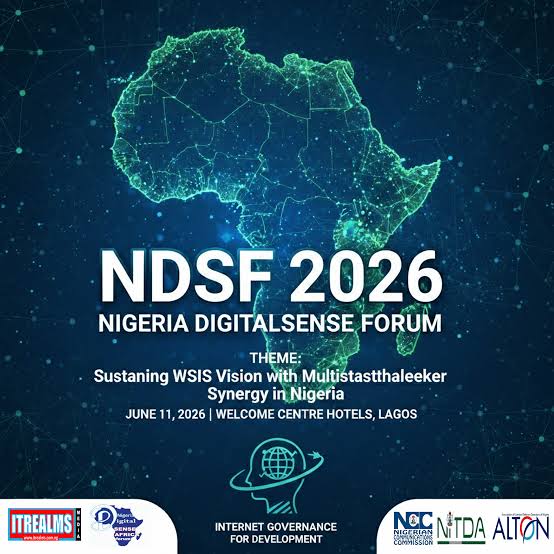
Welcoming guests at the Nigeria DigitalSense Forum on Internet Governance for Development, NDSF 2026, themed Sustaining WSIS Vision with Multistakeholder Synergy in Nigeria on Thursday in Lagos, Nweke stated that the forum, which has held for over 17 years, provides a platform for the government, private sector, civil society, technical communities and other stakeholders to engage and shape conversations around Nigeria’s digital future.
According to Nweke, sustaining the vision of the World Summit on the Information Society (WSIS) is not just a phrase, but an urgent national and global responsibility that requires collective action.
He added that as digitisation continues to evolve, Nigeria must not remain a spectator but must actively contribute to shaping the future of the digital space.
Nweke stressed the importance of strengthening digital infrastructure and promoting digital sovereignty, noting that reliable and accessible infrastructure remains fundamental to expanding opportunities for businesses. especially small and medium enterprises.
He also highlighted the need to address the human and civic dimensions of the digital space, stating that a digital ecosystem that excludes vulnerable groups or ignores human rights cannot achieve meaningful development.
Nweke emphasised the importance of creating opportunities for women and young people to actively participate in the digital economy.
He described their involvement as critical to building a sustainable digital future.

Also speaking at the event, Olusola Teniola, Director of Strategic Business Initiatives at ipNX Nigeria Limited, urged stakeholders to ensure that discussions around digital transformation translate into practical and measurable actions.
Teniola noted that while dialogue and deliberations are necessary, participants must leave the forum with clear commitments that can be implemented and evaluated beyond the event.
He explained that the WSIS vision is built around creating a people-centred, inclusive and development oriented information society where everyone can access, create and benefit from information and communication technologies so as to improve lives and support sustainable development.
According to the Director, Nigeria’s digital efforts must be guided by three key principles, which are: putting people at the centre of technology, ensuring inclusion and using digital tools to support sustainable development.
“Digital technologies should contribute to economic growth, improve governance, quality education, healthcare delivery, job creation, innovation and social progress,” he said.
Olusola added that no one should be left behind in the digital economy, regardless of geographical location, gender, age, disability, educational background or economic status.
He noted that achieving the WSIS vision cannot be the responsibility of one stakeholder alone, stressing that government, businesses, civil society, research and academic institutions, development partners and citizens must work together.
The NDSF 2026 is expected to provide a platform for stakeholders to develop recommendations and strategies aimed at strengthening internet governance, expanding digital inclusion and advancing Nigeria’s digital transformation agenda.
W.U
June 11, 2026
Tags: Olusola Teniola Remmy Nweke