
Opinion
By Valentine Obienyem
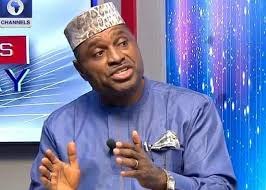
RECENTLY, Barr. Kenneth Okonkwo appeared on Channels Television where, as usual, he poured invectives on Mr Peter Obi. I am pleased that the matter has now become one between him and Barr. Obunike Ohaegbu, who has publicly stated that, in his eagerness to attack Obi unfairly, Kenneth fabricated statements he never made and disseminated them with evident delight. I saw the text messages Kenneth displayed and could not see anything linking Obi and the free-will donation the NDC requested. I understand that Obunike is taking him to court. This is a welcome development because it presents an opportunity for the truth to be tested.
More importantly, it raises serious questions about Kenneth’s character. In his determination to please his new masters, he appears to forget that he is a lawyer. Lawyers are trained to think before they speak, to weigh facts before making allegations, and to understand the consequences of careless assertions. When a lawyer abandons these principles for partisan excitement, he diminishes both his profession and himself. There is nothing left of Kenneth’s character. I hope that when the consequences of what he does today begin to hurt him in his old age, he will not resort to going to church in search of the breaking of ancestral curses.
Today, in boisterous indecency, Kenneth is moving from one stage to another, selling himself for kobo in the name of advocacy. He mistakes the stage for reality, putting up a series of paid performances. True greatness in leadership requires an anchor – discipline. Discipline should be the backbone of personality, enabling it to rise out of the baseness of human nature to the erect stature of the self-conquered man. Without such internal mastery, an anchor, a person remains at the mercy of instinct, drifting aimlessly from one impulse to another, from one stage to another. He wants to enjoy the pleasure of every impulse.
It is against this background that one must view the trajectory of Kenneth Okonkwo. He has no character. When you listen to his two views on Atiku, Tinubu, Obi, and many others, it is difficult to know which to believe. In truth, no discerning individual can clearly decipher Kenneth’s true opinion of the people he speaks about so freely. In one breath, his subjects are angels; in another, they are devils. When an individual continuously shifts position in this manner, it reveals a lack of symmetry and balance in conviction. The intellect is no longer in control of his impulse; rather, impulse – often driven by greed and the hunger for status – begins to govern the intellect.
He is presently so obsessed with Obi that it resembles the madness of Rufus about Naevia. Whether Rufus rejoices, mourns, or remains silent, it is always Naevia. He eats, he drinks, he speaks, he refuses, he gestures – Naevia alone dominates his thoughts. If there were no Naevia, he would be speechless.
In the same way, his public interventions now appear so fixated that they blur the line between political engagement and personal obsession. To appreciate the depth of this political nomadism, one must contrast it with genuine political conviction. There is hardly anything more startling in the history of governance in Nigeria than the rise of Obi, or more comforting than the thought of this man becoming the next president. The people love him so dearly because they have long discovered themselves that justice and passion for the welfare of the people are the two poles of Obi’s mind. His most prized asset in Nigeria is integrity.
The magnetic pull of that integrity became undeniable in everything he has done, starting from when he was Chairman of Fidelity Bank PLC and later Governor of Anambra State. The same light has continued to shine over the years, making him organically loved and widely admired. It was this enduring credibility that became especially evident during the formation of the third-force movement. As soon as Obi entered the NDC, there was mass movement. Immediately, the centre of political gravity shifted towards the party. Those hoping to ride on the wings of Obi for political advantage rushed to join. As a new party, the question naturally arose as to how it would be funded. The party requested free-will donations, and people responded generously, including Mr Peter Obi, whose donation was far greater than what is being bandied as what some people donated.
Besides the falsehood being propagated by the likes of Kenneth Okonkwo as if Obi personally requested any donation, he is also angry that Obi left the ADC. But why should he have remained in a place where plans had already been perfected to “hang” him politically? After what Obi encountered in the ADC – the fight by the government because of him, the prospect of the ADC not being on the ballot because of him, and the resistance from forces within the party – he had to make one of the most pivotal decisions of his political life, and either horn of the dilemma seemed fatal. If he remained in the ADC, or if he joined other parties under consideration, they had already planted their moles in them to cause confusion. In a burst of indignation, he called out the sabotage, and the NDC became the most rational choice.
rather than respect Obi’s choice, Kenneth became Rufus and chose to amplify his own contradictions. One can say with certainty that his political career has increasingly resembled his former profession. It often seems as though each role is dictated by the script of the moment. In this regard, there is the enthusiastic description of Kenneth attributed to Hon. Afam Ogene, who portrayed him as an actor willing to accept payment to play any character. In a private discussion about his present conduct, Ogene assured me that a play always has many scenes, and that this should be understood as just another scene – or even part two of a long drama that continues as long as payments keep coming. And have you seen him speak? He is a perfect artist in acting out an opinion he merely pretends to hold.
This behaviour recalls the sceptical tradition associated with Carneades, the Greek philosopher who believed that no absolute standard of truth exists. He accepted the doctrine that any action is right if it can be reasonably defended. This is why he can fight for an opinion today only to turn against it tomorrow. His conviction is a fluid construct, shaped less by principle than by circumstance, and constantly reshaped by whatever argument serves the moment.
When a man lacks an internal anchor, his intellect becomes a weapon for hire. It then becomes easy to launch unprovoked attacks on men of genuine substance. I even heard Kenneth talking down on Chief Victor Umeh for advising him like a brother. It caught my attention when he said he refrained from answering Chief because it rhymes with thief, which is a thought he stole from Dim Chukwuemeka Odumegwu-Ojukwu.
This pattern places him within a familiar and dishonourable fraternity in contemporary Nigerian commentary. He is guilty of some of the most vituperative ranting in the history of men without honour. In this fraternity are such names as Daniel Bwala, Bayo Onanuga, Reno Omokri and Femi Fani-Kayode. Like others in that circle, loyalty appears to endure only until a more attractive offer presents itself. They are all oil-mouthed, slippery, time-serving sycophants, and Kenneth is cut from the same cloth.
He lacks rational direction; that is why he acts without caution in the face of danger, recklessly speaking like a loose cannon, always prompted by inordinate avarice. Hungry and thirsty for money, he has become subtle in the craft of sycophancy. We hear too much – and indeed, we ourselves have written much – about his addiction to sycophancy. He resembles a faithless dog that ceases barking in his master’s defence once a bone is thrown in another direction. The tenacity with which he clings to false opinions formed under the influence of money, the ease with which he propagates such with ample gesticulations, and the consequent prejudice that warps his judgment, has doomed him to continual error.
Having abandoned the camp of integrity, he now directs his anger against the very man – Peter Obi – that briefly gave him a platform of respectability. For him, the destruction of Obi is now a categorical imperative. But where does this leave him? Does he think that, going by his earlier stings of Alhaji Atiku Abubakar, Atiku would ever believe in him? He is left in a political no-man’s-land – distrusted by those he abandoned and regarded with suspicion by those he now seeks to please. He is a Judas who betrayed truth, a mad dog that bites everybody. Those using him only recognise his nuisance value.
In his desperation, Okonkwo has now resorted to blackmail, a weapon often employed by those who have exhausted the arrows in their quiver. I read his threat that if Obi proceeds with the suit, he would “spill” something. I laugh at such. I know that is empty rhetoric. Obi has never discussed anything unworthy of public scrutiny with anybody, not to talk of Kenneth, whom nobody trusts.
Ultimately, what remains unmistakable is that character is not a costume that actors like Kenneth can wear on different occasions; it is the steady expression of an inner order. When that order is absent, public life becomes a theatre of absurd, shifting loyalties, and opportunistic outrage. In the end, such a man is left with neither the trust of allies nor the respect of adversaries. History is usually unkind to such figures – not because they lacked visibility, but because they lacked consistency.
A.I
June 11, 2026
Tags: Barr. Kenneth Okonkwo Barr. Obunike Ohaegbu Valentine Obienyem