
Business
By Anthony Isibor
KPMG, the consulting firm engaged by the Nigerian Communications Commission, NCC, to conduct a comprehensive review of Nigeria’s Mobile Termination Rate MTR, and International Termination Rate, ITR, regime, has unveiled a detailed methodology that will underpin the study aimed at determining new wholesale telecom pricing benchmarks.
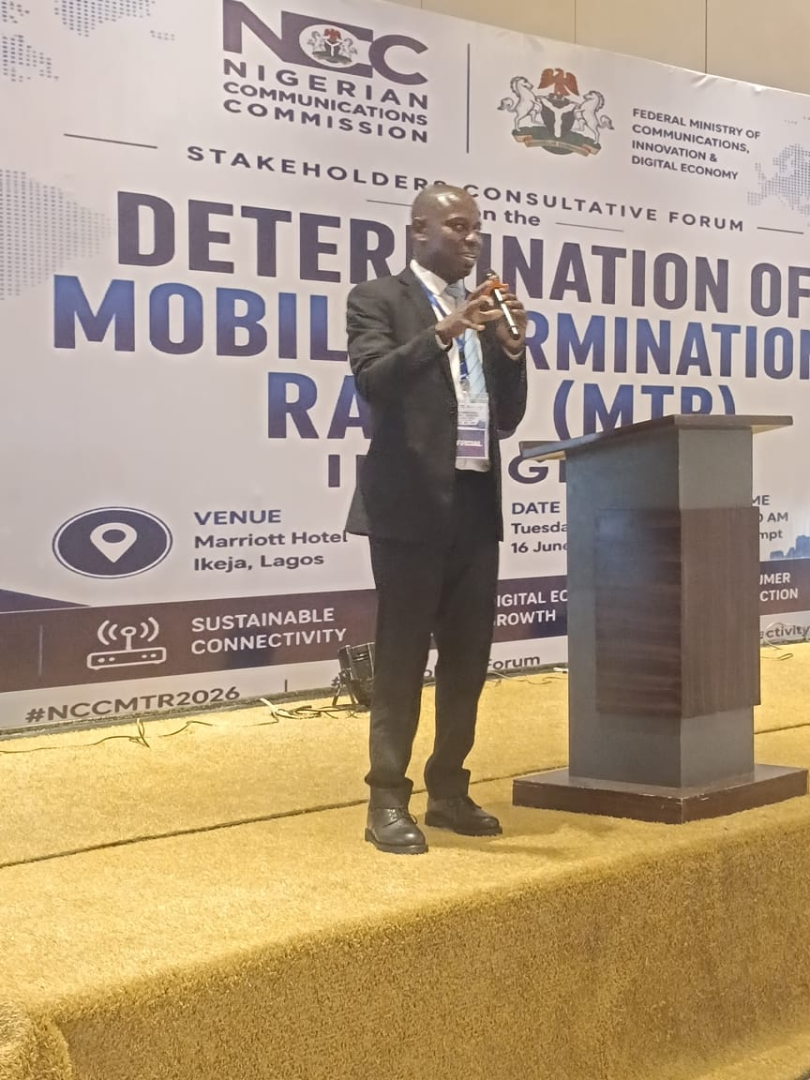
Speaking at the stakeholders’ Consultative forum meeting in Lagos on Tuesday, Oluwole Adelokun, KPMG representative said that the study would focus on assessing the effectiveness of the current interconnection regime, benchmarking Nigeria against comparable international markets and developing a forward-looking cost model to support a new pricing framework for the telecommunications industry.
The firm noted that it previously participated in the last MTR review exercise and is returning to support the NCC in achieving its objectives of promoting sustainable growth, competition and investment in the sector.
According to KPMG, the study has four major deliverables. These include an independent assessment of the current interconnect regime and its impact on operators and consumers, a comparative analysis of international best practices, the development of a forward-looking cost model and recommendations for a revised pricing and regulatory framework.
The consultants explained that the review would seek to identify shortcomings in the existing regime, assess whether current pricing structures remain fit for purpose, and determine how emerging telecommunications services can be accommodated within the regulatory framework.
“KPMG will conduct an objective impact assessment of the current interconnect regime and provide recommendations that support industry growth both now and in the future,” the firm said.
The study has been divided into three phases: Assess, Discover and Develop.
Under the assessment phase, KPMG will evaluate the existing tariff structure, pricing practices and the sustainability of current asymmetry arrangements designed to support smaller operators. The exercise will also examine retail and wholesale pricing models across the industry, including bundles, discounts and promotional offerings.
As part of the process, operators will be invited to participate in one-on-one engagements and stakeholder forums aimed at gathering industry perspectives.
The consultants disclosed that operators would be required to provide extensive financial and operational information covering a five-year period. The requested data will include revenue, costs, profitability, market share, quality of service indicators, investment levels and consumer usage metrics.
According to KPMG, the five-year data horizon is necessary to establish reliable trends and accurately assess the impact of the current tariff regime on market performance.
The benchmarking phase will involve a comparative review of regulatory and pricing frameworks in selected African and emerging markets. Countries expected to be considered include major African telecommunications markets such as South Africa and Kenya, alongside emerging economies such as Indonesia and Malaysia.
The objective, according to the consultants, is to identify global best practices and determine lessons relevant to Nigeria’s evolving telecommunications ecosystem.
KPMG said the final phase of the study would involve the development of a forward-looking cost model based on internationally recognised methodologies.
Presenting details of the modelling approach, KPMG’s telecommunications cost modelling specialist explained that the study would adopt the Long Run Incremental Cost Plus, LRIC+, methodology, a cost standard widely used by regulators around the world to determine termination rates.
The model will capture both capital expenditure and operating expenditure associated with network deployment, while also accounting for shared and common costs such as administration, regulatory fees and overhead expenses.
The consultants said the model would be built using a “bottom-up” approach that reflects the costs of a hypothetical efficient operator, allowing the NCC to determine cost-based rates that are forward-looking rather than based solely on historical expenditures.
Key modelling inputs will include subscriber numbers, traffic volumes, network coverage, spectrum holdings, network architecture, asset costs and demand forecasts extending to 2030.
The model will also evaluate different depreciation methodologies, cost recovery mechanisms and weighted average cost of capital assumptions to determine their impact on regulated pricing outcomes.
According to KPMG, network costs will be allocated to different telecommunications services through routing factors that identify the extent to which each service consumes network resources.
The firm stressed that stakeholder participation would be critical to the success of the exercise.
To facilitate the process, detailed data request templates will be distributed to operators covering network coverage, subscriber growth, traffic forecasts, capacity utilisation, cost structures, asset lives, operating expenses and investment plans.
The consultants urged operators to provide complete and accurate information, noting that the quality of industry data would directly influence the robustness of the final model and the credibility of the study’s recommendations.
The MTR and ITR review comes at a time of significant change within the Nigerian telecommunications industry, with operators facing rising operational costs, rapid growth in data consumption, expanding digital services and increasing investment requirements.
The industry stakeholders at the consultation meeting expressed support for a transparent and evidence-based review process, while emphasising the need for any future pricing regime to balance consumer interests, investment incentives and long-term sector sustainability.
The NCC has indicated that findings from the study will form the basis for future regulatory decisions on wholesale interconnection pricing in Nigeria’s telecommunications market. The current interconnect regime was last comprehensively reviewed several years ago, making the ongoing exercise one of the most significant pricing studies undertaken by the Commission in recent years. Recent NCC reviews and consultations have increasingly focused on evidence-based regulation and international benchmarking to support sector growth.
A.I
June 16, 2026
Tags: KPMG NCC Nigerian Communications Commission Oluwole Adelokun