
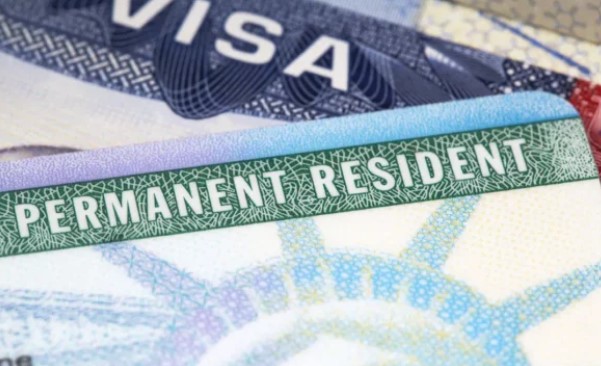
The United States Government has introduced a new immigration policy requiring most foreign nationals seeking permanent residency to complete their green card applications from their countries of origin rather than from within the US.
The policy, announced on Friday by United States Citizenship and Immigration Services, represents another tightening of immigration measures under the administration of Donald Trump.
The directive is expected to affect temporary visa holders already residing in the United States, including students, tourists and foreign workers.
Under the new arrangement, people staying in the US on temporary visas will generally no longer be allowed to change their immigration status to permanent residency while remaining in the country, except under what authorities described as “extraordinary circumstances”.
Instead, applicants will be required to process their green card applications through US embassies or consulates in their home countries.
Explaining the policy shift, USCIS said the move was aimed at restoring the original intent of US immigration laws.
“We’re returning to the original intent of the law to ensure aliens navigate our nation’s immigration system properly,” the agency said.
“From now on, an alien who is in the U.S. temporarily and wants a Green Card must return to their home country to apply, except in extraordinary circumstances.”
The agency said the new requirement would help reduce abuse of the immigration system and limit cases of individuals remaining in the US unlawfully after unsuccessful residency applications.
USCIS spokesperson Zach Kahler said the previous process created loopholes that made immigration enforcement more difficult.
“This policy allows our immigration system to function as the law intended instead of incentivising loopholes,” he said.
“When aliens apply from their home country, it reduces the need to find and remove those who decide to slip into the shadows and remain in the U.S. illegally after being denied residency.”
The immigration agency further argued that temporary visas were never intended to serve as a pathway to permanent residence or citizenship.
“Nonimmigrants, like students, temporary workers, or people on tourist visas, come to the U.S. for a short time and for a specific purpose,” the statement reads.
“Our system is designed for them to leave when their visit is over. Their visit should not function as the first step in the Green Card process.”
Officials also said transferring applications to overseas consular offices would allow the government to redirect resources to other services, including naturalisation cases and support programmes for trafficking victims and survivors of violent crimes.
“The law was written this way for a reason, and although it has been ignored for years, following it will help make our system fairer and more efficient,” USCIS added.
The United States Department of Homeland Security also reinforced the policy change in a social media post on Friday.
“An alien who is in the U.S. temporarily and wants a Green Card must return to their home country to apply,” DHS said.
“This policy allows our immigration system to function as the law intended instead of incentivising loopholes. The era of abusing our nation’s immigration system is over.”
The policy is expected to have major implications for Nigerians and other foreign nationals who enter the US on temporary visas and later seek permanent residency.
Nigeria remains among the top African countries receiving US non-immigrant visas.
The move also follows an earlier decision by the Trump administration to suspend the processing of some green card and citizenship applications involving nationals from countries affected by US travel restrictions.
That measure, introduced in late 2025, reportedly affected immigrants already living legally in the United States who were seeking status adjustments or citizenship.
According to reports, about 3.6 million people were living in the US on temporary visas as of 2024, excluding tourists.