
Opinion
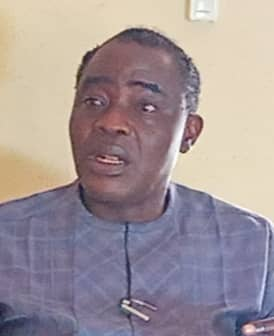
By Chuka Nnabuife
THERE is a time for everything — a time to sow and a time to reap. But harvests are not accidental; they are the reward of how wisely the season is used.
Nigeria is in such a season.
In Nigeria’s democracy, we have a four-year season. The four-year electoral cycle is more than a routine — it is a window to renew leadership and reset national direction. At each turn, citizens are presented with a choice: to reinforce the status quo or to demand a better course. Yet that choice begins long before the ballot is cast.
Political parties remain the sole legal vehicles for leadership recruitment in Nigeria, as independent candidacy is still outside the ambit of electoral law. It is through them that aspirants are filtered, candidates are produced, and ultimately, leaders are made.
Now, across the country, those processes are underway. Party primaries ahead of the 2027 general election have begun — the critical first test in determining not just who will appear on the ballot, but what kind of leadership Nigeria is likely to get.
Therefore, we are now in a familiar ritual: aspirants courting delegates, party faithful being treated like royalty, and the air thick with promises, persuasion, and political theatre. For now, party members are kings — wooed like brides and indulged like prized ornaments.
Yet beneath the spectacle lies something far more consequential.
This is not merely a season of ambition; it is a moment of reckoning. A litmus test for Nigeria’s political parties. A rare window through which Nigerians can scrutinise — not the rhetoric — but the character, structure, and sincerity of those who seek to lead.
What do the parties truly stand for?
How democratic are their internal processes?
Do they respect the rule of law or merely manipulate it? Are they guided by conscience or convenience?
Most importantly, are they genuinely equipped with ideas and instruments to confront Nigeria’s deepening crises — poverty, economic hardship, and systemic governance failure—or are they content to trade blame and recycle empty slogans?
The answers are emerging already.
Some parties are attempting to distinguish themselves by the processes they adopt. The All Progressives Grand Alliance (APGA), for instance, has embraced the Option A4 system in selecting its candidates — a method that emphasises transparency and direct participation. Aspirants are barred from inducing voters with money or gifts. Instead, they stand openly, while supporters queue behind them to be counted. The candidate with the highest number emerges.
It is simple. It is visible. And, crucially, it is harder to manipulate.
In adopting this approach, APGA appears to be pushing back against the monetisation of politics and the culture of backroom deals. In fact, the party’s National Leader, Prof. Chukwuma Charles Soludo, the Governor of Anambra State stated it while unveiling the party’s agenda for the 2027 election in Awka, on Saturday, April 18. Flanked by APGA national chairman, Chief Sly Ezeokenwa, the governor announced that the party is international about changing the narrative of Nigerian politics through the approaching polls. APGA insits that they want to establish that internal democracy can be practised with integrity in Nigerian parties and that elections can be sane.
Early indications suggest a noteworthy paradigm shift in tone within the party during the ongoing preparation to the general elections. Its screening processes have been largely smooth, with many aspirants passing through without the rancour that used to define such exercise. Observers speak of a renewed sense of fairness — of a system attempting, at least, to correct itself.
But this is not about one party alone.
Across the board, Nigerians are watching. They are measuring not just the candidates who emerge, but the credibility of the processes that produce them. The quality of leadership that will define the next political era is being determined now — quietly, steadily, and largely away from the glare of general election campaigns.
And so, the responsibility is shared.
Political parties must rise to the occasion by presenting credible leaders and demonstrating genuine commitment to reform. They must show — not merely tell — how they intend to rescue a nation burdened by economic strain and governance fatigue.
But the masses, too, have a role that cannot be abdicated.
Delegates, party members, and indeed the wider electorate must resist inducement, reject mediocrity, and demand competence. They must understand that every compromised choice today plants the seed for tomorrow’s disappointment.
For in the end, the truth remains unavoidable: a people get the leadership they want or at least, the leadership they are willing to accept.
That is not a proverb of resignation; it is a warning and a challenge.
If Nigerians insist on integrity, they will elevate it.
If they reward competence, they will reproduce it.
If they reject corruption, they will diminish it.
The 2027 elections will not begin on election day. They are being shaped now — in party primaries, in quiet decisions, and in the conscience of both politicians and citizens.
This is the time to choose wisely.
This is the time to fix Nigeria.
***Chuka Nnabuife, FNGE, FSNA, author and journalist writes from Awka, Anambra State, via chukafornaija@gmail.com. 08026472357
A.I
May 18, 2026
Tags: Chuka Nnabuife