
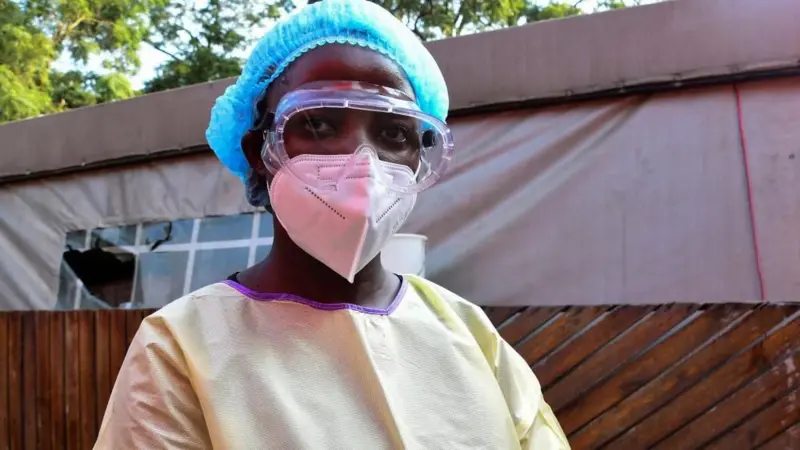
The World Health Organisation (WHO) has declared a public health emergency of international concern (PHEIC) following an outbreak of Bundibugyo virus disease (BVD), a rare and severe form of Ebola, in the Democratic Republic of the Congo (DRC) and Uganda. The outbreak, which began in early May 2026, has already spread across multiple health zones in Ituri Province, with cross-border transmission confirmed in Uganda.
The alert was first raised on 5 May 2026 after reports of a fast-spreading illness with unusually high mortality rates in Mongbwalu Health Zone, including deaths among healthcare workers. Laboratory tests conducted by the Institut National de Recherche Biomédicale (INRB) in Kinshasa later confirmed the presence of Bundibugyo virus in patient samples on 15 May, officially identifying the outbreak as Ebola disease caused by the virus.
The DRC government formally declared its 17th Ebola outbreak on the same day, while Uganda confirmed an imported case linked to travel from Ituri. A second case was later detected in Kampala, though authorities say no local transmission has yet been established in Uganda.
As of mid-May 2026, hundreds of suspected cases and dozens of deaths have been reported across affected zones, including Rwampara, Mongbwalu, and Bunia. Health officials say the outbreak has disproportionately affected adults aged 20 to 39, with women making up more than 60% of cases, pointing to household and caregiving exposure as key transmission routes.
The outbreak is believed to have originated in Mongbwalu, a mining hub with high population movement. From there, infections spread to surrounding health zones as patients sought treatment. Contact tracing remains difficult due to insecurity, population displacement, and weak surveillance systems, with several contacts already lost to follow-up.
Read more news
Ebola: DR Congo records 42% mortality rate, WHO warns of regional risk
African country lost N1.3bn lost to ‘Tomato Ebola’
Uganda launches Ebola vaccine trial to combat rising cases
Health authorities also raised concern over infections among healthcare workers and weak infection prevention measures in hospitals, which likely contributed to early hospital-based transmission. At least four healthcare workers have died since the outbreak began.
The virus has been confirmed as Bundibugyo virus, a member of the Ebola family that carries a case fatality rate of 30% to 50%. Symptoms include fever, fatigue, vomiting, and in severe cases, haemorrhage and organ failure. The disease spreads through direct contact with bodily fluids or contaminated surfaces, and is often amplified in healthcare settings and unsafe burial practices.
Unlike Ebola virus disease caused by other strains, there is currently no licensed vaccine or specific antiviral treatment for Bundibugyo virus. As a result, response efforts rely entirely on supportive care, early detection, strict infection prevention and control, contact tracing, safe burials, and community engagement.
The WHO, alongside national health authorities in DRC and Uganda, has deployed rapid response teams, strengthened surveillance systems, and expanded laboratory testing capacity. Emergency measures also include border screening, isolation facilities, and cross-border coordination to prevent further spread into neighbouring countries.
The outbreak is unfolding in a complex environment marked by ongoing insecurity in eastern DRC, the displacement of hundreds of thousands of people, and limited access for health workers. These conditions have slowed response efforts and increased the risk of wider regional transmission.
WHO has classified the situation as a PHEIC due to its rapid spread, high fatality rate, weak containment, and confirmed cross-border movement of cases. Officials warn that without urgent containment measures, the outbreak could expand further within the region.