
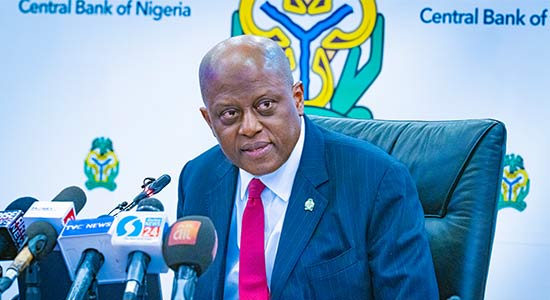
The Monetary Policy Committee of the Central Bank of Nigeria has retained the Monetary Policy Rate at 26.5 per cent.
CBN Governor, Olayemi Cardoso, announced the decision after the committee’s 305th meeting held in Abuja, with 11 members in attendance.
The committee also retained all other key monetary policy parameters, reflecting a cautious approach as the apex bank continues to monitor inflationary pressures, exchange-rate stability and broader macroeconomic conditions.
According to the MPC, the Cash Reserve Ratio was retained at 45 per cent for commercial banks and 16 per cent for merchant banks, while non-Treasury Single Account public sector deposits remain subject to a 75 per cent CRR.
The committee also left the Standing Facilities Corridor unchanged at +50 and -450 basis points around the MPR.
Cardoso said the decision to hold rates was influenced by persistent inflationary pressures and global uncertainties, including developments in the United States and the ongoing conflict in the Middle East.
The committee noted the recent rise in inflation figures, particularly the back-to-back increases recorded in March and April 2026.
Nigeria’s headline inflation rose to 15.69 per cent in April 2026 from 15.38 per cent recorded in March.
At its 304th meeting in February 2026, the MPC had reduced the MPR by 50 basis points from 27 per cent to 26.5 per cent, marking the first rate cut after a prolonged tightening cycle.
The CBN has continued to balance inflation control with efforts to support exchange-rate stability and broader economic recovery.
Analysts had widely expected the apex bank to maintain its current policy stance, citing inflationary risks, exchange-rate concerns, rising crude oil prices and geopolitical tensions as key factors.
The Monetary Policy Rate serves as the benchmark interest rate used by the CBN to influence lending rates, liquidity conditions, inflation and overall macroeconomic stability.
While high interest rates may help moderate inflationary pressures, Nigeria’s business community has repeatedly raised concerns over elevated borrowing costs and their impact on investment, expansion and economic growth.