
The Federal Government has described the launch of the International Media and Information Literacy Institute (IMILI) as a major step toward strengthening responsible information use, democratic resilience, and the fight against misinformation. This is according to a statement by the Special Assistant (Media) to the Minister of Information and National……
The Federal Government has described the launch of the International Media and Information Literacy Institute (IMILI) as a major step toward strengthening responsible information use, democratic resilience, and the fight against misinformation.
This is according to a statement by the Special Assistant (Media) to the Minister of Information and National Orientation, Rabiu Ibrahim,
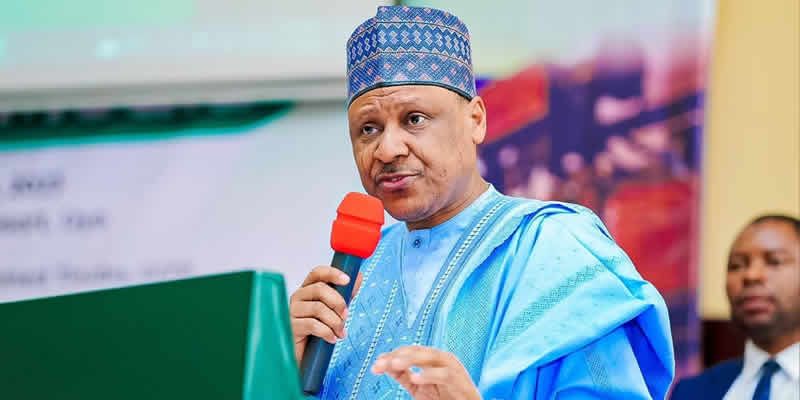
Speaking at the close of the two-day launch held at the National Open University of Nigeria (NOUN), the Minister of Information and National Orientation, Mohammed Idris, said the institute marks a defining moment for Nigeria and the global community in advancing media and information literacy.
Represented by the Executive Secretary of the Nigerian Press Council, Dr. Dili Ezughah, the minister noted that the initiative aligns with the Renewed Hope Agenda of President Bola Ahmed Tinubu, particularly in promoting transparency, civic engagement, and inclusive development.
“This marks the beginning of a transformative journey, not just for Nigeria, but for Africa and the global community. IMILI is more than an institution; it is a platform for collaboration, innovation, and measurable impact in media and information literacy,” he said.
Idris explained that discussions at the event, including goodwill messages and the presentation of IMILI’s Strategic Plan (2026–2030), have provided a clear roadmap for the institute’s operations and long-term sustainability.
He described IMILI as a global hub designed to promote research, capacity building, and policy dialogue among educators, journalists, policymakers, and young leaders.
“The conversations we have had over the past two days have laid a solid foundation for sustained action. What is required now is commitment; commitment to partnerships, to implementation, and to measurable progress that will benefit not just Nigeria, but the global community,” he added.
The minister emphasised the need for a collective approach involving government, private sector, academia, media, civil society, and international partners, including UNESCO, to address the challenges of misinformation and declining public trust.
He stressed that media and information literacy has become critical in an era driven by rapid technological advancement and artificial intelligence.
“The ability to think critically, verify information, and engage responsibly is fundamental to building resilient societies and safeguarding democratic institutions,” he said.
“At a time when information can both unite and divide, IMILI provides the tools to ensure that knowledge empowers rather than misleads. This is central to building trust, strengthening democracy, and securing a more stable and informed future,” he added.
The minister described Nigeria’s hosting of the UNESCO Category 2 institute dedicated to media and information literacy as both a moment of national pride and a call for global responsibility.
He reaffirmed the Federal Government’s commitment to working with UNESCO, development partners, academic institutions, and the media to ensure the success of the institute.
The event brought together stakeholders from government, academia, and the communications sector, including former Minister of Information and Culture, Lai Mohammed; Vice Chancellor of the National Open University of Nigeria, Prof. Uduma Oji Uduma; Director of IMILI, Dr. Sharon Omotosho; and President of the Nigerian Institute of Public Relations, Dr. Ike Neliaku, among others.