
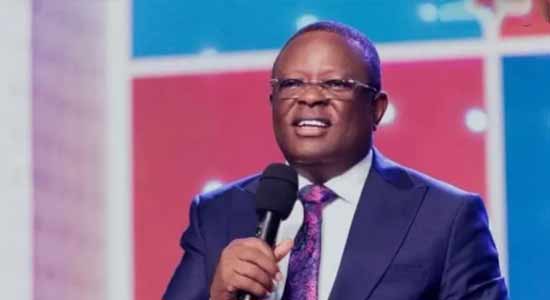
The Federal Executive Council on Thursday approved contracts for road and bridge projects worth over N7tn, comprising 10 major projects spanning all six geopolitical zones.
This includes a N1.86tn extension of the Lagos-Calabar Coastal Highway through Akwa Ibom State, a N548.98bn contract to demolish and fully rebuild the Carter Bridge in Lagos and a new N1.79tn section of the Sokoto-Badagry Expressway.
Minister of Works, Dave Umahi, who announced the approvals to State House correspondents after the FEC meeting, also disclosed a separate roll of major road projects ready for inauguration ahead of President Bola Tinubu’s third anniversary in office on May 29.
Thursday’s approvals are the single largest batch of road project approvals the Tinubu-led FEC has approved in one sitting.
According to Umahi, the first project was the Suleja-Minna and Kaduna Roads, which he describes as one of the administration’s most troubled inherited road projects.
The Suleja-Minna corridor, a 71-kilometre stretch previously awarded to Salini under a Nigeria National Petroleum Corporation Limited tax credit scheme, under which, according to Umahi, nothing tangible was achieved in five years, had been rescoped and split into two lots.
“A section of it is 71km, dualised, and was awarded to Salini under NNPCL’s tax credit, and for five years, nothing tangible was achieved. And so the Ministry of Works decided to terminate the project and rescoped it into two lots,” Umahi said.
Lot 1, covering the first 71km, was awarded to CGC at N91bn, and Lot 2, covering the next 71 kilometres, was awarded to CCECC at N93bn, both to be executed on reinforced concrete pavement.
The council also approved the reconstruction of the Mando-Birnin Gwari Road in Kaduna State, a 122.8-kilometre project that Umahi described as one of the specific infrastructure commitments Tinubu made during his presidential campaign.
He explained, “The project is very important to the people of Kaduna State. It is 122.8km, and the contract sum is N178.12bn.
“The outer shoulders, which are 2.75 metres each, shall be done on reinforced concrete pavement, and because of the urgency, the carriage way will be done on asphalt. It’s a three-lane road at 11.3 metres’ width.”
Umahi said the council approved the complete demolition and reconstruction of the Carter Bridge.
He said the council’s decision followed independent investigations to determine the structural fate of one of Lagos’s oldest bridges.
Umahi noted that the independent investigations commissioned at multiple points, in 2013, 2019 and again under the current administration through Julius Berger, had all confirmed that the bridge’s underwater piles and pile caps had deteriorated at a “geometrical progression,” leaving no viable option but complete demolition and reconstruction.
He explained, “We convocated a stakeholders’ engagement, and all the technical experts all over the country, and even internationally, all agreed that we could not redeem Carter Bridge, and it has to be completely demolished and rebuilt.
“We’ve gone through rigorous procurement and design. The initial total length of that bridge was 1.525 kilometres, with three lanes, dualised. We have now increased the project to 1.93 kilometres because we increased a flyover ramp, so that the bottleneck that is usually there will no longer exist.
“The total contract sum approved is N548.98bn. CCCC won the contract after Julius Berger, CCECC, CBC, and China Harbour High Tech all bid. The new bridge will have a navigational waterway of 105 metres by two.”
Umahi also listed a separate N24.89bn for underwater elements of the Third Mainland Bridge, also by Julius Berger, among the projects ready for commissioning.
The council also approved the fifth section of the Sokoto-Badagry Expressway, a 360-kilometre dual carriageway at a total cost of N1.785 trillion, with 30 per cent to be paid by the Federal Government and 70 per cent through external financing.
The project will be tolled, Umahi emphasised, adding that the cost per kilometre of standard carriageway will be N3.2bn.