
Women
AS global demand for critical minerals surges to power the clean energy transition, feminist advocates are raising urgent concerns about who truly benefits—and who is left behind.
Across mineral-rich regions in Africa, women are calling for a fundamental shift in how extractive industries operate, demanding justice, equity, and meaningful participation in decision-making processes.For many women living in mineral-rich communities, the threat of losing land, livelihoods, and cultural heritage is a daily reality.
What is often framed as progress through “green energy” is, on the ground, experienced as dispossession and disruption.Gamuchirai Munesi, Acting Village Head of the Vatombe community in Hanyanya village, Bikita region of Zimbabwe, describes lithium mining as a growing crisis.“Lithium mining has become a curse. It threatens our mountains, our water sources, and the land that has sustained the Vatombe people for generations,” she said.
Despite these challenges, Munesi emphasised the community’s resolve:
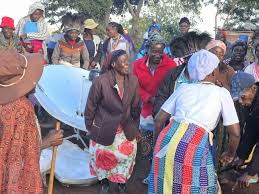
“We are determined to resist any encroachment on our land. Our struggle is also about legal empowerment and ensuring our concerns are addressed through the appropriate authorities.”Munesi spoke during a recent story circle event in Hanyanya that brought together grassroots women, eco-feminists, and climate justice activists.
Organised by SHINE Collab and partners, the event reflects a community-centred approach championed by Dr Mela Chiponda, Executive Director of SHINE Collab and a leading eco-feminist scholar.Story circles—structured, facilitated dialogues where small groups share personal experiences—are increasingly being used as tools for inclusive engagement. Rooted in principles of deep listening, equality, and empathy, they create space for grassroots voices that are often excluded from formal policy platforms.Civil society organisations and eco-feminist networks are embracing this approach to surface indigenous knowledge and grassroots-driven solutions. Insights from these engagements are informing growing demands for gender-responsive budgeting, community ownership models, protection of land rights, and investment in women-led enterprises—particularly in spaces where grassroots women remain underrepresented.
Chiponda warns that while the world celebrates a “green future,” the realities for many African women remain deeply unequal.
“The transition to clean energy cannot be built on the same extractive logic that has historically marginalised women,” she said. “This moment demands that we rethink power—who holds it, who benefits, and how women, particularly at the grassroots, can shape these systems.”
A.I
April 27, 2026
Tags: PowerHarare