
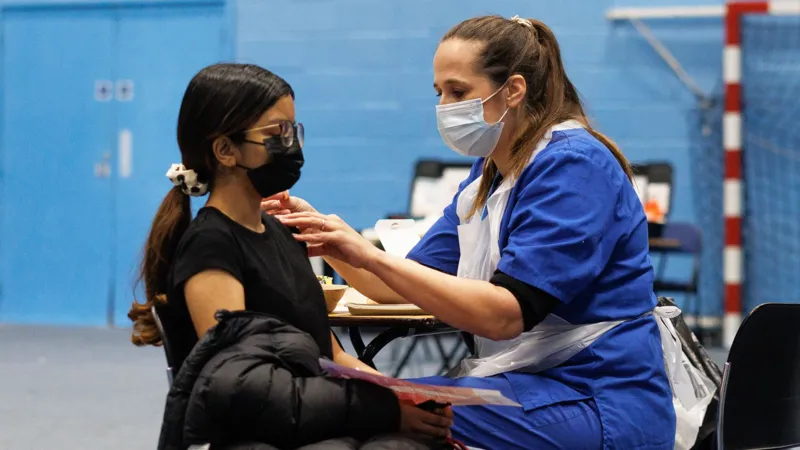
UK health experts have recommended that teenagers should be offered a free vaccine against meningitis B (MenB) from the age of 15, following growing concerns over the risk of the potentially deadly infection among young people.
The recommendation by the Joint Committee on Vaccination and Immunisation (JCVI) marks a change from its previous advice and comes after the UK recorded its largest and fastest-growing MenB outbreak in Kent earlier this year, where two people died.
As a precaution, a temporary vaccination campaign is already being rolled out this summer for young people preparing to start university, alongside some other groups considered at higher risk. However, health advisers are now urging the government to consider introducing the vaccine as part of routine secondary school immunisation programmes.
The move has received strong support from families affected by the disease, including Anthony Mills, whose 18-year-old son Aaron died after contracting MenB during the Christmas break from university.
Mills said providing teenagers with the vaccine would be a lasting legacy for his son and urged the government to adopt the recommendation quickly.
“The only thing that could have saved Aaron is the vaccine,” he said, adding that more public education was needed because many families remain unaware that MenB vaccination is available for young people.
He explained that before his son’s death, the family believed his school vaccinations at age 14 provided full protection against meningitis. However, Aaron had only received the MenACWY vaccine, which protects against four other types of meningococcal bacteria.
MenB infections can develop into serious illnesses such as meningitis and sepsis, causing long-term disabilities including hearing loss, brain damage and limb amputations. In some cases, the disease can be fatal.
Health experts said teenagers are at increased risk because of their social lifestyles, including close contact with others through activities such as kissing and sharing items like vapes.
Becca Heritage, who lost her legs and part of her hand after contracting MenB while studying at university, welcomed the proposed change. She encouraged young people to understand the symptoms of the disease and take responsibility for getting vaccinated.
“Young people’s lives are at stake, and this vaccine is our best protection,” she said.
JCVI chair Prof Wei Shen Lim said invasive meningococcal disease is rare but can have devastating consequences, adding that the committee carefully considered experiences shared by families affected by the illness.
The Department of Health and Social Care said it would review the advice before making a decision on whether the programme would be introduced across the UK.
Currently, babies born since July 2015 are offered the MenB vaccine through the NHS childhood immunisation programme because they face a higher risk of severe infection.
Under the new proposal, teenagers aged 15 would receive two doses for stronger protection, while those vaccinated as babies may only require a booster dose.
Health charities have described the recommendation as a major step towards preventing future outbreaks and protecting more young lives.
For more details, visit New Dailyprime