
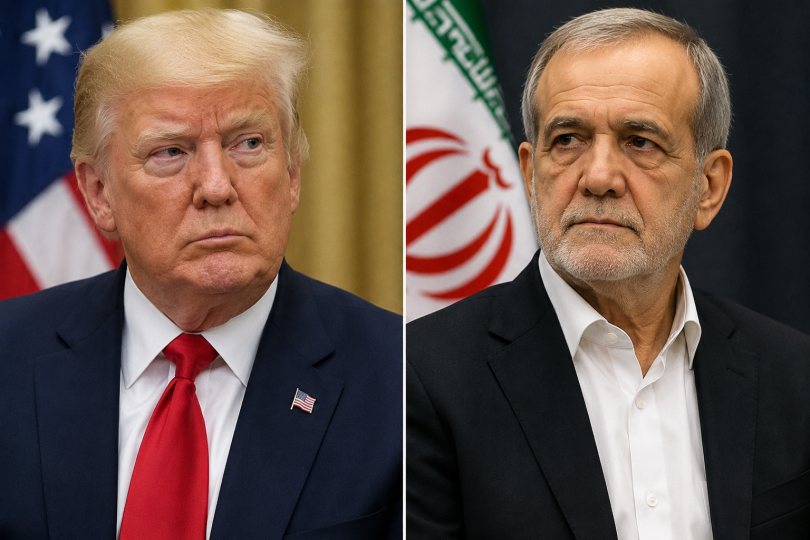
The Middle East moved closer to a broader regional conflict on Thursday as United States President Donald Trump disclosed that he is considering a new and larger military offensive against Iran, even as American and Israeli forces sustained pressure on Tehran and Iranian officials threatened further retaliation.
Trump’s latest remarks came during continued military operations under Operation Epic Fury, the codename for the United States’ campaign against Iran, coordinated with Israel’s Operation Roaring Lion. The conflict, which began with joint strikes on Iranian military infrastructure earlier this year, has entered a volatile new phase following the collapse of a ceasefire reached in April.
Speaking on Thursday in an interview with Axios, Trump indicated that no final decision had been taken but acknowledged that his administration was actively considering a military campaign that would exceed the scale of previous operations.
Trump said, “I’m close to making a decision.”
He added that any new offensive could be “bigger than ever before.”
The President also suggested that Israel would immediately join any expanded military operation if requested, underscoring the close strategic coordination between Washington and Tel Aviv.
The latest developments come after weeks of sustained American air operations targeting Iranian military infrastructure. According to US Central Command, previous waves of strikes focused on military facilities, missile positions, and naval assets across several Iranian locations as Washington sought to weaken Tehran’s military capabilities.
Although reports circulating on social media claimed that the United States was preparing military action against Afghanistan or had fixed a 10-day deadline to end the conflict, no credible official confirmation has been issued to support either claim.
On the battlefield, the confrontation has expanded beyond direct exchanges between Israel and Iran. Reuters reported on Thursday that Iran-backed Houthi fighters launched missile attacks against Saudi oil tankers in the Red Sea, and this has prompted Trump to threaten what he called “major military punishment” against both Iran and the Houthis.
Iran has denied directing the attacks but warned that continued American military action would provoke further retaliation across the region.
The growing instability has triggered fresh concerns over global energy supplies. Shipping insurers have sharply increased premiums for vessels transiting the Red Sea and nearby waterways, while international oil prices climbed above 100 dollars per barrel as traders assessed the possibility of further disruption to key maritime routes.
The United Nations (UN) has also expressed alarm over the rapidly deteriorating security situation.
UN Secretary-General António Guterres warned that the crisis was “teetering on the edge of the unimaginable.” He urged all parties to exercise restraint and pursue diplomatic solutions before the conflict widens further.
Within the United States, the conflict has fuelled political divisions. While the White House insists military pressure is necessary to counter Iranian threats and protect regional allies, several lawmakers have questioned the legal basis and long-term objectives of the campaign. Debate has also intensified following reports of continued US military casualties and concerns over whether Congress has been adequately consulted before further escalation.
As it stands now, the next few days could prove decisive. An expanded American offensive would significantly raise the risk of direct Iranian retaliation against US forces and allies across the Gulf, potentially transforming an already dangerous confrontation into one of the most consequential conflicts in the region in decades.
For More Details, Visit PrimeTimes News