
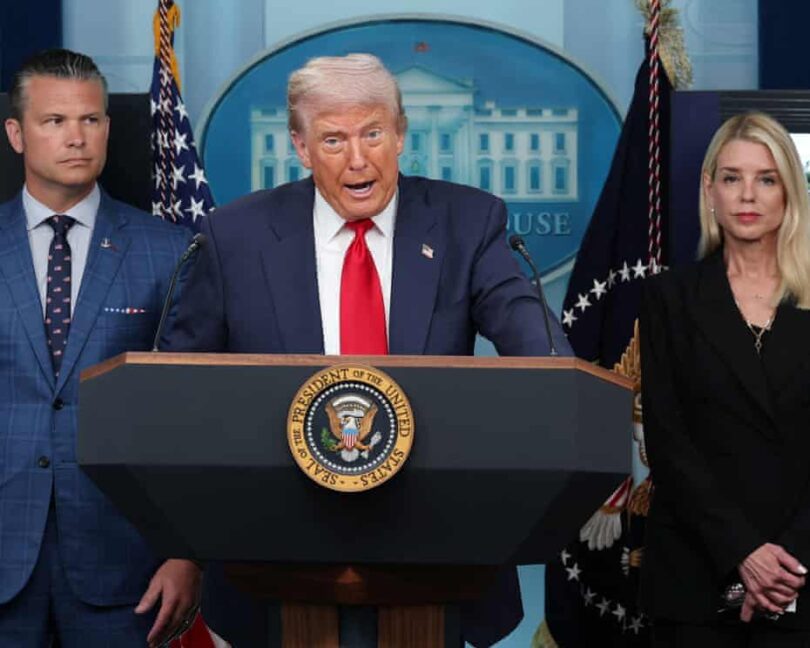
President Donald Trump has paused American attacks on Iran after 13 consecutive nights of air strikes, but the Trump Iran war remains far from a lasting settlement. Iran has indicated that it will also suspend its attacks while the United States holds fire, creating an opening for diplomacy without establishing a formal ceasefire.
The pause was still holding for a second consecutive day on Sunday, 26 July, as officials tried to revive negotiations over Iran’s nuclear programme and shipping through the Strait of Hormuz. Travellers, shipping companies and businesses operating in the Gulf should continue checking official security and airline information because renewed attacks could quickly disrupt transport and commercial activity.
The decision follows weeks of military escalation and growing questions over whether US air power can force Tehran to accept Washington’s demands.
An analysis published by The New York Times described Trump as increasingly constrained by a conflict in which America possesses overwhelming military strength but has struggled to turn that power into a clear political result. The report said the president, who once appeared to believe there were few limits to his authority, had encountered military, diplomatic and strategic barriers.
The central problem facing the White House is that each available option carries serious risks.
Continuing large-scale attacks could damage more Iranian military and infrastructure targets, but it could also trigger further retaliation against US bases, Gulf states and commercial shipping.
Ending the campaign without a firm agreement could allow Iran to maintain important military and nuclear capabilities while claiming that it resisted American pressure.
A ground operation or an attempt to seize and hold territory around the Strait of Hormuz would expose more American troops to danger and could turn the campaign into the type of prolonged Middle East conflict Trump repeatedly promised to avoid.
The US administration has argued that its military campaign is intended to remove the threat from Iran’s nuclear programme, weaken its missile forces and protect international shipping. The White House presented those objectives when Trump authorised Operation Epic Fury in March.
However, the conflict has continued for months, despite earlier suggestions from US officials that major operations could finish within weeks.
Read related news:ADC to Tinubu: Focus on results, not Trumps letter
US clarifies passport rules for Nigerians holding American citizenship
American actor James Ransone passes away
The latest pause came after military and civilian advisers raised concerns
about the effectiveness of further bombing and pressure on American supplies of defensive missiles, according to several reports. Senior commanders were also reported to have questioned whether continued strikes would achieve enough to justify the risks.
This does not mean the American military has run out of weapons or cannot conduct further attacks. It means planners must consider how many defensive interceptors are available to protect US forces and allies if Iran launches another wave of missiles or drones.
The United States and Iran have not announced a comprehensive peace agreement.
Iran’s reported position is conditional: it will stop retaliatory action for as long as Washington maintains its pause. Iranian officials remain doubtful that the halt represents a permanent change in American policy.
Oman and other mediators are working to restore negotiations and revive an earlier interim arrangement that was weakened by renewed exchanges of fire.
The talks are expected to address Iran’s nuclear activities, sanctions and freedom of movement through the Strait of Hormuz. These issues have repeatedly prevented the two sides from reaching a durable settlement.
The Strait of Hormuz is one of the world’s most important energy routes. About 20 per cent of global petroleum liquids consumption passed through it during the first half of 2025, meaning instability there can affect oil supplies, fuel prices, air travel and the cost of transporting goods.
The British Government has supported the reopening of the waterway and condemned attacks on commercial shipping and neighbouring Gulf countries. It has also said that any international response should protect freedom of navigation and follow international law.
Trump entered office presenting himself as a president who would avoid new, open-ended wars.
The continuing Iran conflict therefore creates a political problem as well as a military one. A prolonged campaign could increase US casualties, deepen public opposition and place further pressure on energy prices ahead of the American midterm elections.
The president must also manage competing demands from Israel, Gulf partners, military commanders and members of his own administration. Israel continues to press for firm action against Iran’s nuclear and missile programmes, while Gulf states have strong reasons to prevent further attacks on their cities, military installations and energy infrastructure.