
Business
THE Organisation for Technology Advancement of Cold Chain in West Africa, OTACCWA says high transportation and energy costs are keeping food prices high across Nigeria in spite of easing headline inflation.
The President of OTACCWA, Mr Alexander Isong, made the observation in an interview with the News Agency of Nigeria (NAN) on Wednesday in Lagos.
According to him, transportation now accounts for between 30 and 40 per cent of the retail cost of food, with the cost of moving one tonne of grain from Kano to Lagos rising from about N45,000 to N70,000.
He said transport fares on several routes had doubled or tripled as rising petrol and diesel prices continued to increase the cost of moving, storing and distributing food.
“Petrol now sells for over N900 per litre, while diesel costs above N1,500 per litre, making food logistics increasingly expensive,” he said.
Isong also blamed exchange rate volatility and declining agricultural production for the persistent rise in food prices.
He said rice production was projected to decline by six per cent this year, while the area under cultivation would reduce by seven per cent.
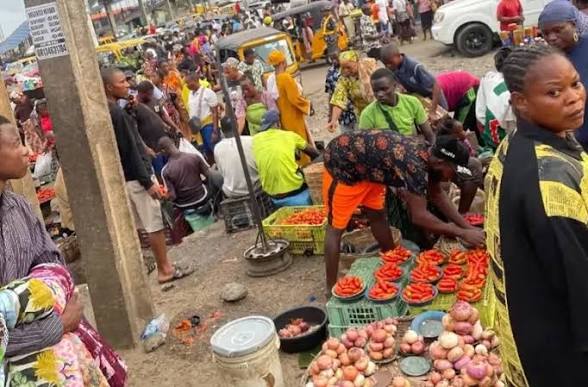
According to him, fresh pepper has recorded one of the sharpest price increases, with a basket now selling for about N45,000 compared with N15,000 previously.
He added that tatashe had risen by more than 100 per cent, while tomatoes increased from N52,000 to N80,000 per basket.
Isong said a 50kg bag of local rice increased by about 20.5 per cent within one month, from N92,946 to N112,000, while imported rice recorded a 21.1 per cent increase over the same period.
He added that onions also became more expensive, with a large bag now selling for between N45,000 and N50,000 against N35,000 previously.
The OTACCWA president noted that although some food items showed year-on-year declines, month-on-month prices continued to rise.
He cited beans, garri, onions, tomatoes and eggs as commodities recording lower annual prices but gradual monthly increases.
“The year-on-year decline gives the impression that prices are falling, but the monthly figures show they are gradually rising again.
“We are coming from a very high base in 2025, so the relief consumers are seeing is only relative,” he said.
Isong called for sustained investment in transport infrastructure, energy and agricultural logistics to reduce the cost of food across the country.
The National Bureau of Statistics (NBS), in its June Consumer Price Index and Inflation Report, said headline inflation eased slightly to 15.91 per cent in June from 15.93 per cent in May.
However, food inflation rose to 17.52 per cent in June from 16.96 per cent in May, reflecting continued pressure on household food budgets.
The bureau attributed the increase to higher prices of fresh pepper, tomatoes, crayfish, beef, garri, yam tubers, yam flour, cassava flour, cowpea, bananas and Irish potatoes.
It added that food and non-alcoholic beverages remained the largest contributor to headline inflation, accounting for 6.37 percentage points. (NAN)
A.I
July 22, 2026
Tags: OTACCWA