
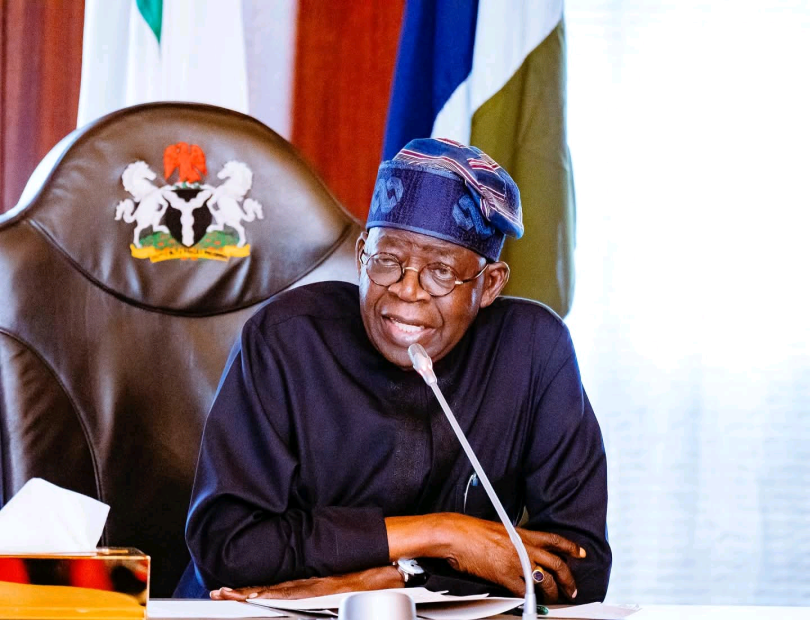
West African leaders have backed a new regional roadmap aimed at strengthening unity, improving security, and boosting economic cooperation, with President Bola Tinubu affirming that the plan will help build stronger support for the Economic Community of West African States (ECOWAS) that serves more than 400 million people.
Tinubu, represented by Vice President Kashim Shettima, gave Nigeria’s support for the ECOWAS Compact for the Future of Regional Integration on Sunday at the 69th Ordinary Session of the ECOWAS Authority of Heads of State and Government in Freetown, Sierra Leone.
FG bans import of poultry, cement, pharmaceuticals from non-ECOWAS countries
SERAP drags Tinubu govt to ECOWAS court over alleged mass phone-tapping rules
Shettima attends Guinea President’s inauguration, reaffirms Nigeria’s ECOWAS role
He said the Compact is important because it seeks to rebuild public trust, improve cooperation among member states and help the region respond better to security, economic and political challenges.
The endorsement places the Compact at the centre of ECOWAS efforts to strengthen cooperation as West Africa faces terrorism, political instability, climate pressure and economic difficulties. The document also sets out a long-term direction for regional integration and governance.
Tinubu said Nigeria is fully committed to the Compact because it reflects a shared determination to make regional integration more effective and relevant.
He said the Compact will “strengthen regional solidarity, and build a more resilient, prosperous, peaceful, and people-centred Community capable of meeting the aspirations of its over 400 million citizens.”
Nigeria also pledged to work with other member states to ensure the six strategic pillars of the Compact are fully implemented.
Tinubu urged West African leaders to step up joint efforts against insecurity and unconstitutional changes of government. He reaffirmed Nigeria’s support for constitutional rule, respect for human rights and the rule of law through existing ECOWAS frameworks.
He also repeated Nigeria’s commitment to establishing the regional Counter Terrorism Force and strengthening the ECOWAS Standby Force to improve intelligence sharing, joint security operations and preventive diplomacy.
Tinubu said stronger regional cooperation must also remove obstacles to trade and make it easier for people and goods to move within West Africa.
He called for better cross-border infrastructure, a Digital Single Market, stronger cooperation on artificial intelligence and cybersecurity, and policies that create jobs for young people.
He also restated Nigeria’s commitment to expanding opportunities for women, investing in education and skills, supporting youth entrepreneurship and giving young people a greater role in shaping the future of the region.
The meeting also addressed the future direction of ECOWAS. Chairman of the Authority and President of Sierra Leone, Julius Maada Bio, urged member states to adapt to changing realities while pursuing the goals of ECOWAS Vision 2050, which seeks a peaceful, integrated and prosperous West Africa.
The United Nations also backed the regional body’s efforts. UN Deputy Secretary-General Amina Mohammed reaffirmed support for ECOWAS initiatives against terrorism and urged the UN Security Council to support African-led solutions to the continent’s security challenges.
ECOWAS Commission President Omar Alieu Touray also reaffirmed the commitment to improving governance and accountability within the regional bloc.
Another major outcome of the summit was the signing of the Intergovernmental Agreement for the African Atlantic Gas Pipeline project, a cross-border energy initiative intended to strengthen regional energy cooperation and improve access to natural gas among participating countries.
Tinubu also used the meeting to urge African countries to jointly condemn recent xenophobic attacks in South Africa, saying intolerance against Africans has no place on the continent. He noted that Nigeria had already evacuated more than 1,490 of its citizens from South Africa in seven batches and was prepared to take further action if necessary.
The Compact, alongside the decisions taken at the summit, indicates ECOWAS’ effort to strengthen regional unity while tackling security threats, improving economic integration and preparing the region for future challenges.