
Opinion
By Ike Abonyi
“True progress cannot happen in Northern Nigeria when a tiny elite consumes the wealth of the region while the masses starve in ignorance.” – Mallam Aminu Kano
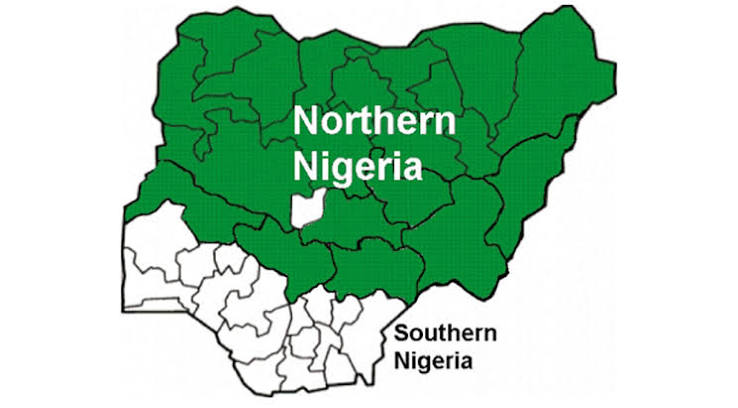
From whichever angle you stand to watch the political situation in Northern Nigeria today ahead of 2027, it is turning into a make-or-mar year for its survival as a homogeneous geopolitical region. Nigeria’s geopolitical North needs to embrace one painful truth in the future: that its past political strategy has failed the region woefully.
Examining the political behaviour of the North over the last 27 years, from 1999 to date, the region has failed glaringly in terms of human capital development and security of lives and property, which are the primary mandates of any government.
Few elites who have made money for themselves and their children serving in government may differ, but the reality shows everywhere with figures from international bodies.
If you deem yourself wise and operate a political system that fattens poverty amid a few rich men flourishing on public funds, nobody should tell you to change your sitting position.
If the United Nations World Food Programme (WFP) is warning that northern Nigeria is currently facing its worst hunger crisis in nearly a decade, that over 17 million people across nine northern states are experiencing crisis levels of hunger, with more than 35 million Nigerians at risk nationwide as we go through this severe lean season—with over 10,000 of our compatriots in Borno State alone slipping into “catastrophic” hunger conditions—the highest level of food insecurity. It should not just be a statistical heartbreak; it should be seen rightly as a profound national failure.
If global records show that over 140 million Nigerians are living in multidimensional poverty and the geopolitical North has nearly 70% of this number, and they are still trying the methods that produced such alarming statistics, then something is wrong.
The likes of Ali Modu Sheriff, who has a strong link to the cause of the major problem of the North today, ought to know this sad fact and be hiding in shame.
The few political elites pushing for the old order are selfish because they desire to continue growing the few rich even richer and the poor getting poorer and increasing in numbers.
Unless and until the region resolves to use the 2027 poll to start a people-oriented politics, they may kiss goodbye to the so-called Northern political myth.
If not, at the end of the day, the geopolitical North will gnash their teeth over squandered opportunities in the way and manner they handle the political advantages available to them.
One of their regrets when the time comes will be the political romance the region entered into in 2014 with President Bola Ahmed Tinubu. The Tinubu marriage with the North will be likened to what happens to a player who over-dribbles and ends up scoring an own goal.
In the Tinubu/North project, with the main masterminds Nasir El-Rufai and Abubakar Malami now thoroughly embattled, nobody needs further proof that it’s an own goal. Yes, as a result, the North became President for eight years, but how did the region fare under a Northern President? Reports show that more people entered multidimensional poverty under the watch of a Northern President.
The emotional torture the geopolitical North will experience if they fail to rise in 2027 and re-create their political relevance will be far-reaching.
Despite the vocal voice of some very few selfish Northern elites, the conversation ahead of 2027 is rapidly shifting from mere electoral calculations to a deeper, more fundamental reality: the political landscape of Northern Nigeria cannot rely on the old strategies of ethnic bloc voting or numerical triumphalism. If the North is to secure its future, command genuine respect in national alignments, and deliver prosperity to its people, it must embrace a few cold, hard political truths.
Since 1999, the North’s ultimate political card has been its massive demographic weight—the regional voting bloc that could single-handedly tilt a presidential election. But something happened in 2023 that shattered the illusion that numbers alone guarantee cohesive power.
The socioeconomic realities since then have made it clearer that demographics without development are a liability, not an asset. What better proof supports this assertion than that the region with the highest fertile farmland is facing acute hunger, with 17 million in danger of dying of no food to eat.
With a vast youth population facing severe unemployment, out-of-school children challenges, and persistent regional insecurity, the North cannot afford to view 2027 merely as a contest for central power. The region must realise that true political negotiation capital is built on food security, industrialisation, and regional economic self-reliance, not just the volume of PVCs registered.
Even at that, the concept of a monolithic, singular “North” that speaks with one voice politically is an outdated myth. The political divergence between the North-West, North-East, and the Middle Belt (North-Central) is wider than ever.
The Middle Belt continues to assert its distinct identity, driven by unresolved security concerns and historical grievances over marginalisation. The North-West and North-East are increasingly fragmented by hyper-local dynamics, shifting party alignments, and competing regional kingmakers—from Kano’s distinct political machinery to the emerging power centres in Borno and Kaduna.
Any attempt to force an artificial “Northern consensus” around a Northern candidate or agenda ahead of 2027 will fail. The truth the region must embrace is that pluralism is here to stay. Northern leaders must learn to negotiate through coalitions and mutual respect rather than assuming regional compliance.
Today’s North no longer has the Talakawa father, Aminu Kano, or Maitama Sule, Adamu Ciroma, Abubakar Rimi, Solomon Lar, Sunday Awoniyi, Paul Unongo, Joseph Taraki, Balarabe Musa, or Olusola Saraki, men who earned Northern and national respect for their selfless and forthright leadership—not on their wealth stolen from public office, as is the case with the current unprincipled leaders.
Unlike the fragmented North of today with its various ethnic and religious badges, none of these leaders was identified primarily by ethnicity—Fulani, Hausa, Kanuri, Tiv, Igala, or Igbara, etc.
The disastrous eight-year reign of President Muhammadu Buhari, despite the near-unanimous support he received from the region, glaringly proved one thing: power at the centre does not automatically translate to prosperity at home.
Except for Tinubu’s three-year calamitous reign, more Northerners fell into poverty under Buhari’s watch. The insecurity germinated under President Jonathan but bloomed under Buhari. By the end of Buhari’s tenure in 2023, the region remained the hardest hit by banditry, agricultural disruption, and poverty.
Buhari’s era established the hardest truth Northern political elites must face: that having a son of the soil in Aso Rock does not automatically translate to the development of the region. That is why ahead of 2027, the focus of the North must shift from who occupies the presidency to what structural concessions the region can secure.
The North needs a rigorous, non-partisan development agenda focused on reclaiming its vast agricultural belt from insecurity, restructuring federal resource allocations to empower subnational growth, and most importantly, investing heavily in human capital infrastructure.
That is why the Peter Obi and Rabiu Kwankwaso team should be attractive to the North because of their antecedents in human capital development, especially Obi’s consistency that the North is the future wealth base of Nigeria with its vast agricultural land.
Late Aminu Kano remains the most notable fighter for the poor, earning recognition as the father of the Talakawa, but his death in 1983 led to political elites capturing the space and weaponising the very essence Aminu Kano fought against. Instead, religion and ethnic sentiment grew stronger, further dividing the poor and making them vote against their economic interests.
Today, contemporary critics looking at the growing poverty and out-of-school children in the North point to the absence of a modern version of Aminu Kano. Perhaps the closest to Aminu Kano by his antecedents and love for the poor is Rabiu Kwankwaso, and he should be supported if the region is desirous of embracing a new political thinking that targets the emancipation of the poor.
The North’s path to relevance in 2027 lies in building bridgeheads, offering viable, competent leadership alternatives, and showing a readiness to partner on national stability rather than regional dominance.
Tinubu’s seeming political agenda of dismantling the geopolitical North has been adequately tested in the treatment being meted out to Nasir El Rufai and Abubakar Malami. The regime no longer looks at the yeoman role they played in bringing it to power but is interested in the benefits therein in caging them.
The bottom line of this conversation is that the 2027 election cycle will not be won by appealing to old regional sentiments. The North must allow itself to evolve from a strategy of “capturing power” to a strategy of “negotiating value”—and that begins by prioritising the economic survival and security of its people over elite political positioning.
If the North approaches 2027 with the old playbook—demanding the presidency simply because “we have the number” or out of reactive frustration—it will alienate necessary allies across the Niger. This election cycle is the last chance for the region’s leadership to pivot from a strategy of absolute control to one of sophisticated negotiation.
The goal must centre on securing specific, non-negotiable deliverables on regional development, infrastructure, and decentralised security in exchange for its massive electoral weight. The reality check for 2027, for me, is not the last chance for the North to survive; it is the last chance for the North to decide how it wants to coexist in the modern federation.
Relying on emotional, insular politics will lead to fragmentation and diminished influence. The alternative is to step into the arena as a pragmatic, clear-eyed economic partner who demands substance over sentiment. May God help us.
F.O
Tags: North must confront Political truth