
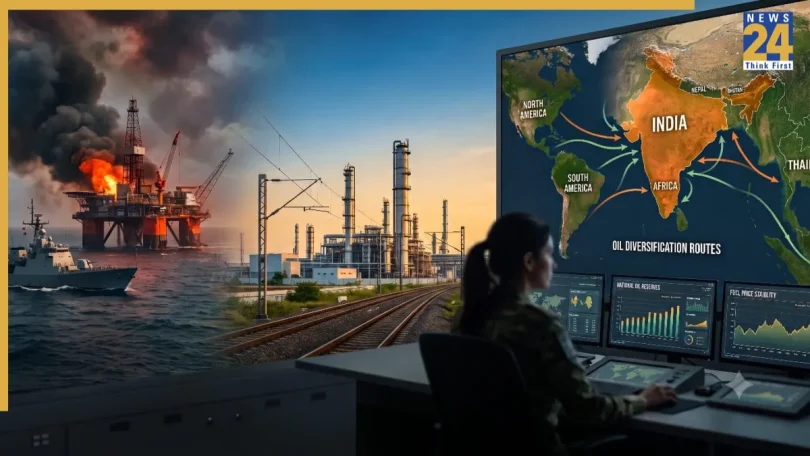
When war suddenly broke out in the Gulf, the world lost almost one-fifth of its oil and gas supply overnight. Panic spread everywhere. Across Asia, country after country scrambled to protect their economies. In those early days, India looked like one of the most vulnerable nations.
The worry was real. India buys most of its crude oil from outside, and more than half of its natural gas too. A large share of these imports comes from the Middle East — the very region that was now on fire. To make things worse, India’s oil reserves could last only about one week. That is dangerously low for a long crisis. On top of this, the rupee started slipping, and since oil is priced in dollars, every barrel became costlier.
Yet something surprising happened. By the time America and Iran paused their missile attacks, even for a short while, India stood much stronger than anyone had expected.
After the guns fell silent, experts looked at India’s economy and found very little damage. Fuel prices had risen, but only a little. Inflation stayed calm. The rupee found its feet again. Meanwhile, other Asian countries were struggling badly. Some saw energy prices shoot up sharply, some asked people to work from home to save fuel, and the Philippines even declared a national emergency. Most Indian families, however, barely felt the shock. So how did India manage this?
Part of the answer was plain luck. India guessed early that the fighting would not last too long, so it froze petrol and diesel prices for two full months. At the same time, rich countries opened their emergency oil reserves and poured huge quantities into the market. This extra supply stopped crude prices from rising too high. As The Economist noted, no one could have predicted that China would suddenly cut its oil imports, or that Donald Trump would step back exactly when he did. These unexpected turns quietly helped India.
But luck was only half the story. The bigger reason for frozen fuel prices was simple politics. The first missiles hit Iran just weeks before election campaigns began in four Indian states. One of them was West Bengal — a big prize that the BJP had wanted for years. Rising fuel prices could have angered voters and damaged the party’s chances. So even though petrol and diesel prices are supposed to move with the market, the government’s quiet hand kept them steady.
This calm came at a heavy price. Government-owned oil companies, which run most petrol pumps, lost a lot of money. After the government also cut fuel tax, it was losing around $1.5 billion every month. And then, right on cue, fuel prices were quietly raised just days after the BJP won the election it wanted so badly.
Indian fuel prices high even after global crude prices fell
Interestingly, India kept fuel prices high even after global crude prices fell. This helped the state oil companies recover their losses. And since nearly half of what we pay at the pump is tax, the government also filled its own treasury, creating a cushion for tougher times. Whether Modi would have taken the same decision without elections nearby, no one can say. But the choice worked. It stopped panic, controlled inflation, and kept people spending — which is important because consumer spending makes up about 60% of India’s economy.
Beyond luck and politics, India also handled the crisis with real skill. State-run refineries increased LPG cooking gas production by 30% in the very first month, so kitchens across the country kept running smoothly. When India’s special permission to buy Russian oil (despite American sanctions) was about to end, Indian diplomats quickly got it extended.
India’s real strength
The real strength, however, was built quietly over many years. As The Economist pointed out, India had slowly increased its oil suppliers from 27 countries to 41 in the last decade. Its old habit of staying friendly with rival nations paid off beautifully. India bought oil from America and Venezuela, and also took supplies from Russia and Iran whenever possible. It built clever refineries that can process many different types of crude. It electrified almost its entire 70,000-km railway network. And it reached its 20% ethanol-petrol blending target in 2025 — a full five years ahead of schedule.
By the time Iran and the US announced a ceasefire on 17 June, India had protected both its economy and its people remarkably well. But the story is not over. The Strait of Hormuz has closed again as fighting has restarted. Oil prices are slowly rising, and the rupee is once more under pressure.
India cannot keep spending heavily to soften every blow forever. The real lesson is simple. Luck cannot be controlled, but careful planning can. And the next storm is already gathering on the horizon.
(Girish Linganna is an award-winning science communicator and a Defence, Aerospace & Geopolitical Analyst. He is the Managing Director of ADD Engineering Components India Pvt. Ltd., a subsidiary of ADD Engineering GmbH, Germany.)
(Disclaimer: The views expressed above are the author’s own and do not reflect those of News24)
First published on: Jul 20, 2026 01:56 PM IST
Get Breaking News First and Latest Updates from India and around the world on News24. Follow News24 on Facebook, Twitter.
End of Article
Related Story


