
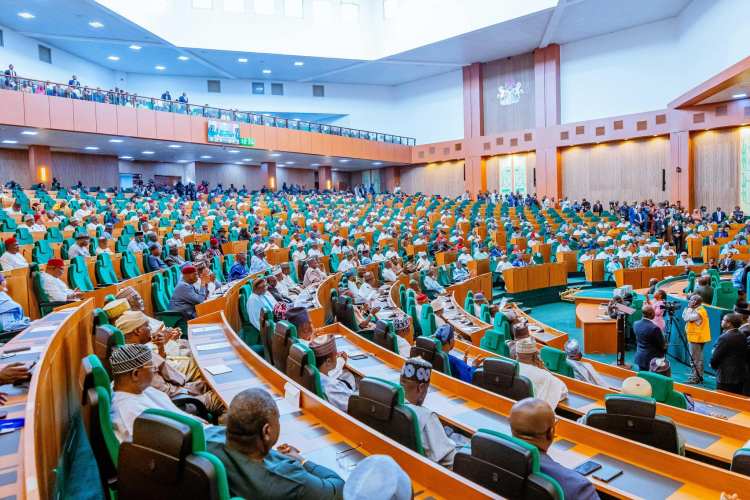
The House of Representatives has given its Committee on Solid Minerals Development four weeks to examine the legal status, funding and operations of the Mining Marshals after lawmakers questioned whether the security unit is working within the law.
The decision, taken on Wednesday in Abuja, also directs the committee to examine allegations of financial misconduct, including claims that more than N2 billion was found in the bank account of one of the unit’s State Commanders.
The outcome could shape how Nigeria protects mining sites and tackles illegal mining.
The review puts the focus on the structure of the Mining Marshals rather than only the allegations against individuals. Lawmakers want to know whether the unit has operated within its statutory powers, how its activities have been financed and whether changes are needed to strengthen the protection of the country’s mineral resources.
The resolution followed the adoption of a motion sponsored by Abdulmaleek Danga, who questioned how the Mining Marshals have carried out their duties since their inauguration in March 2024.
The lawmaker told the House that the unit was created through collaboration between the Federal Ministry of Solid Minerals Development and the Federal Ministry of Interior. It has more than 2,200 officers drawn from the Nigeria Security and Civil Defence Corps and was set up to fight illegal mining, protect mining sites, improve security in mining communities and protect government revenue.
Danga, however, told lawmakers that reports suggested the unit had failed to keep to those objectives.
He alleged that some legitimate mineral title holders had been wrongly arrested and harassed because some officers lacked sufficient knowledge of mining operations.
The motion also referred to claims of financial misconduct involving one of the State Commanders. Danga told the House that more than N2 billion was reportedly found in the officer’s bank account. He further alleged that the officer was transferred instead of facing prosecution or disciplinary action.
Lawmakers also questioned the source of funds used to purchase operational vehicles for the Mining Marshals. They want to know whether the spending followed the required budget approval process.
Following the resolution, the House directed its Committee on Solid Minerals Development to carry out a detailed review of the unit’s activities in the 36 states and the Federal Capital Territory.
The committee will examine whether the Mining Marshals have acted within their legal mandate. It will also investigate the allegation linked to the reported N2 billion and any similar cases involving the unit.
Another part of the assignment is to examine how operational vehicles and other activities have been funded. The lawmakers also asked the committee to review the legal foundation of the Mining Marshals, their organisational structure and compliance with existing laws.
At the end of the exercise, the committee will recommend a security framework that meets legal standards and can better protect Nigeria’s mining assets. Its report is due within four weeks.
Illegal mining has remained a major challenge in several mineral-producing states, including Zamfara, Niger, Nasarawa, Plateau and Kaduna. Criminal groups have continued to exploit mineral resources outside government control, reducing public revenue and contributing to insecurity in affected communities.
The Federal Government created the Mining Marshals in March 2024 as a specialised security unit to stop illegal mining and improve protection for licensed operators. The House review now places the unit itself under scrutiny, with lawmakers seeking answers on its legal authority, financial accountability and operational methods.
The findings of the committee could influence future decisions on how Nigeria secures its mining industry, manages public funds allocated to enforcement operations and strengthens confidence in the country’s solid minerals sector.