
By Seun Oloketuyi
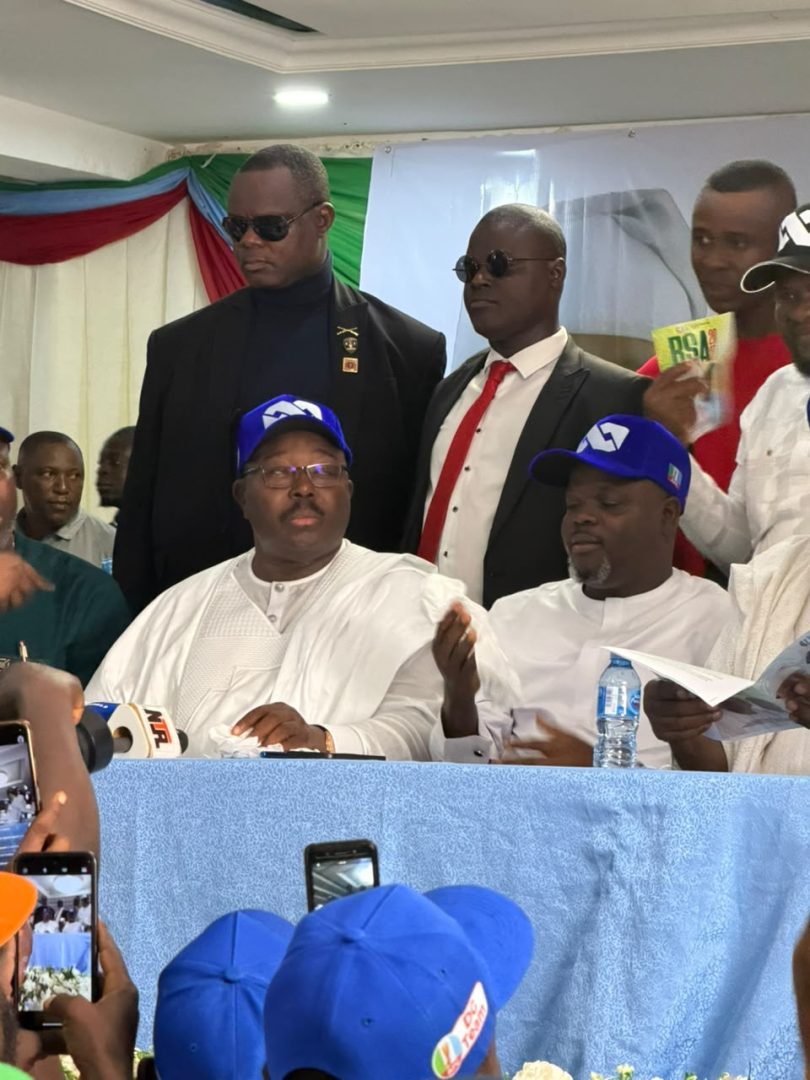
Every election season comes with a defining narrative. Sometimes it is a candidate’s track record. Sometimes it is the promise of change. At other times, it is the strategic combination of personalities assembled to lead a campaign. In Oyo State, one phrase has increasingly found its way into political conversations following the unveiling of Prince Adedeji as the running mate to Senator Sharafadeen Abiodun Alli in the forthcoming governorship election: “Buy One, Get Two.”
Ordinarily associated with the world of commerce, the phrase has been adopted by supporters of the APC ticket to convey what they believe is a partnership that offers more than the conventional relationship between a governor and deputy governor. In their view, the ticket combines two different leadership profiles—one rooted in years of political and legislative experience, the other in administration, professional exposure, and institutional engagement.
Whether that description ultimately convinces the electorate remains an open question. Yet one thing is undeniable: the choice of Prince Adedeji has shifted the conversation beyond the identity of the governorship candidate to the value of the partnership itself.
In modern Nigerian politics, the selection of a running mate is rarely a ceremonial exercise. It is one of the most consequential decisions a governorship candidate makes. Beyond satisfying constitutional requirements, it signals the type of government a candidate hopes to build. Political parties increasingly seek running mates who complement—not duplicate—the strengths of the principal candidate.
Senator Alli: Experience at the Centre of the Ticket
For Senator Sharafadeen Abiodun Alli, the governorship ambition represents another chapter in a political career that has spanned executive and legislative responsibilities. Over the years, Alli has occupied positions that exposed him to both policy formulation and governance. His tenure as Secretary to the State Government placed him at the heart of government coordination, while his service in the National Assembly has further strengthened his understanding of legislation, constituency representation, and federal-state relations.
Supporters argue that these experiences have equipped him with a practical understanding of the machinery of government. They point to his familiarity with public administration, political negotiation, and stakeholder management as qualities that distinguish him from many first-time contenders.
Another attribute frequently associated with Senator Alli is his connection with grassroots politics. Throughout his political career, he has maintained visibility across communities in Oyo State, building relationships with party leaders, community associations, artisans, professionals, market groups, and traditional institutions. To his supporters, this network reflects an understanding of local realities and the everyday concerns of ordinary residents.
Those who have followed Oyo politics over the years also note that Alli’s appeal has often extended beyond election periods. His political style has been described as one that prioritise consultation and consensus-building, qualities many believe are essential for governing a politically vibrant state such as Oyo. While critics, like those of every major political figure, may hold different views about his record, even many neutral observers acknowledge that Senator Alli brings considerable experience to the governorship contest.
Prince Adedeji: A Different Dimension
If Senator Alli represents political experience, Prince Adedeji is widely viewed as introducing a different dimension to the ticket. His emergence immediately attracted attention because it broadened discussions beyond politics alone. Rather than selecting another career politician, the APC chose someone whose profile is associated with administration, professional management, and institutional engagement.
Supporters believe this is where the “Buy One, Get Two” narrative derives much of its strength. They argue that governance in today’s Nigeria requires more than political popularity. It also demands administrative competence, strategic planning, efficient coordination of government institutions, and an appreciation of how public policy affects investment, economic development, education, healthcare, and infrastructure.
Prince Adedeji’s supporters contend that his professional background positions him to contribute in these areas. His royal heritage is also seen by admirers as an added advantage, particularly in a state where traditional institutions continue to play meaningful roles in community development, peacebuilding, and social cohesion.
For them, his emergence broadens the ticket’s appeal beyond conventional political structures, reaching professionals, young voters, and stakeholders who increasingly expect governance to be driven by competence as much as political experience.
Why Supporters Call It ‘Buy One, Get Two’
Political partnerships are often judged by whether the strengths of both candidates complement one another. In the case of the Alli–Adedeji ticket, supporters argue that this complementarity is exactly what distinguishes the alliance. They see Senator Alli providing political leadership, legislative experience, institutional memory, and an understanding of governance, while Prince Adedeji contributes administrative insight, organisational discipline, and a fresh perspective on public management.
The argument is not that one leader possesses all the answers, but that together they bring different competencies that could strengthen decision-making and improve the overall functioning of government. This is why the phrase “Buy One, Get Two” has resonated among many supporters. Rather than portraying the deputy governorship position as secondary, the narrative presents both men as individuals whose respective strengths could work in tandem if entrusted with the responsibility of governing the state.
The message is also strategic. Across Nigeria, voters increasingly pay attention not only to governorship candidates but also to those who may eventually serve as deputy governors. The expectation is that governance should be a collaborative effort rather than one centred solely on a single individual.
The Road Ahead
Political narratives can generate excitement, shape public perception, and influence campaign momentum. They can define how candidates are introduced to voters and frame the issues that dominate public debate.
Ultimately, however, elections are not decided by slogans alone. As campaigns gather pace across Oyo State, Senator Alli and Prince Adedeji will have to convince voters that the qualities attributed to them can be translated into practical solutions for the challenges confronting the state. Issues such as economic growth, infrastructure, education, healthcare, agriculture, youth employment, security, and social welfare will remain central to the campaign conversation.
The “Buy One, Get Two” description has undoubtedly become one of the most talked-about themes surrounding the APC ticket. Whether it remains a memorable political slogan or evolves into a message that resonates at the ballot box will depend on how effectively the candidates communicate their vision and how the electorate responds. For now, the partnership has achieved one notable objective: it has sparked a conversation about leadership, teamwork, and what Oyo State should expect from those seeking its highest offices.