
Featured
For millions of Nigerians, the first drops of rain no longer bring relief from the heat, they cause anxiety over impending annual flooding.
By Wealth Ufford
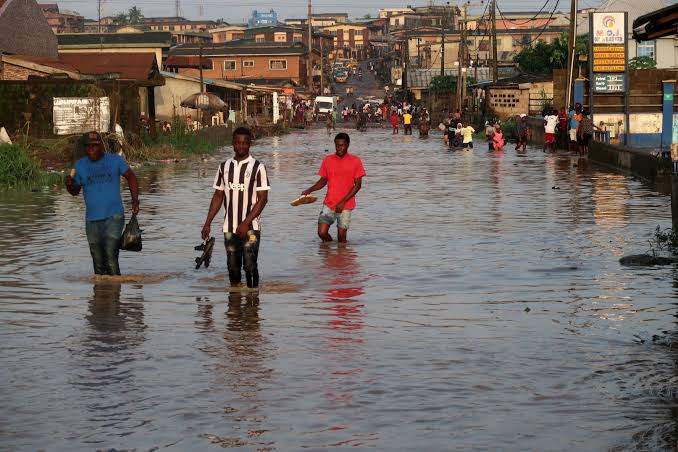
Within minutes of a heavy downpour, major roads become rivers, vehicles grind to a halt, homes are inundated and businesses shut their doors as floodwaters rise. In Lagos especially, residents in flood-prone communities have grown accustomed to the disruption, knowing that a few hours of intense rainfall can leave behind damaged property, lost income and lives thrown into disarray.
The effects of flooding have been evident across Lagos during this year’s rainy season. Following heavy rainfall in late June, several communities on both the mainland and the island were affected, leaving roads submerged, vehicles stranded and residents wading through floodwaters.
According to local media reports, Mushin, Gbagada, Surulere, Ijesha, Ilupeju, Shomolu, Ikeja, Ikorodu, Oshodi, Victoria Island and parts of Lekki were among the areas affected with floodwaters disrupting commercial and residential activities.
But beyond the floodwaters lies a more complex story. While heavy rainfall is often the immediate trigger, experts say that Nigeria’s growing flood crisis is being fuelled by a combination of multiple factors.
Long before many communities experience flooding, the Nigerian Meteorological Agency (NiMet) issues forecasts aimed at helping governments, emergency agencies and the public prepare for the rainy season.
And through its annual Seasonal Climate Prediction, the agency provides projections on rainfall patterns, temperature trends and areas likely to face an elevated risk of flooding. These forecasts are intended to support disaster preparedness, guide agricultural planning and enable authorities to take preventive measures before extreme weather occurs.
For the 2026 rainy season, NiMet warned that several parts of the country could experience above-normal rainfall and conditions favourable for flooding, urging federal, state and local authorities to strengthen mitigation efforts and encourage public compliance with safety advisories.
Despite these forecasts, flooding continues to claim lives, destroy property and disrupt economic activities in many communities. This has raised concerns among environmental experts about the gap between early warning and early action.
However, weather forecasts can only reduce disaster risks when there are matched by timely interventions, including the clearing of drainage channels, enforcement of environmental and building regulations, improved waste management and greater public awareness of flood risks.
Flooding is not a new phenomenon in Nigeria. For decades, communities have experienced seasonal flooding during the rainy season. What experts say is changing, however, is the intensity and frequency of extreme weather events.
According to experts, global temperatures rise due to climate change, the atmosphere is able to hold more moisture, increasing the likelihood of heavier and more intense rainfall. They are also of the view that while climate change does not cause every flood, it can make rainfall events more severe, raising the risk of flash floods, particularly in densely populated urban centres.
The climate experts also noted that Nigeria is already experiencing the effects of a changing climate through rising temperatures, shifting rainfall patterns and more frequent extreme weather events.
Another persistent challenge in Lagos and many other Nigerian cities is indiscriminate waste disposal. Plastic bottles, food containers, nylon bags and other refuse frequently find their way into gutters, canals and drainage channels, restricting the free flow of storm water during heavy rainfall.
When drains become clogged, water has nowhere to go. Instead, it spills onto roads, homes and businesses and prolongs flooding long after the rain has stopped. In many cases, what begins as a heavy downpour quickly escalates into a disaster because drainage systems are unable to cope with the volume of water.
This problem also extends beyond individual behaviour. Inadequate waste collection services in some communities, poor drainage maintenance and weak enforcement of environmental sanitation laws have all contributed to the recurring blockage of waterways.
Addressing Nigeria’s flood crisis requires more than responding after communities have been submerged. It also demands better waste management, regular clearing of drainage channels, stronger enforcement against illegal dumping and sustained public awareness on the environmental consequences of indiscriminate waste disposal.
Other factors like inadequate drainage infrastructure, illegal developments on drainage alignments and weak enforcement of physical planning regulations have compounded the problem over the years.
In many communities, buildings have been erected too close to canals or waterways, reducing their capacity to convey storm water safely.
For a low-lying coastal city like Lagos, these challenges are further complicated by its geography. High tides can slow the discharge of storm water into lagoons and the Atlantic Ocean, increasing the likelihood of flash floods during periods of prolonged or intense rainfall.
The impact of these overlapping factors extends far beyond flooded roads and disrupted traffic. Across Nigeria, flooding destroys homes and businesses, displaces families, disrupts transportation and damages critical infrastructure.
It also poses serious public health risks, as stagnant floodwater can contaminate water sources and create breeding grounds for disease-carrying mosquitoes. For many communities, the effects of flooding linger long after the floodwater has receded, leaving behind financial losses, health concerns and the difficult task of rebuilding lives and livelihoods.
In response to the recent flooding, the Lagos State Government announced additional measures to improve flood control. Governor Babajide Sanwo-Olu approved the immediate dredging and maintenance of 28 additional primary drainage channels across the state.
According to the Commissioner for the Environment and Water Resources, Tokunbo Wahab, the recent flash floods were caused by unusually intense rainfall that overwhelmed existing drainage systems in several communities, including Victoria Island, Lekki, Ikeja, Gbagada and Mushin. The government said that the dredging exercise was intended to improve storm water discharge and reduce the impact of future flooding.
The Federal Government has also outlined measures aimed at reducing the impact of flooding and other climate-related disasters. In June 2026, the National Economic Council, NEC, approved ₦83.2 billion for interventions under the Anticipatory Action Task Force, AATF, to proactively mitigate the impact of anticipated flooding and other climate-related emergencies across the country. The intervention is intended to strengthen preparedness and ensure that disaster response shifts from a reactive to a preventive approach.
The approval reflects growing recognition that addressing Nigeria’s flood crisis requires sustained investment in early warning systems, disaster preparedness and coordinated action across all levels of government.
However, the success of such initiatives will depend on effective implementation, adequate funding and sustained collaboration between government agencies, communities and residents.
As climate change continues to influence weather patterns, adaptation is becoming increasingly important. Strengthening urban planning, protecting wetlands that naturally absorb excess water, improving emergency preparedness and ensuring communities receive and act on weather advisories are among the measures experts say could reduce the impact of future floods.
For Nigeria, the challenge is no longer simply predicting when the rains will come. It is ensuring that warnings translate into action and that the next heavy downpour does not become another preventable disaster.
W.U
July 6, 2026
Tags: GOVERNOR Babajide Sanwo-Olu Nigerian Meteorological Agency (NiMet) Tokunbo Wahab Wealth Ufford