
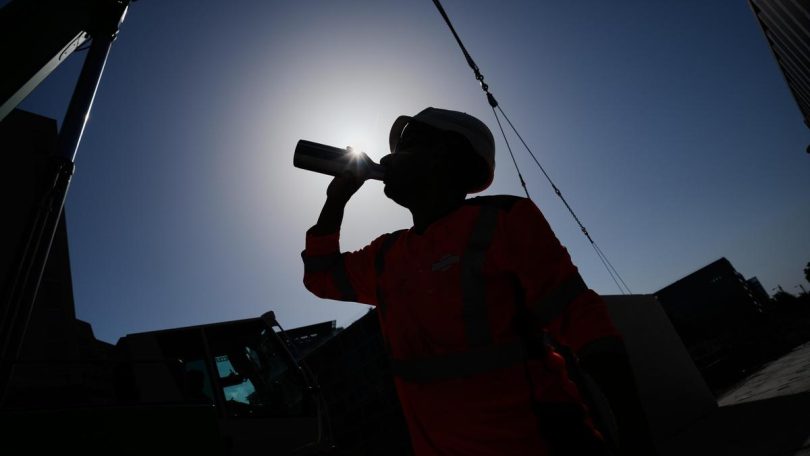
A curious dome hovering over Western Europe has thrown life out of gear across the region. From droughts to drownings, a severe heatwave driven by this increasingly frequent phenomenon has enveloped a dozen countries in its searing embrace. Here’s a look at what it means, how it came about and what’s on the cards in the coming days.
The story so far
In its second major heatwave in two months, Europe has been recording a steep increase in temperatures since mid-June. A code red (the highest-level warning) heat alert has been issued in parts of the United Kingdom, France, Spain, and Italy. Code orange and other regional heat warnings are in effect across parts of Germany, Switzerland, Luxembourg, Portugal, Belgium, the Netherlands, Poland, Hungary, Croatia, Bosnia and Herzegovina, Serbia, and Greece.
In desperate attempts to tackle this unprecedented crisis, countries have issued emergency safety protocols, imposed workplace restrictions, closed schools, and reduced working and studying hours. France has ordered public parks and gardens to stay open around the clock, opened canals and even fountains for public swimming. In parts of the U.K., water-spraying mist cannons and temporary splash pads have been set up in public places. Many tourist destinations, including the Louvre and the Eiffel Tower, have reduced visiting hours. Some cinema theatres in Switzerland opened doors for the public to relax in their air-conditioned spaces.
Deaths and disruptions
Despite all this, over 60 heatwave-related deaths have been reported across the continent.

About 40 people, mostly youngsters, drowned since June 18, announced French Prime Minister Sebastien Lecornu on Tuesday. For respite from the soaring mercury, they had been swimming in unsupervised areas, he said. As per Reuters, three senior citizens died from heat-related causes near Bordeaux, while two children, aged two and four, were found dead inside a sizzling car. In Spain, a 90-year-old woman and a 68-year-old man reportedly died of heatstroke. Several others have been hospitalised over heat related ailments.

The blistering spell has left few aspects of public life untouched. Amid wildfire risks and tropical nights, experts also warn of possible drought conditions.
On Wednesday (June 24), a heat-related transformer failure triggered a major power outage in France, leaving about 68,000 households without electricity.
Last week, authorities restricted alcohol consumption at events associated with the country’s annual music festival in areas under red heatwave alert.

People cool off in the Trocadero Fountain near to the Eiffel Tower as temperatures rise during a heatwave affecting a large part of the country, in Paris, France
| Photo Credit:
Reuters
Amid several other programmes, the Paris Fashion Week schedule was altered, outdoor sporting events in the Netherlands were cancelled or modified, and Florence’s Uffizi Galleries temporarily halted ticket sales after an air-conditioning failure.
Record-breaking temperatures
As per Météo-France, France recorded its hottest days since 1947 on Tuesday and Wednesday with a nationwide thermal indicator average of around 29.9°C.
In France and Spain, temperatures have tiptoed between 43°C and 44°C. Slightly above 36°C in the United Kingdom; 39°C to 41°C in Italy; and 35°C to 38°C in Germany, Belgium, and the Netherlands.
Spain’s weather agency, AEMET, also recorded the country’s highest daily average temperatures in June since 1950 on Monday (28.08°C) and Tuesday (28.17°C).

Why is this happening?
“This extreme heatwave has been caused by a ‘heat dome effect’ that occurs when a high-pressure system traps hot air in the upper atmosphere,” says Krishna Raj, Professor at Institute of Social and Economic Change, Bengaluru. A heat dome is a strong, persistent zone of high-pressure system in the upper atmosphere that parks over a region like a lid on a pot.
It is driven by an ‘omega block’ (a stuck, Ω-shaped wind pattern) that traps the air inside, preventing ventilation. This increases the heat under the blanket, making it sultry for those inside. The trapped heat does not let temperatures cool down even at night. Unlike a typical moving heatwave, the stagnant air inside the dome can trap pollutants, reducing air quality.

Climate change and atmospheric phenomena like La Nina or El Nino cycles, could worsen the effects.
What’s on the horizon?
In the coming days, the hot blanket is expected to envelope parts of Eastern Europe also.
Poland’s weather service has issued high-level heat warnings for the western parts of the country from Thursday to Saturday. Hungary and Croatia are also bracing up for similar conditions.

A man takes shelter in the shade of a street board to protect himself from the sun in Istanbul, Turkey, on June 24, 2026
| Photo Credit:
AP
France may continue to swelter through the weekend, with temperatures forecast to hop around 40°C to 42°C (104°F-107.6°F), Météo-France said on Wednesday. Germany expects a similar suit, even as countries like Switzerland, Austria, and the Benelux region gets ready to bare the heat’s brunt into Monday.
The U.K’.s Met Office, however, hopes their situation to ease by Friday.
Climate change concerns
With Europe warming at more than twice the global average, the World Meteorological Organization has warned that the continent faces a growing risk of prolonged heat episodes.
“Weather patterns in Europe are shifting rapidly. Scientists are grappling with these sudden changes,” says Professor Raj. As human-induced climate change gathers pace, what was once an occasional anomaly is now occurring with increasing frequency. “The Global North has significantly contributed to climate change, and this heatwave should be looked at as the right time to set its record straight on low carbon emissions.”
Addressing an event during London Climate Action Week on Tuesday, U.N. Secretary-General António Guterres remarked, “London is cooking.”
He urged the world to intensify efforts to limit global warming. “A climate crisis is pushing us towards higher temperatures and closer to catastrophic tipping points, and an energy crisis is exposing the folly of a world hooked on hydrocarbons,” he said. “On the surface, these crises may seem separate, but they share the same destructive origin: fossil fuels.”