
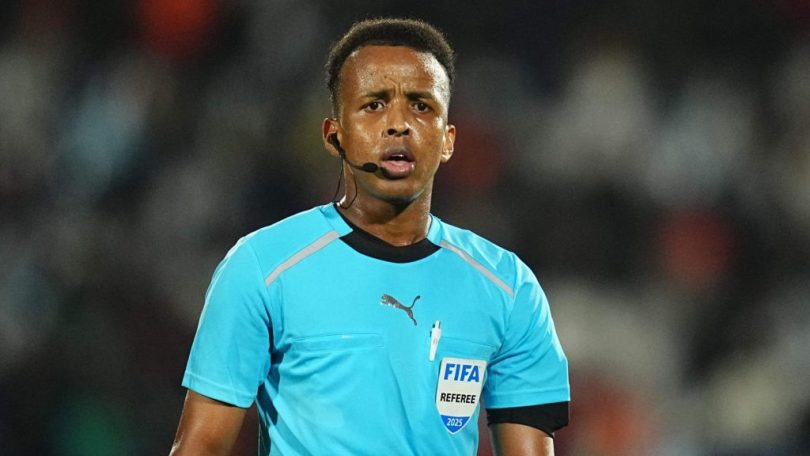
Somali referee Omar Abdulkadir Artan will miss the World Cup after the United States refused him entry over security concerns linked to alleged “terror” associations.
Artan, who was named Africa’s men’s referee of the year in 2025, has denied any connection with terror groups. He had been expected to make history as the first Somali referee to officiate at the World Cup.
The tournament is being hosted by the United States, Mexico and Canada, but Artan’s role depended on him being allowed into the US for training and match preparation.
US Customs and Border Protection said a Somali national arrived at Miami International Airport from Istanbul on Saturday but was denied entry after further checks. The agency did not name Artan in its statement.
A White House official later said US border officers found information that raised national security concerns. The official claimed the information included links to suspected members of terror organisations.
The official said this made him inadmissible under the Immigration and Nationality Act. The Trump administration also said it would not allow anyone considered a security threat to enter the country.
Artan has rejected the allegation. Reports said he had a valid visa before travelling to the United States.
FIFA later confirmed that Artan would not be able to take part in the tournament. The football body said it does not control immigration decisions made by host countries and had been informed that Artan’s status would not be changed for now.
This means he will not be able to join the referees’ training camp or officiate at the competition.
The decision has caused disappointment in Somalia, where Artan’s selection had been seen as a major moment for the country’s football history.
Somalia’s Ministry of Sports said it was deeply saddened by the development. It said officials had tried to work with the United States and FIFA to allow Artan to enter the country, but the efforts did not succeed.
The ministry described Artan’s international rise as a source of pride for Somalia.
The Somali Football Federation also expressed sadness, saying Artan’s appointment was an important achievement for the country. The federation said his selection followed years of hard work, professionalism and commitment.
It also said it had not received a full official explanation for why he was denied entry. The federation added that it was still working with FIFA and other authorities to understand what happened.
A senior Somali official told Reuters that diplomatic talks were still ongoing in an effort to get Artan into the United States, but no further details were given.
Artan later spoke at Istanbul Airport before returning to Somalia. He thanked FIFA, CAF and the Somali people for their support. He said he was in good spirits despite the setback.
It is not yet clear which World Cup matches Artan would have handled. FIFA usually announces referee appointments only a few days before each match.
The case has also drawn attention because of the Trump administration’s strict immigration policy. The US imposed a broad travel ban last year on citizens from 12 countries, including Somalia. That policy had already raised concerns before the tournament.
Rodney Scott, the CBP commissioner, defended the decision. He said travellers are often refused entry when they fail to meet US entry rules or are judged to pose a threat.
Scott said a person’s job or public profile would not change how the law is applied. He said the US would not admit someone simply because they were expected to referee a match.
The incident has sparked debate across the football world. Some observers say the US has the right to protect its borders, especially during a major global event. Others say FIFA and host countries should have resolved immigration and security checks earlier to avoid embarrassing officials selected for the World Cup.
For Somalia, the decision is a painful blow. Artan’s appearance at the tournament would have been a symbolic moment for Somali football and African refereeing.
Instead, his World Cup dream has been stopped before the first whistle, with unanswered questions still surrounding the US decision.