
Politics
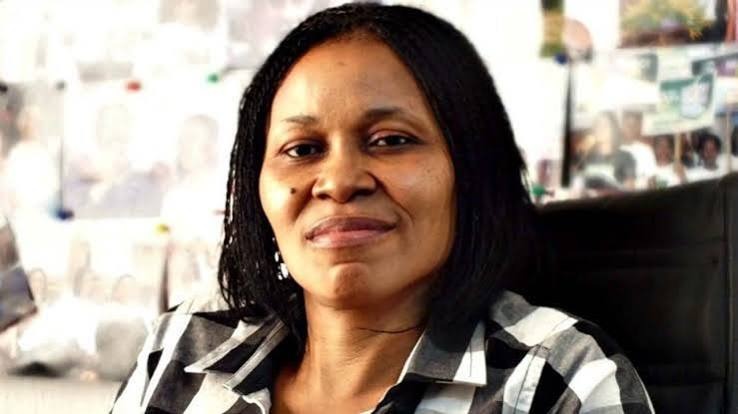
HUMAN rights activist, Dr Joe Okei-Odumakin, has described Nigeria’s sustenance of civilian rule for 27 years as a notable achievement.
Okei-Odumakin made the observation in an interview with the News Agency of Nigeria (NAN) on Friday as Nigeria celebrates Democracy Day.
She noted that the country had recorded multiple transfers of power and sustained key democratic institutions in its uninterrupted civilian administration since 1999.
“The restoration of democratic governance after years of military dictatorship remains a significant achievement.
“The fact that Nigeria has sustained uninterrupted civilian administration for over 27 years, witnessed multiple transfers of power between political parties, and maintained democratic institutions is evidence of democratic progress,” she said.
Okei-Odumakin, however, said that the country’s democracy was still weak and required urgent reforms for consolidation.
She said that democratic consolidation was more than periodic elections and entailed good governance, accountability and improved living standards.
According to her, democracy must translate into good governance, accountability, respect for human rights, rule of law, social justice, and improved living conditions for citizens.
She said that many of the ideals that defined the June 12, 1993, struggle remained unrealised.
According to her, poverty, unemployment, insecurity, corruption, and electoral irregularities have continued to erode public trust.
Okei-Odumakin also raised concerns about shrinking civic space, alleging harassment of journalists and rights activists, as well as restriction on freedom of expression.
“Democracy thrives when citizens are free to express their opinions, organise peacefully and hold their leaders accountable without fear of intimidation.
“Any attempt to weaken these freedoms poses a threat to democratic consolidation,” she said.
Okei-Odumakin also said that Nigeria had yet to achieve electoral integrity, adding that vote-buying, electoral violence and influence of money on politics were still being observed.
“Until elections truly reflect free and unhindered choice of the people, democracy will remain a work in progress,” she said.
To strengthen democracy in Nigeria, she called for comprehensive electoral reforms to ensure credibility and public confidence in the electoral process.
She also advocated strengthening institutions such as the judiciary and anti-corruption agencies, as well as shielding them from political interference.
She said: “Government at all levels must demonstrate greater commitment to accountability, transparency and responsible governance.”
The activist emphasised the need for expanded civic education to promote active citizen participation beyond election cycles.
According to her, democracy cannot survive when citizens are reduced to mere voters every four years.
“Nigerians must be empowered to engage government and participate in policy-making processes.”
The right activist also called for increased inclusion of youths and women in leadership and governance.
Reflecting on the significance of June 12, Okei-Odumakin said the struggle symbolised by the late Chief M.K.O. Abiola, the acclaimed winner of the 1993 Presidential Election, was more than voting rights.
“It was about building a Nigeria where freedom, justice, equality, and prosperity are guaranteed for all.
“The best way to honour the heroes of June 12 is to continue the struggle for a democracy that delivers tangible benefits to ordinary Nigerians.”
She said that the endurance of Nigeria’s democracy alone was insufficient.
“The challenge before us is to deepen and consolidate democracy in a manner that improves governance, protects human rights, strengthens institutions, and fulfils the aspirations of the Nigerian people,” she said.
A non-governmental organisation, Yiaga Africa, and the Employers Association for Private Employment Agencies of Nigeria (EAPEAN) also called for reforms to strengthen democratic institutions.
They said that such reforms should also improve electoral credibility and promote greater citizen participation in governance.
The Executive Director of Yiaga Africa, Mr Samson Itodo, said that Nigeria’s democracy must be strengthened through credible elections, accountable leadership and active citizen engagement.
Itodo said that June 12 was more than a date on the calendar, describing it as a reminder that Nigeria’s democracy was won through sacrifice.
According to him, democracy survives only when citizens can organise freely, vote without fear and hold those in power accountable.
He said that while Nigeria had recorded 27 years of uninterrupted civil rule, including regular elections and a historic peaceful transfer of presidential power, democratic consolidation remained incomplete.
Itodo said that elections in Nigeria were still challenged by logistics failures, violence and lack of accountability for electoral offenders.
He said that insecurity, poverty and weak public service delivery had continued to erode public confidence in democracy, raising concerns about its ability to improve the daily lives of Nigerians.
“For Yiaga Africa, Democracy Day is not just a celebration; it is a call to renegotiate a new social compact that protects rights, rebuilds trust in institutions and puts citizens at the centre of decision-making,’’ he said.
Itodo said that strengthening Nigeria’s democracy would require credible elections, truly independent institutions and enforceable consequences for abuse of public trust alongside guarantee for citizens’ freedom.
“It must guarantee the freedom of citizens, especially young people, women and persons with disabilities to organise, protest, participate and shape public policy without fear,’’ he said.
He urged Nigerians to be more engaged beyond voting during elections.
“The next chapter depends on whether citizens are empowered, not just to cast ballots, but to co-create the democratic future they deserve,’’ he said.
Mr Jide Afolabi, the Secretary of EAPEAN, said that Nigeria had made significant progress in sustaining democratic governance since its return to civilian rule in 1999.
Afolabi said that the uninterrupted democracy was a major achievement considering Nigeria’s past experiences with military rule.
He noted that the country had conducted several general elections and witnessed successive transitions.
According to Afolabi, the peaceful transfer of power from a ruling party to an opposition party in 2015 stood out as a landmark in Nigeria’s democratic development.
He noted that democratic institutions, including the legislature, judiciary, electoral bodies, media and civil society organisations, had become more established and continued to play important roles in governance and accountability.
He said that Nigerians enjoyed greater freedoms of expression, association and political participation than during the military era.
The EAPEAN secretary, however, said that Nigeria’s democracy remained a work in progress, noting that democratic consolidation extended beyond regular elections and continuity of civilian rule.
He said true democratic consolidation would require strong institutions, adherence to the rule of law, transparency, accountability and a political culture that would place public interest above personal or partisan interests.
Afolabi identified electoral malpractice, vote-buying, political violence, weak internal democracy within political parties, and influence of money in politics as factors undermining democracy in the country.
He also cited corruption, insecurity and public distrust of government institutions as challenges affecting citizens’ confidence in the democratic process.
According to him, many Nigerians are yet to experience the full benefits of democracy through improved living standards, quality public services and economic opportunities.
To strengthen democratic consolidation, he called for sustained electoral reforms to enhance election transparency, credibility and fairness.
Afolabi urged political parties to embrace internal democracy, while advocating greater independence and effectiveness for the judiciary, legislature, security agencies and anti-corruption institutions.
The EAPEAN secretary urged increased civic education to encourage active citizenship and informed political participation, adding that elected officers should be held accountable beyond election periods.
He advocated greater inclusion of women, youths, persons with disabilities and other underrepresented groups in governance and leadership.
Afolabi also called for intensified efforts to address insecurity, unemployment and poverty.
According to him, democracy will thrive best when citizens feel secure and confident that governance is improving the quality of their lives.
“As Nigeria marks another Democracy Day, there is every reason to celebrate the country’s democratic experiment while reflecting on the work that remains to be done,’’ he said.
Afolabi said that the ultimate measure of democratic consolidation would be the ability of democratic institutions to deliver justice, accountability, development and prosperity to the people. (NAN)
F.O
Tags: democracy Okei Odumaki YIAGA Africa