
Defence, Security
THE Nigerian Army has is spearheading a radical overhaul to counter complex, asymmetric, and cyber-based security threats effectively.
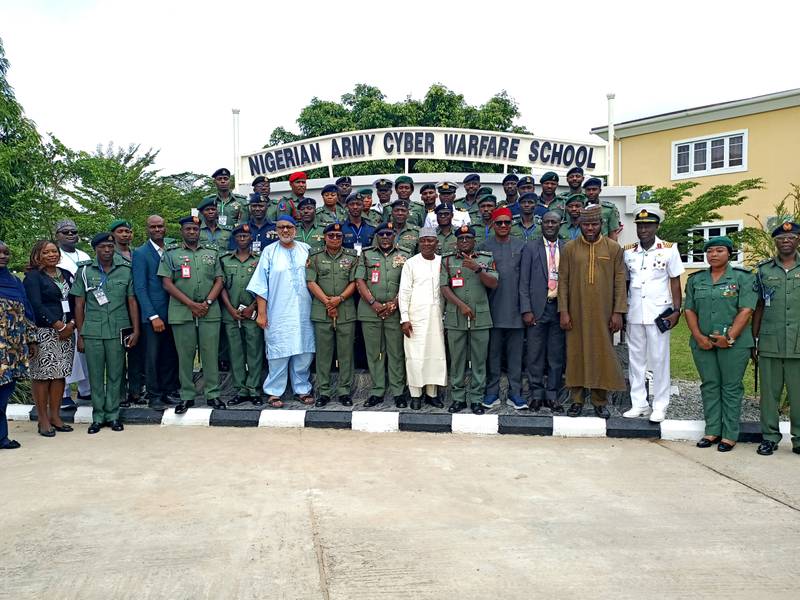
The Chief of Army Staff (COAS), Lt.-Gen. Waidi Shaibu, stated this at the 2026 Nigerian Army Cyber Warfare School Seminar held on Tuesday in Abuja.
Shaibu, represented by the Deputy Chief of Special Services and Programmes, Maj.-Gen. Jeremiah Manjang, described the seminar’s theme as timely and relevant to contemporary national security realities.
He said the cyberspace has evolved into a strategic domain where state and non-state actors operated with unprecedented speed, creating security threats that transcended geographical boundaries and conventional military operations.
According to him, hostile actors no longer require physical presence to disrupt critical infrastructure, compromise sensitive information, manipulate public opinion or undermine national security through anonymous cyber attacks.
He said terrorism, insurgency, banditry, kidnapping, separatist agitations, organised crime, misinformation and disinformation were increasingly enabled, coordinated and amplified through digital platforms and cyber networks across Nigeria.
The COAS said terrorist and criminal groups now exploited cyberspace for recruitment, propaganda, fundraising, intelligence gathering, attack coordination and concealment of illicit financial transactions, requiring proactive national responses.
He stressed the need to strengthen cyber intelligence capabilities through artificial intelligence, machine learning and advanced data analytics to improve early warning, threat detection and predictive security analysis nationwide.
Shaibu also called for stronger inter-agency collaboration, saying effective cybersecurity required government institutions, military, law enforcement agencies, academia and private sector stakeholders to develop robust indigenous response frameworks.
He emphasised continuous investment in indigenous cyber capabilities, research, technological innovation and human capacity development to safeguard Nigeria’s digital sovereignty against emerging cyber threats and future security challenges.
According to him, integrating cyber capabilities with conventional military operations will improve surveillance, intelligence fusion, geospatial analysis, command-and-control systems, situational awareness and overall mission effectiveness across operational theatres.
He said the Nigerian Army remained committed to strengthening cyber infrastructure, specialised training, technological innovation and strategic partnerships as part of its transformation agenda for the digital age.
Earlier, the Commandant of the Nigerian Army Cyber Warfare School, Brig.-Gen. Jacob Bawa, said the seminar aimed to advance cybersecurity awareness, strengthen cyber resilience and promote national security through collaboration.
Bawa said increasing dependence on digital technologies had exposed critical infrastructure, including telecommunications, power, financial systems and government databases, to cybercriminals, terrorists and hostile state actors worldwide.
He said the school was established as a centre of excellence for cyber warfare training, education and research, providing a platform for professional engagement among cybersecurity practitioners and policymakers.
According to him, participants will examine cyber resilience, threat intelligence, incident response, cyber warfare and emerging technologies to generate practical recommendations for strengthening Nigeria’s cybersecurity ecosystem.
A Global Cybersecurity Resource, Mr Abdulhakeem Ajijola, warned that national security now depends on protecting digital systems, stressing that artificial intelligence increasingly shapes military decisions, command structures and the protection of critical infrastructure.
Ajijola said Nigeria must build sovereign cyber capabilities, cautioning that dependence on foreign-controlled software, platforms and artificial intelligence could undermine national resilience, operational continuity and independent decision-making during crises.
He urged military commanders to prioritise AI governance, indigenous innovation and resilient digital infrastructure, stressing that technology should strengthen national sovereignty, while accountability for operational decisions must always remain with human commanders. (NAN)
W.U
June 30, 2026
Tags: Lt.-Gen. Waidi Shaibu