
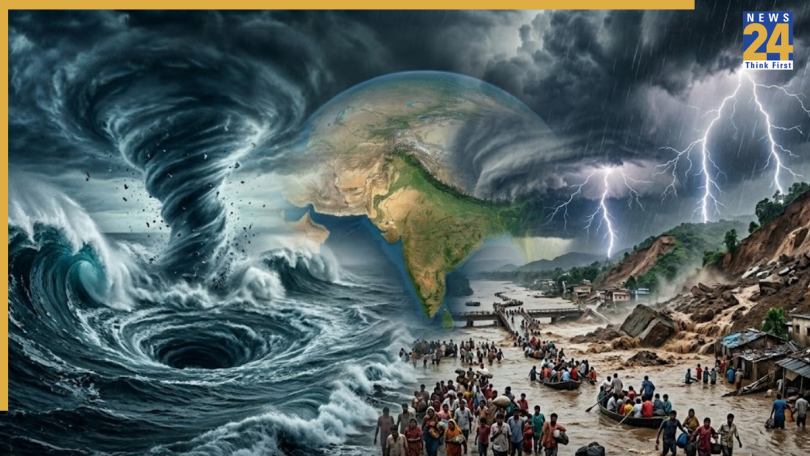
A large area of unusually cold water in the North Atlantic Ocean, known as the “Cold Blob,” is rapidly influencing weather patterns in India, Pakistan, and other parts of South Asia. According to a new study highlighted by Live Science, this climate shift could threaten the livelihoods and food security of more than one billion people living across the region.
The Indian summer monsoon normally runs from June to September and is driven by temperature differences between the warm northern Indian Ocean and cooler waters near the equator. Scientists believe this newly identified ocean connection could help improve weather forecasting and understanding of climate events in South Asia.
Major Change in Monsoon Behavior Since 1999
Climate researchers have found a significant shift in monsoon patterns since 1999. The study shows that northwestern India and parts of Pakistan are now receiving around 25% more heavy rainfall during the monsoon season than before.
At the same time, rainfall across the fertile Indo-Gangetic Plain has declined by nearly 4%. According to climate scientist Mahendra Nimmakanti from the Indian Institute of Science, this change is creating serious challenges for farmers because crops and soils in the region have adapted to traditional rainfall patterns over thousands of years.
Global Warming Slowing Down the AMOC System
Experts link these unusual monsoon changes to shifts in the Atlantic Meridional Overturning Circulation (AMOC), a vast network of ocean currents that helps regulate global climate and heat distribution across the Northern Hemisphere.
Due to global warming, the AMOC is slowing down, causing waters southeast of Greenland to become colder. This cooling area is known as the “Cold Blob.”
Study co-author Matthew Huber explained that the Cold Blob is strengthening jet stream winds over Eurasia and creating a blocking pressure system near Russia’s Ural Mountains. This system is redirecting moisture-rich winds toward northwestern India and Pakistan, leading to increased rainfall in those regions.
Growing Challenge for Traditional Farming
A large population in India and neighboring countries depends heavily on agriculture. Regions in northwestern India and Pakistan have traditionally been suited to low-rainfall crops, but excessive rainfall is now damaging harvests.
Meanwhile, the Indo-Gangetic Plain, one of South Asia’s most important food-producing regions, is facing reduced rainfall, raising concerns about lower crop yields and food production.
The study, published in the AGU Advances journal, helps address gaps in existing climate models that struggled to fully capture ocean temperature changes. Researchers believe the findings could improve forecasts of floods, droughts, and other extreme weather events in the future.
Key Impacts of the Climate Shift
1. Serious Risk for Farmers
Traditional farming systems are being disrupted as rainfall patterns change rapidly across India and Pakistan.
2. Monsoon Winds Taking a New Route
A pressure system near the Ural Mountains is pushing moisture-laden monsoon winds toward northwestern regions instead of the usual plains.
3. Direct Impact of Global Warming
The Cold Blob highlights how climate change is affecting ocean temperatures and creating weather imbalances across the world.
4. More Accurate Weather Forecasts
Scientists believe this discovery will help improve weather prediction models for South Asia.
5. Threat to Food Security
Declining rainfall in the Indo-Gangetic Plain could reduce grain production and affect economic stability across the region.
First published on: Jun 21, 2026 09:44 AM IST
Get Breaking News First and Latest Updates from India and around the world on News24. Follow News24 on Facebook, Twitter.
End of Article
Related Story


