
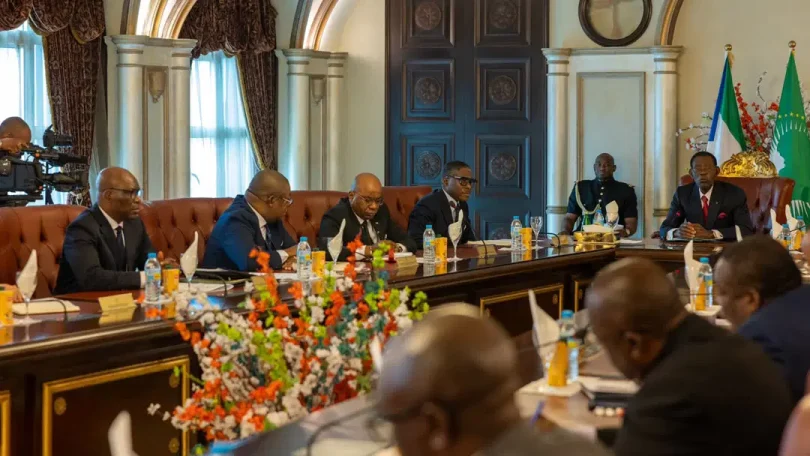
The Vice President, who is the son of President Teodoro Obiang Nguema Mbasogo, said in a post on X that the federal executive council stepped down due to “insufficient” delivery on government goals.
“The rule is simple: public responsibility has to come with results,” Mangue wrote. “The state puts significant human, material and financial resources at the disposal of the government to address the needs of the population. So the degree of execution achieved is clearly insufficient in relation to the expectations and commitments undertaken.”
He did not specify which targets the cabinet failed to meet.
Both President Obiang and Vice President Mangue will remain in office. The president appointed the outgoing government in 2024, with Manuel Osa Nsue Nsua as prime minister. Nsua, who previously led the National Bank of Equatorial Guinea for over a decade, was tasked with implementing economic reforms aimed at aiding the country’s poorest populations.
Two years later, Equatorial Guinea’s economy remains in a prolonged slowdown driven by declining oil production, reduced investment and external shocks. The country relies heavily on petroleum, with oil and gas accounting for most exports and government revenue.
The ruling Democratic Party of Equatorial Guinea (PDGE) said President Obiang was dissatisfied with the cabinet’s management, particularly its failure to implement policies to diversify the economy. The president cited the agricultural sector as a key area where reliance on imports could be reduced through local production.
Obiang has ruled Equatorial Guinea since 1979, making him the world’s longest-serving head of state. A new government is expected to be appointed.