
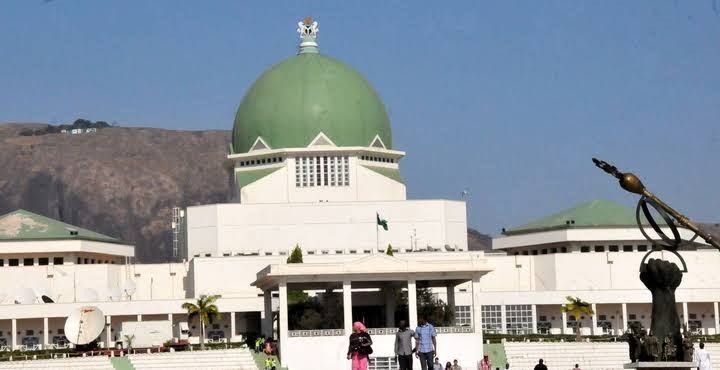
The Federal High Court in Lagos has declared the National Assembly’s N110 billion expenditure on vehicles and support allowances for lawmakers unlawful, ruling that the spending violated procurement regulations, constitutional provisions, and public trust obligations.
In a judgment delivered by Justice Yellim Bogoro on May 6, 2026, the court held that the planned expenditure of N40 billion for 465 vehicles and N70 billion in support allowances for newly elected lawmakers breached the Public Procurement Act, the Code of Conduct for Public Officers, and constitutional requirements governing public office.
The case, filed by the Socio-Economic Rights and Accountability Project (SERAP) in August 2023, challenged the legality of the spending approved by the National Assembly amid worsening economic hardship across Nigeria.
Justice Bogoro directed the leadership of the National Assembly, including Senate President Godswill Akpabio and House of Representatives Speaker Tajudeen Abbas, to ensure that all future spending and procurement processes strictly comply with due process requirements.
The court further ordered that future expenditures be guided by principles of transparency, accountability, and value for money.
In her judgment, Justice Bogoro described the expenditure as arbitrary and disproportionate, citing the absence of evidence showing compliance with procurement procedures.
“Looking at the magnitude of the expenditure, coupled with the absence of demonstrable due process, leads me to conclude that the procurement is arbitrary, disproportionate and inconsistent with statutory procurement standards,” the judge ruled.
The court also found that lawmakers stood to benefit directly from the expenditure they approved, describing the arrangement as a case of self-dealing and conflict of interest.
According to the judgment, allocating N110 billion for lawmakers’ benefits at a time of widespread economic hardship reflected a failure to prioritize the national interest and undermined the fiduciary duty public officials owe Nigerians.
The National Assembly had argued that the court lacked jurisdiction to interfere with legislative spending, citing the doctrine of separation of powers.
However, Justice Bogoro rejected the argument, stating that legislative autonomy does not shield public officials from judicial scrutiny when allegations of illegality arise.
“The doctrine of separation of powers does not operate as a shield for illegality,” the court held.
The judge emphasized that courts have a constitutional duty to intervene whenever legislative actions violate constitutional or statutory provisions.
The court also dismissed objections to SERAP’s legal standing, affirming that public-interest organizations can institute lawsuits aimed at protecting transparency and accountability in governance.
Justice Bogoro held that the issues raised in the suit were matters of significant public concern and therefore justified judicial intervention.
She further ruled that the case was not academic despite arguments that the funds had already been spent, noting that courts can still grant declaratory reliefs after the completion of disputed actions.
After reviewing evidence presented by both parties, the court found that the National Assembly failed to provide credible proof of compliance with procurement procedures, including competitive bidding and value-for-money assessments.
Justice Bogoro held that the expenditure violated Section 57(4) of the Public Procurement Act 2007, which mandates transparency, accountability, and due process in public procurement.
The court also found the spending inconsistent with the Code of Conduct for Public Officers, which prohibits public officials from placing themselves in positions of conflict of interest or using public office for personal gain.
Reacting to the judgment, SERAP Deputy Director Kolawole Oluwadare described the ruling as a major victory for transparency, accountability, and responsible management of public resources.
He said the judgment reaffirmed that public office is a public trust and that public funds must be used strictly in the public interest.
SERAP subsequently wrote to the leadership of the National Assembly, urging immediate compliance with the court’s orders and calling for a stronger commitment to the rule of law.
Human rights lawyer Femi Falana welcomed the judgment, describing it as a significant victory against wasteful public spending.
Falana urged the National Assembly to comply with the ruling without delay and called on the Revenue Mobilization Allocation and Fiscal Commission to enforce constitutional provisions governing lawmakers’ salaries and allowances.
According to him, curbing excessive government spending would free up resources for critical sectors such as security, healthcare, education, and social welfare.
Justice Bogoro granted the following major reliefs sought by SERAP including; a declaration that the proposed N40 billion expenditure on 465 bulletproof vehicles for lawmakers violated procurement laws, constitutional provisions, and lawmakers’ oath of office, a declaration that the N70 billion support allowance approved for new lawmakers under the 2022 Supplementary Appropriation Act breached constitutional and statutory obligation, an order directing the National Assembly to ensure that all future public spending and procurement processes comply with due process, transparency, accountability, and value-for-money principles.