
Opinion
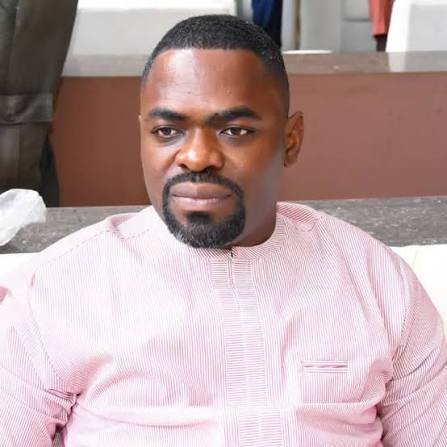
By Kamen Chuks Ogbonna
COLONIALISM did not just take land. It stole memory, broke confidence, and stole the future.
Every thinking Igbo person still carries the question: what if the white man had come as a guest, not a conqueror?
What if he had come to learn, not to teach? What if Ndigbo had kept their knowledge and still engaged the world?
The answer is not fantasy; it is logic. A civilization that was already whole would have grown stronger. It would have borrowed without bleeding and shared without shrinking.
The Igbo had a system that worked. Their politics was conversation, not command. Their economy was trust, not greed. Their medicine was wholeness, not pills. Their spirituality was ecology, not escape.
These were not primitive habits. They were advanced solutions. They were solutions the world now pays billions to rediscover. If left intact, they would have been refined, shared, and studied.
Imagine Igbo medicine meeting Chinese acupuncture. Both saw the body as energy. Both mapped invisible channels. Both used plants with precision. A free exchange would have produced a global healing system decades before the West admitted that spirit and body connect.
The Dibia and the Chinese healer spoke the same language. Colonialism made sure they never met.
Imagine Igbo mathematics meeting Arabic numerals. The Igbo had binary thinking in their divination systems. They had geometric patterns in their architecture. They had statistical methods in their market forecasting.
Cross-pollination with Islamic scholarship, which preserved Greek mathematics, would have accelerated computation centuries before computers.
The Igbo mind was ready, but the door was locked.
Imagine Igbo governance meeting Swiss democracy. Both were decentralized. Both trusted local assemblies. Both rotated leadership. The Swiss had written constitutions. The Igbo had living ones. A free exchange would have produced models of direct democracy that the world now craves.
Instead, the British imposed warrant chiefs. They destroyed what worked and imposed what failed.
Imagine Igbo agriculture meeting Japanese permaculture. Both saw the farm as an ecosystem. Both honoured the soil. Both integrated trees, crops, and animals. The Igbo had practiced agroforestry for millennia. The Japanese refined it into art. Together, they would have built food systems that can feed millions without poisoning the earth.
The Green Revolution brought chemicals. The Igbo way brought balance. The world chose chemicals. Now it regrets it.
Imagine Igbo cosmology meeting quantum physics. The Igbo saw reality as vibration. They saw the observer and the observed as one. They saw time as cyclical, not linear. These were not superstitions. They were intuitions that physics would confirm a century later.
A free intellectual exchange would have produced philosophical frameworks that the West is only now stumbling toward.
The Igbo elder and the quantum physicist were asking the same questions. They were stopped from comparing notes.
The arts would have flourished too. Igbo sculpture was already masterful. Free trade with Benin, Ife, and beyond would have created schools of art that rivaled any Renaissance.
Igbo music, with its complex rhythms and call-and-response patterns, would have met jazz, blues, and classical forms to produce genres we can only imagine.
Igbo storytelling, with its nested narratives and moral complexity, would have enriched world literature without needing a translator to apologize for it.
Technology would not have been absent. The Igbo were ironworkers. They were architects. They were urban planners.
Free exchange with Indian metallurgy, Persian engineering, and eventually European mechanics would have produced an Igbo industrialism that respected limits.
It would not have been the industrialism that eats its own tail. It would have been one that asks permission from the earth before it digs.
The Igbo language would have been a language of scholarship. Its tonal precision would have advanced linguistics. Its proverbs would have entered philosophy texts. Its names, which carry entire biographies, would have influenced how humans think about identity.
Instead, English was forced down throats. Igbo became shame. Children were beaten for speaking it. A language that held a universe was treated as a dialect of the uneducated.
The greatest loss was not material. It was psychological. The Igbo were made to hate their own reflection. They were made to laugh at their own dress. They were made to fear their own gods. They were made to forget their own names. A people who once walked tall began to crawl for approval.
This was the deepest theft. It cannot be measured in pounds or acres. It lives in the hesitation of an Igbo child who wonders if their grandfather was truly wise.
If the interaction had been free, the Igbo would have been contributors, not beggars. They would have brought as much as they received. They would have entered the global conversation as equals. They would have said, “Here is what we know about the forest. What do you know about the stars?” They would have said, “Here is how we heal the sick. How do you build the bridge?” This is how civilizations grow. They cross-pollinate. They do not uproot.
The world would have been different today. Climate change would have been slower. The Igbo respect for Ala would have been a global ethic, not a quaint custom. Mental health would be better. The Igbo circle of kin would have been a model, not a curiosity. Politics would be cleaner. The Igbo town hall would have been studied, not mocked. Medicine would be wiser. The Dibia’s wholeness would have tempered the surgeon’s knife.
This is the path not taken, but the good news is that it is not too late to walk it. The knowledge is not fully dead. It sleeps in the villages. It whispers in the proverbs. It waits in the festivals. It can be awakened. It can be honoured. It can be shared. Ndigbo must stop apologising for who they were.
Ndi Igbo must become who they were meant to be. Not by returning to the past. But by carrying the past into the future. Not alone. But in free exchange with all who come with respect.
The white man should have come with empty hands and open eyes. The loss is his too. The world is poorer for what was destroyed. But the seed remains. The soil is still Ala. The rain still falls. The Igbo heart still beats. What was whole can be whole again. What was interrupted can resume.
The conversation can restart. The cross-pollination can begin. The civilization that was never backward can finally move forward.
The first step begins with you: wear your Igbo identity with pride through your dressing, your speaking, and the way you carry your name into the world.
A.I
June 7, 2026
Tags: Kamen Chuks Ogbonna