
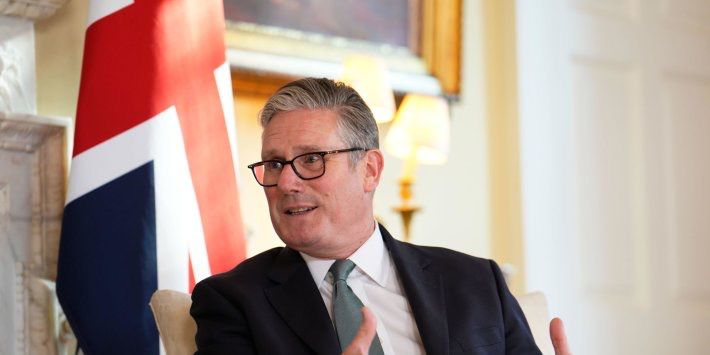
Sir Keir Starmer is fighting to save his job as UK Prime Minister, as senior party figures and union leaders question whether he can still lead the government into the next general election.
Read more breaking stories from our latest UK news
The Prime Minister has refused to quit despite growing pressure inside his own party after a damaging set of local election results. His critics believe Labour has lost direction in government, while nervous MPs fear the party is losing support in seats it cannot afford to surrender.
But Starmer has made it clear that he will not leave Downing Street without a fight. At a tense Cabinet meeting on Tuesday, he told ministers he would “get on with governing” and insisted that no formal leadership contest had been triggered.
That has left Labour in a difficult position. Many MPs are unhappy, but they remain divided over who should replace him. Under Labour rules, a challenger needs the backing of 20 per cent of Labour MPs to force a contest. That means 81 MPs would have to unite behind one candidate.
So far, no rival has publicly declared a challenge.
The most closely watched figure is Health Secretary Wes Streeting. He has long been seen as one of Labour’s strongest communicators and has built support among MPs on the centre and right of the party. His record on the NHS is likely to be central to any leadership pitch, especially after he pointed to falling waiting lists as proof that Labour can deliver in government.
Streeting’s brief visit to Downing Street added to the drama. He entered No 10 at about 8.29am and left around 21 minutes later. The meeting came as speculation grew that he could become the candidate around whom Starmer’s critics might gather.
But Streeting also faces a problem. While he has supporters among MPs, party members are often to the left of the parliamentary party. That could make it harder for him to win a full leadership contest if his opponents present him as the candidate of Labour’s right.
Andy Burnham is another name dominating the conversation. The Greater Manchester mayor has a strong public profile, a long record in government and support among Labour MPs, especially in the North West and on the left of the party. His allies believe he could speak to voters who feel Labour has become too distant from everyday concerns.
Burnham, however, faces one major obstacle: he is not an MP. To become prime minister, he would need a route back to Westminster. Allies have looked at possible by-election options, with seats such as Bootle, Warrington North, St Helens South and Manchester Rusholme discussed. But finding a safe path back to Parliament would not be easy, especially with Reform UK and the Greens threatening Labour in different parts of the country.
Angela Rayner would also be a serious figure if a contest began. She has strong roots in the trade union movement and remains popular with many members. Her supporters see her as a politician who can speak plainly to working-class voters and reconnect Labour with its traditional base. But the key question is whether she could secure enough support from MPs to reach the final stage of a leadership race.
Other names are being mentioned too. Ed Miliband, now Energy Secretary, has been discussed by some MPs as a possible unity candidate, although he has previously dismissed the idea of returning to the leadership. Home Secretary Shabana Mahmood has also been named as a possible contender, but her stance on immigration could make it difficult for her to win over Labour members.
For now, Starmer’s greatest advantage is not strength, but division among his opponents. His critics know they want change, but they have not yet agreed on the person to lead it.
That may keep him in office for now. But it does not end the crisis.
The Prime Minister remains in Downing Street, yet his authority has been badly shaken. Unless he can rebuild confidence quickly, every poor poll, every ministerial resignation and every election setback will revive the same question.
Labour is no longer simply asking whether Starmer can survive today. It is asking whether he can still win tomorrow.