
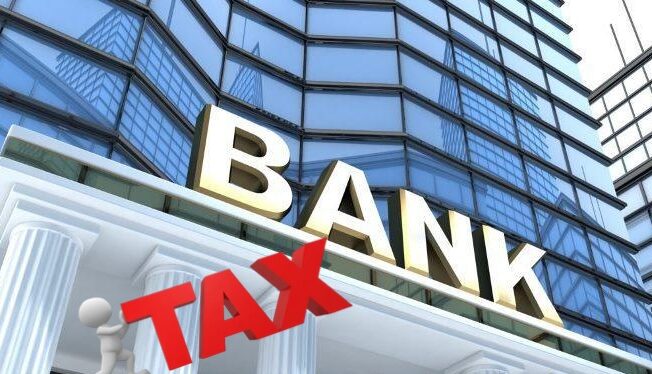
Nigeria’s fiscal position in 2026 remains tight. Oil revenue is volatile, borrowing space is limited, and the federal government is leaning harder on non-oil revenue to fund the budget. At the center of that push are the banks. As the most formalized and digitized part of the economy, the banking sector is both a target for taxation and a channel for collecting it.
The result is a complex dynamic: higher revenue expectations from government, tighter compliance demands from regulators and the Federal Inland Revenue Service (FIRS), and growing pressure on banks to pass costs to customers without eroding confidence.
The Revenue Imperative,
Nigeria’s tax-to-GDP ratio stood at 10.8% in 2024, up from 8.4% in 2022, according to the Federal Ministry of Finance. The target is 18% by 2027. To get there, the government is broadening the tax base, automating collection, and closing loopholes.
Banks are critical to this strategy for three reasons:
They hold the data: Through BVN, NIN linkage, and transaction records, banks have visibility into income flows that tax authorities previously could not access.
They are collection agents: Withholding tax, VAT on electronic transactions, and stamp duties are often collected at source by banks.
They are taxpayers themselves: Banks contribute significantly to Company Income Tax (CIT), Education Tax, and other levies.
In 2025, the banking sector paid over ₦1.2 trillion in taxes and levies, making it one of the top contributing sectors. The expectation for 2026 is higher, driven by improved profitability in the sector and new levies introduced in the Finance Act.
New Taxes and Levies Affecting Banks,
Windfall Tax on Forex Gains
Introduced in 2024 and extended into 2026, the windfall tax targets extraordinary gains from naira devaluation on foreign currency holdings. Banks that recorded large FX revaluation gains faced a one-off tax of 50%. The policy was aimed at equity – ensuring that banks did not profit disproportionately from currency adjustment while households bore inflation costs.
The policy achieved revenue but created tension. Banks argued that the gains were unrealized accounting adjustments, not cash, and that taxing them reduced capital buffers needed for lending.
Electronic Money Transfer Levy (EMTL)
EMTL of ₦50 on transfers above ₦10,000 remains in place. It is collected by banks and remitted to FIRS. In 2025, EMTL generated over ₦320bn. While the rate is small per transaction, the volume makes it significant. Customers complain about “double charges” when combined with bank transfer fees, but government defends it as a broad-based, low-rate tax.
The 0.5% cybersecurity levy on electronic transactions, introduced under the Cybercrime Act amendment, was suspended in 2024 after public backlash. It has not been reintroduced, but the framework remains, meaning it could return if revenue needs intensify.
Company Income Tax and Education Tax are in the front burner too.
Banks remain subject to 30% CIT and 3% Education Tax. With banks reporting stronger 2025 profits due to higher interest income, these payments are set to rise in 2026.
It is clear the Compliance Pressure is Rising.
FIRS and the Nigerian Financial Intelligence Unit (NFIU) have increased scrutiny on financial transactions. The push for cashless payments, driven by the Central Bank of Nigeria, has created more digital trails. That helps tax compliance but also increases reporting burden on banks.
There are Key compliance demands and they now include Automated Exchange of Information*: Banks must report high-value transactions, dormant accounts, and suspicious activity in real time.
Tax Identification Number (TIN) Enforcement: Account opening and high-value transactions require TIN. This has pushed more informal businesses into the tax net.
For banks with foreign parents or subsidiaries, FIRS is conducting deeper audits to ensure profits are not shifted out of Nigeria.
The cost of compliance is not trivial. Banks have invested heavily in RegTech, AML systems, and staff training. A mid-tier bank now spends 8-12% of its operating expense on compliance functions, up from 4-6% in 2020.
Higher taxes and compliance costs affect banks in three ways:
When a significant portion of FX gains or profits is taxed away, banks have less retained earnings to grow capital. This limits lending capacity at a time when SMEs and manufacturers need credit.
To maintain return on equity, banks adjust lending rates. In 2026, average lending rates hover around 28-32% for corporate loans. SMEs face even higher rates. Customers feel the pinch, and credit growth slows.
Banks are accelerating digital channels to reduce cost-to-serve. Branch closures continue, especially in low-traffic areas. Product fees are being reviewed, with more banks introducing account maintenance fees, SMS alerts charges, and tiered service fees.
For the average customer, the impact is felt in two places: fees and access.
Every transfer above ₦10,000 attracts ₦50 EMTL. SMS alerts, USSD sessions, and card maintenance fees add up. For a trader making 20 transfers a month, that’s ₦1,000 in EMTL alone, before bank charges.
To avoid fees, some customers keep money outside the banking system. This undermines financial inclusion goals. POS agents and mobile money operators are seeing increased cash activity in rural areas where bank branches are distant.
Banks argue that fees are necessary to cover costs. FIRS argues that without broad-based collection, government cannot fund roads, schools, and security. The customer is caught in the middle.
What about SMEs and the Informal Sector
SMEs are the most affected by the tax-bank nexus. Many operate on thin margins and cannot absorb higher lending rates or compliance costs.
The government’s approach has been mixed. On one hand, the tax amnesty window for MSMEs in 2025 brought 400,000 new taxpayers into the system. On the other hand, aggressive enforcement on small businesses without clear thresholds has created fear and resistance.
Banks are trying to bridge the gap with digital lending products that use transaction data for credit scoring. But high policy rates and tax costs make these loans expensive. Interest rates of 35-40% are common for unsecured SME loans, limiting uptake.
There is a Regulatory Balancing Act.
The Central Bank of Nigeria (CBN) and FIRS are not always aligned. CBN wants lower lending rates and deeper financial inclusion. FIRS wants more revenue and compliance.
In 2026, the coordination has improved through the Presidential Committee on Fiscal Policy and Tax Reforms. The committee’s recommendations include:
– Harmonizing multiple taxes to reduce multiplicity.
– Exempting transactions below ₦25,000 from EMTL to protect low-income users.
– Providing tax credits for banks that lend to priority sectors like agriculture and manufacturing.
Implementation is ongoing, but the direction is clearer: reduce nuisance taxes, focus on high-value compliance, and use technology to lower collection cost.
There are Lessons from Other Markets:
Kenya and Ghana have faced similar issues. Kenya’s mobile money tax in 2021 reduced transaction volumes by 15% in three months before rates were adjusted. Ghana’s e-levy faced public resistance and was reduced from 1.5% to 1% in 2023.
The lesson is clear: tax design matters. High rates on digital transactions can push activity back into cash, defeating the purpose. Broad base, low rate, and visible public service delivery create compliance.
What ought to be done? Clarify Tax Policy Communication.
Many customers do not understand why EMTL exists or where it goes. FIRS and banks need joint public education campaigns showing how revenue is used.
Exempting transactions below ₦25,000 from EMTL would reduce friction for low-income users without significantly cutting revenue.
Tax credits for banks that meet lending targets in agriculture, manufacturing, and renewable energy can align revenue goals with growth goals.
Multiple agencies asking for the same data increases cost. A single digital portal for tax, AML, and CBN reporting would cut duplication.
FIRS has improved e-filing, but dispute resolution is still slow. A faster, transparent appeals process would improve trust.
Taxation and banking are two sides of the same coin. A healthy banking sector mobilizes savings and funds growth. A fair tax system funds public goods and reduces inequality. When the balance is wrong, both suffer.
Nigeria cannot tax its way to prosperity without growth. But it cannot grow without funding infrastructure, security, and education. Banks are central to that equation.
The challenge for 2026-2027 is to make the system fairer, simpler, and less punitive. That means protecting small users, taxing large gains transparently, and ensuring that revenue translates into visible public services.
If that happens, compliance will rise, trust will return, and the banking sector can play its role as an engine of growth rather than a collection point alone.
The relationship between taxation and banking in Nigeria is at a turning point. Revenue needs are real, and banks are the most efficient collection channel. But overreach risks killing the formalization gains of the last decade.
The next phase must be about precision: tax the right base, at the right rate, with minimal friction. For customers, that means fewer surprises at the ATM. For banks, it means a stable policy environment to plan and lend. For government, it means more revenue without stifling the economy.
The next budget and Finance Act will test whether that balance can be struck.