
Oil & Gas
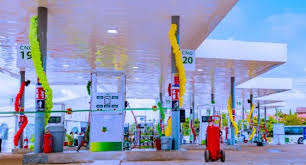
STAKEHOLDERS in Anambra, Ebonyi and Enugu states have urged fuel and gas station operators to establish Compressed Natural Gas (CNG) plants to combat climate change and reduce costs of road transportation.
They also encouraged motorists to patronise CNG stations, describing the product as environmentally friendly and more affordable than conventional petrol and diesel.
The stakeholders made the call while responding to a News Agency of Nigeria (NAN) survey on the availability, cost, patronage and location of CNG plants in the three South-East states.
In Enugu State, the Managing Director of Enugu East Zone Bus Terminals, which oversees Holy Ghost Bus Terminal 1 and 2, Gariki and Abakpa terminals, Dr John Egbo, defined CNG as a cleaner alternative fuel stored under high pressure and used mainly for vehicles, power generation and industrial energy.
According to him, the state currently has a CNG plant located at Ugwuonyeama, on the Enugu-Onitsha Expressway.
“CNG is one of those modern fuels that is good for the environment because it helps in preventing ozone layer depletion and improving climate conditions,” Egbo said.
He noted that the Enugu State Government had adopted CNG-powered buses as a model for public transportation and expressed hope that other filling stations would emulate the initiative by establishing similar plants.
“With the rate of climate change across the country and the world, it is very important that we begin to move toward fuels that do not emit smoke that can endanger the environment,” he said.
Egbo added that CNG remained cheaper and more stable in price compared to petrol, making transportation more affordable for residents.
“If you watch our CNG buses, especially the BRT buses operated by the state, transport fare from Enugu to Nsukka is about N1,500, as against N3,500 charged by conventional transport operators,” he said.
He explained that fluctuations in petrol prices had little effect on CNG transportation costs, helping to stabilise fares on routes such as Nsukka, Obollo-Afor, Agbani and Awgu.
Egbo appealed to petroleum marketers in Enugu to embrace the new fuel technology and encourage vehicle conversion to CNG-compatible systems.
He also called for increased sensitisation campaigns to educate residents on the benefits of CNG.
“It is very important that we begin to imbibe this new fuel system because it is climate-friendly and will help the environment much better than the current petroleum products used in vehicles.
“We need to publicise the fact that CNG is climate-friendly and all petroleum dealers should begin to install the facilities in their respective stations,” he added.
A Bus Rapid Transit (BRT) driver, who pleaded anonymity, said drivers buy a kilogramme of CNG for between N500 and N550, describing it as cost-effective and safer than conventional fuel.
“The gas is always available at the CNG plant at Ugwuonyeama and it is affordable,” the driver said.
NAN however, reports that Enugu metropolis and its outskirts have witnessed additional numbers of CNG filling stations opening up and more availability of the product.
NAN correspondent, who monitored the cost and availability of CNG products, reports that the stations increased from two as at 2025 to five major stations selling the products.
The stations included: Greenville CNG Hub located at Ugwu-Onyema in Enugu-Onitsha Expressway; and Amara Oil and Gas located at Emene axis, Enugu-Abakaliki Expressway
Others are: Shafa Energy CNG Outlet located near 9th Mile Corner: NIPCO Gas Station in Abakpa axis of Enugu-Nike-Opi-Nsukka Road and A.A. Rano CNG Station located along Enugu-Port Harcourt Expressway.
A station manger of A.A. Rano CNG Station, who simply gave his name as Abdul, said that the prices ranges between ₦200 and ₦250 per Standard Cubic Meter (SCM) in most stations in Enugu.
Abdul said that some newly built outlets were yet to open while some of the major sellers were also planning expanding outlets within the metropolis.
He noted that it was viable that CNG stations are located along major expressways in the metropolis – Enugu-Onitsha, Enugu-Abakaliki and Enugu-Port Harcourt dual carriageways and Enugu-Nike-Opi-Nsukka Road.
“We are witnessing increase in patronage especially as the Enugu State Government and some transport organisations are focusing in buying more CNG or hybrid vehicles.
“However, the conversion of patrol cars to CNG cars has been very minimal and we call on government to put more subsidy to allow more private car owners convert,” he said.
A commercial bus driver, Mr Donatus Nebolisa, said that although the conversion with about N400,000, was still expensive, but after his conversion, the price of fuelling his bus for business had drastically reduced.
Nebolisa said, “I buy N10,000 for about 50 SCM of CNG and I use it to do my commercial transport business for three good days.
“CNG burns very slow; unlike my fellow commercial bus drivers using petrol that buys between N67,500 and N70,000 for the same three days.”
In Anambra, lack of refilling stations, high conversion costs and inadequate awareness have continued to hinder adoption of the Compressed Natural Gas (CNG) by motorists in spite of the rising petrol prices.
The motorists, however, expressed growing interest in CNG as a cheaper alternative to petrol.
NAN reports that the Federal Government is promoting CNG as a cleaner and more affordable alternative to petrol and diesel, following the removal of fuel subsidy.
NAN also reports that currently there is no refilling stations in Anambra.
Findings showed that while petrol currently selling for between ₦1,350 and ₦1,400 per litre in the state, CNG is sold at significantly lower prices in states where refilling stations are operational.
Mr Chinedu Eduorah, a commercial bus driver in Awka, said the high cost of petrol had become unbearable for transport operators.
Eduorah said many drivers were now considering converting their vehicles to CNG-powered systems to reduce operational costs.
“Petrol is too expensive now and it is affecting our business seriously.
“If CNG stations become available in Anambra and the conversion cost is reduced, many of us will embrace it because it is cheaper,” he said.
Another motorist, Mr Emeka Obika, described CNG as a promising alternative but complained about the lack of refilling stations in the state.
Obika said the absence of accessible infrastructure had discouraged adoption among private vehicle owners.
“We hear that CNG is cheaper and safer, but where are the stations in Anambra?
“Many people are afraid to convert their vehicles because they do not know where to refill the gas,” he said.
Mrs Ngozi Ezeilo, a ride-hailing driver in Awka, said the cost of converting vehicles to CNG remained a major challenge for motorists.
According to her, some conversion centres charge between N400,000 and over N1 million depending on the type of vehicle.
“The idea is good because it will reduce transport costs, but the conversion price is too high for an average driver.
“The government should subsidise the conversion kits to encourage more people,” she said.
Mr Jude Okonkwo, an inter-state fleet operator, said some drivers who converted their vehicles to CNG travel to Ugwu Onyeama along the Enugu-Onitsha Expressway in Enugu State and Asaba in Delta to refill their vehicles.
According to him, only a few drivers in his park have converted their vehicles to CNG, and they confirmed that it is cheaper than petrol.
He said CNG in Enugu currently sells for between N400 and N500 per Standard Cubic Meter (SCM), depending on the station and location.
Okonkwo explained that one kilogramme of CNG was roughly equivalent to 1.5 litres of petrol in energy content.
He added that filling a typical Sedan’s CNG tank of about 15 Kilogrammes to 20 Kg cost between N3,000 and N5,000, compared to ₦15,000 and ₦20,000 for petrol.
According to him, CNG costs about 60 per cent less than petrol, resulting in significant monthly savings for commercial drivers and fleet operators.
“Many of us are yet to convert because there are no CNG refilling stations in Anambra and the cost of conversion is high,” he said.
A mechanic and vehicle conversion technician in Nnewi, Mr Ifeanyi Nwafor, said awareness about CNG usage was increasing among motorists.
Nwafor, however, said many drivers still lacked proper understanding of the technology and safety measures involved.
“People are gradually asking questions about CNG because they want to save money on fuel.
“But there is still need for public enlightenment because many motorists do not understand how it works,” he said.
It is a similar story in Nsukka, Enugu State as some motorists said they had not converted their cars to use the CNG due to its absence in Nsukka.
Mr Kinsley Onah, a commercial bus driver and Chris Ani a private car owner, blamed the non conversion to absence of the product in Nsukka.
“If there is depot in Nsukka, I would have converted my car to CNG because it is cheaper than petrol. I will not be able to be going to Enugu every time to refill my car.
“What will happen if on my way to Enugu, my car stopped because I have exhausted the gas in my car,” Onah said.
Mrs Florence Ezema also a private car owner, said she has not seen any CNG depot in Nsukka.
“Some of my friends that are using CNG in Nsukka, always go to Enugu to refill their cars.
“I wanted to join my friends to convert my own car to CNG but I was told that my car was above 10 years of use and it will not be compatible with CNG kits,”, she said.
In Ebonyi, a CNG Conversion Centre, Ceedac Automobile in Abakaliki, decried low patronage by motorists in the state.
NAN check on the cost and availability of the centre in Abakaliki, showed that currently Ebonyi has no functional CNG centre.
Mr Nnanna Okafor, Managing Director of Ceedac CNG centre on Ogoja road in Abakaliki, said that many motorists in the state still relied heavily on petrol and diesel for transportation and commercial activities.
“Yes, we have office in Ebonyi but we are not operating in the state right now because of low patronage,” he said.
On the cost of conversion, Okafor said that it had been subsidised by the government.
“Currently, the cost is between N550, 000 and N750, 000 depending on the vehicle and the engine capacity,” he explained.
Some commercial drivers who spoke with NAN said the scarcity of CNG stations and the high cost of converting vehicles from petrol-powered engines to CNG had discouraged many vehicle owners from embracing the alternative energy source.
Mr Sunday Nwankwo, a commercial bus driver in Abakaliki, said that although CNG was cheaper and more economical compared to petrol, accessibility remained a major challenge in the state.
“We hear that CNG is cheaper and safer for the environment, but the problem is that there are no readily available functional stations in Ebonyi.
“Most of us cannot risk converting our vehicles without assurance that we can easily refill the gas whenever needed,” he said.
Another motorist, Mrs Martha Eze, noted that the cost of vehicle conversion kits and inadequate awareness on the benefits of CNG also contributed to the low patronage.
She called on government and private investors to establish functional CNG stations across the state to encourage usage.
An official in another proposed CNG Centre in the state, who pleaded anonymity, told NAN that patronage had been annoying.
According to the attendant, I think most vehicle owners are still observing the system and waiting for more infrastructure before embracing it fully.
“I believe the CNG can help reduce transportation costs and cushion the effects of rising petrol prices.
“There must be more increased public sensitisation, incentives for vehicle conversion, and investment in CNG infrastructure to improve adoption in Ebonyi,” the attendant advised. (NAN) (
A.I
May 18, 2026
Tags: CNG Mr Chinedu Eduorah Mr Donatus Nebolisa Mr Emeka Obika Mr Jude Okonkwo