
Politics
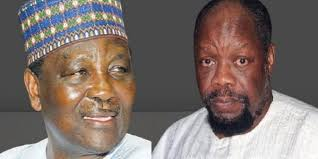
FORMER Southeast spokesman to President Bola Ahmed Tinubu and Chairman of the Forum of Former Members of the Enugu State House of Assembly, Josef Onoh, has strongly disputed recent remarks by former Head of State, Yakubu Gowon, over the collapse of the Aburi Accord and the circumstances that culminated in the Nigerian Civil War.
In a statement issued to journalists, Onoh dismissed Gowon’s account which allegedly portrayed the late Chukwuemeka Odumegwu Ojukwu as the figure responsible for frustrating reconciliation efforts after the historic Aburi meeting held in Ghana in January 1967.
Onoh maintained that such portrayals wrongly present Gowon as a conciliatory national leader while unfairly branding Ojukwu as rigid and unwilling to compromise.
Drawing from what he described as years of intimate conversations with Ojukwu, his late brother-in-law, alongside discussions with late Biafran figures including Col. Achuzie and Maj. Gen. Philip Effiong between 1998 and 1999, Onoh insisted his position was rooted in firsthand historical accounts.
According to him, the Aburi talks, brokered by Ghana’s former leader, Joseph Ankrah, produced firm resolutions aimed at preserving Nigeria’s unity through restructuring and mutual trust.
He listed some of the major understandings reached at the meeting to include enhanced regional autonomy, a decentralized military arrangement allowing regional governors significant authority over security forces within their territories, collective decision-making within the Supreme Military Council, and a commitment to avoid military confrontation.
Onoh noted that the atmosphere during the talks was constructive, with both Gowon and Ojukwu actively participating in deliberations.
“On returning from Aburi, Ojukwu publicly affirmed the agreement and adopted the position, ‘On Aburi We Stand,’” he said.
The former presidential spokesman, however, argued that the agreement began to unravel almost immediately after Gowon returned to Lagos.
He alleged that top federal civil servants and advisers opposed aspects of the accord, believing the concessions granted at Aburi tilted Nigeria toward a confederal structure.
According to Onoh, this resistance ultimately resulted in the promulgation of Decree No. 8 in March 1967, which Eastern Region leaders interpreted as a distortion of the original understanding reached in Ghana.
He stated that the decree weakened provisions relating to military authority, emergency powers, and regional balance.
“Ojukwu repeatedly warned that failure to faithfully implement the accord would leave the East with no alternative but self-help,” Onoh said.
He further claimed that historical materials, including declassified records and eyewitness testimonies such as the memos of Prince Akenzua, support the view that the federal authorities retreated from key commitments made during the Aburi negotiations.
Onoh insisted that Ojukwu attended the peace meeting sincerely and did not obstruct reconciliation efforts.
Rather, he argued, the collapse of the accord stemmed from conflicting interpretations of the agreement and the federal government’s unwillingness to embrace a looser federation capable of addressing Eastern fears after the 1966 killings and growing ethnic tensions.
Recalling Ojukwu’s reaction to subsequent developments, Onoh said the late Biafran leader became deeply disappointed with Gowon, whom he allegedly described as “my friend Gowon turned bandit.”
He said similar sentiments were expressed by Effiong.
Onoh also highlighted Ojukwu’s academic and military background, describing him as an Oxford-trained historian and a senior contemporary of Gowon within the pre-coup Nigerian military establishment.
He referenced Ojukwu’s memoir, Because I Am Involved, as part of the documented historical record surrounding the crisis.
While acknowledging Gowon’s post-war reconciliation policy of “No Victor, No Vanquished,” which he said contributed to national reintegration after the civil war, Onoh expressed reservations about what he described as Gowon’s recent attempts to revisit the events decades later.
He argued that Ojukwu had publicly defended his own position during his lifetime, whereas Gowon remained largely silent for many years before offering his version of events after Ojukwu’s death.
“A genuine statesman should place national healing above personal vindication, especially regarding issues that remain emotionally sensitive more than five decades later,” Onoh stated.
He urged Nigerians to rely on documentary records, taped proceedings from the Aburi meeting, contemporary broadcasts, and balanced historical scholarship rather than one-sided recollections.
“History survives through truth that fosters unity, not narratives capable of deepening division,” he said.
Onoh added that the lessons of Aburi underscore the importance of sincere dialogue and faithful implementation of agreements in resolving national crises.
Dailyinsider
A.I
May 22, 2026
Tags: Josef Onoh Maj. Gen. Philip Effiong President Bola Ahmed Tinubu Yakubu Gowon