
Oil & Gas
By Anthony Isibor
NIGERIA’S ambitious $5 billion Nigeria Liquefied Natural Gas, NLNG, Train 7 project has reached 92 per cent completion and is now transitioning into the critical systems completion and pre-commissioning phase, marking a major breakthrough in the country’s drive to expand gas production capacity and deepen local content participation in the energy sector.
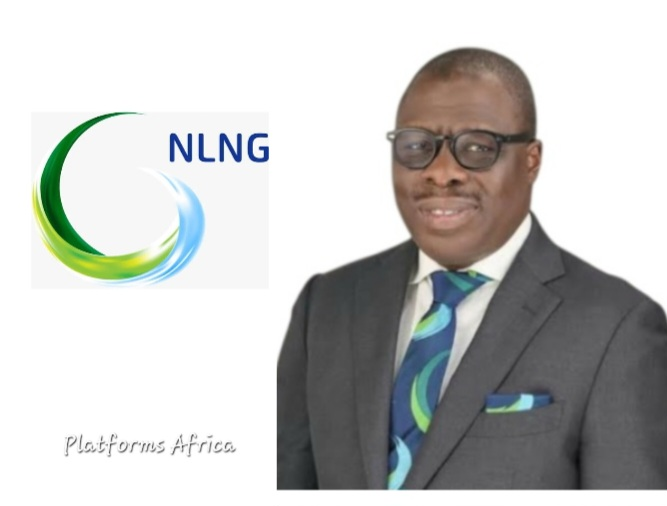
Speaking at the recently concluded 2026 Nigerian Oil and Gas Midstream and Downstream Summit in Lagos, the Managing Director of the NLNG, Adeleye Falade, described the project as one of the most significant milestones in the Nigerian gas industry in recent years.
Represented by the Project Director for Train 7, Ali Uwais, the managing director stated that the project has overcome years of delays and uncertainty since its conceptual stages, eventually gaining momentum after front-end engineering design activities commenced in 2018.
According to him, the major redesign introduced a common liquefaction unit, significantly enhancing processing capacity and effectively delivering the output equivalent of two trains.
The Final Investment Decision, FID, for the landmark project was taken in December 2019 by NLNG shareholders — the Nigerian National Petroleum Company Limited, NNPC, Limited, Shell, TotalEnergies, and Eni — paving the way for the development of what has become one of Africa’s largest gas infrastructure projects.
“In 2020, at the height of the COVID-19 pandemic, the Engineering, Procurement and Construction, EPC, contract was awarded to the Saipem, Chiyoda and Daewoo consortium,” he said.
“Despite the global uncertainties and disruptions caused by the pandemic, the shareholders remained committed to ensuring the project moved forward. Today, Train 7 is more than 92 per cent complete and advancing steadily toward commissioning.”
When completed, the Train 7 expansion project is expected to increase NLNG’s production capacity from 22 million tonnes per annum (MTPA) to 30 million tonnes per annum, significantly strengthening Nigeria’s position in the global liquefied natural gas market and boosting the country’s export earnings.
Beyond its commercial significance, he emphasized that the project represents a major victory for indigenous capacity development and local participation in Nigeria’s oil and gas industry.
He noted that the progress recorded on Train 7 was driven by deliberate collaboration among government agencies, industry regulators, and private sector operators, creating opportunities for Nigerian engineers, contractors and service providers to play leading roles in the execution of a multi-billion-dollar energy project.
Meanwhile, the Nigerian Content Development and Monitoring Board, NCDMB, highlighted the broader impact of local content policies on the nation’s oil and gas sector.
Speaking at the summit, the board revealed that the number of operating companies in Nigeria’s upstream petroleum industry has grown from fewer than 10 before the enactment of the Nigerian Oil and Gas Industry Content Development, NOGICD, Act in 2010 to 117 companies today. Service companies have also expanded dramatically, rising to 11,764 firms.
The NCDMB attributed the growth to the successful implementation of the local content legislation, which has helped increase indigenous participation, technology transfer and capacity development across the industry’s value chain.
The summit, organised by the NCDMB under the theme “Unlocking, Growing and Sustaining Nigerian Content Development in Nigeria’s Oil and Gas Midstream and Downstream Sectors,” brought together key stakeholders to assess the achievements and future prospects of local content development in the country’s energy sector.
As Train 7 moves closer to commissioning, industry stakeholders view the project as a game-changing investment that not only expands Nigeria’s LNG production capacity, but also demonstrates the growing capability of local firms and professionals to execute complex energy infrastructure projects on a global scale.
A.I
May 31, 2026
Tags: Adeleye Falade Limited NCDMB Nigeria Liquefied Natural Gas Nigerian National Petroleum Company Limited NLNG NNPC Shell TotalEnergies