
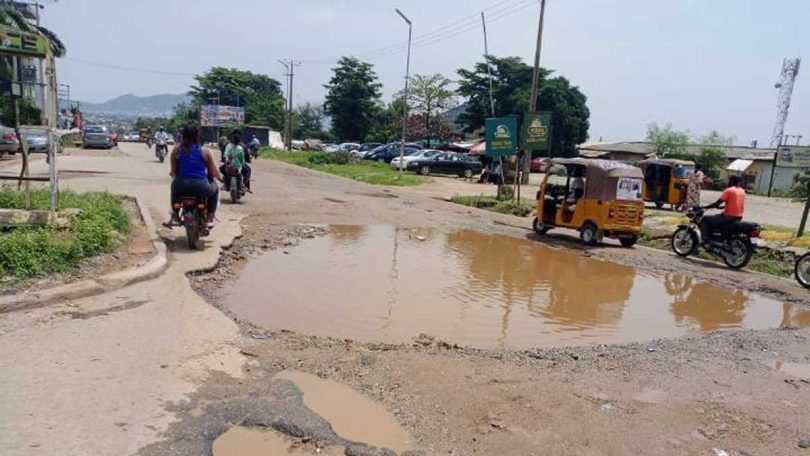
If you have driven from Lagos to Ibadan, Benin to Auchi, or Kaduna to Zaria in the last 18 months, you know the story. Sections of Nigeria’s federal road network remain in a state of disrepair that undermines trade, raises transport costs, and costs lives. The federal road network is the backbone of Nigeria’s economy. It carries over 90% of passengers and freight. Yet, for millions of Nigerians, it is a daily reminder of the gap between budget announcements and lived reality.
This article examines the current state of federal roads, why repairs stall, what government and private partners are doing, and what it will take to move from patchwork fixes to a network that works.
*Let’s consider The Scale of the Network*
Nigeria has about 35,000 km of federal roads, out of a total road network exceeding 195,000 km. These roads connect state capitals, ports, airports, and agricultural belts. They are critical for the movement of cement, fuel, food, and manufactured goods.
The Federal Ministry of Works and the Federal Roads Maintenance Agency (FERMA) share responsibility. The Ministry handles construction and rehabilitation of major highways, while FERMA is mandated to maintain them. But maintenance has consistently lagged behind construction, leading to a cycle where new roads deteriorate quickly and old roads collapse.
*Now, Where Things Stand in 2026*
*South West & South*
The Lagos-Ibadan Expressway rehabilitation is largely complete, easing one of the country’s most critical corridors. However, feeder roads and portions of the Sagamu-Benin axis remain problematic. The Benin-Warri road, a vital route for oil and gas operations, continues to suffer from delays and contractor disputes. In Edo and Delta, seasonal flooding worsens road conditions, with several communities cut off during peak rains.
*South East*
The Enugu-Onitsha and Enugu-Port Harcourt corridors are receiving attention, but progress is uneven. Insecurity in parts of the region has slowed contractor movement, increasing costs and timelines. Many rural federal roads remain impassable, forcing traders to use longer, costlier routes.
*North Central & North West*
The Abuja-Kaduna-Zaria-Kano road project is advancing in phases. When fully completed, it will cut travel time and reduce accidents on one of Nigeria’s busiest highways. But the Abuja-Lokoja road and parts of the Kaduna-Zaria axis are still plagued by potholes and washouts. Security concerns along certain stretches also limit night travel and raise insurance premiums for haulage companies.
*North East*
Federal roads in Borno, Yobe, and Adamawa remain heavily impacted by both insurgency and neglect. Rebuilding here is tied directly to security stabilization and humanitarian access. Where work has resumed, it is often under military escort and with significant cost premiums.
*Why Roads Fail and Repairs Stall*
*Funding Gaps*
Budget allocations for road maintenance have consistently fallen short of need. The 2025 and 2026 budgets increased capital expenditure on infrastructure, but inflation, naira depreciation, and rising material costs have eroded purchasing power. A project budgeted at ₦50bn in 2023 may now cost ₦85bn.
*Contractor Capacity and Procurement Delays*
Many contractors lack the equipment and cash flow to deliver at scale. Payment delays from government further weaken capacity. Procurement processes, while improved, still take months, and variation orders become battlegrounds for renegotiation.
*Design and Climate Issues*
Some roads were built without adequate drainage, soil testing, or climate resilience. Heavy rains and flooding now wash away sections within months. Climate-proofing is no longer optional, but it raises costs.
*Security and Community Issues*
Insecurity disrupts work and raises risk premiums. Community disputes over compensation and right-of-way also delay projects. Without early engagement, work stops for weeks.
*The Economic Cost*
Bad roads are not just an inconvenience. They raise the cost of doing business across Nigeria.
1. *Transport Costs*: Haulage companies report 30-50% higher maintenance costs due to road damage. Fuel consumption rises on rough surfaces, and tire replacement is constant.
2. *Food Inflation*: Farmers in Benue, Kogi, and Kebbi lose up to 40% of perishable produce because trucks cannot reach markets on time.
3. *Logistics Delays*: Ports congestion worsens when hinterland evacuation is slow. Importers pay demurrage, which is passed to consumers.
4. *Accidents and Lives Lost*: Poor road conditions contribute to accidents, especially at night. The Federal Road Safety Corps consistently cites road condition as a factor in fatal crashes.
*What Government Is Doing*
*Highway Concessioning*
The Highway Development and Management Initiative (HDMI) is bringing private capital into road maintenance through tolling and concessions. The first phases on Lagos-Ibadan and Shagamu-Benin are operational. The model aims to ensure predictable maintenance funding, but public acceptance of tolls depends on visible service delivery.
*Tax Credit Scheme*
The Road Infrastructure Tax Credit Scheme allows companies to fund road construction in exchange for tax credits. Dangote, BUA, and others have used this to rehabilitate critical corridors like Apapa-Oshodi-Oworonshoki and Obajana-Kabba. It has accelerated delivery but raises questions about equity and regional balance.
*FERMA Reforms*
FERMA has shifted toward direct labor and performance-based contracts in some states. The goal is faster pothole patching and drainage clearing without waiting for full rehabilitation contracts. Results are mixed, with better outcomes in states with active monitoring.
*Digital Monitoring*
The Ministry of Works has introduced GIS mapping and public dashboards for project tracking. Citizens can now see project status, contractor names, and timelines. It’s a step toward accountability, but coverage is not yet nationwide.
*What Works Elsewhere*
Countries with similar challenges have made progress through three moves:
1. *Ring-fenced Road Funds*: Dedicated fuel levy or road fund that cannot be diverted to other uses.
2. *Performance Contracts*: Pay contractors based on road condition metrics, not just kilometers covered.
3. *Maintenance First Policy*: Allocate 40-50% of road budgets to maintenance, not just new construction.
Rwanda and Morocco have used these approaches to keep core networks in good condition with smaller budgets than Nigeria’s.
*The Role of States and LGAs*
Federal roads pass through states, but coordination is weak. States often build link roads that connect to federal highways without standardizing design, leading to bottlenecks. A joint planning framework between federal, state, and LGA road agencies would reduce duplication and improve network flow.
Public-private partnerships at state level, like those in Lagos and Rivers, show that sub-national governments can deliver when they have fiscal space and political will.
*What Needs to Happen Next*
*1. Increase and Protect Maintenance Funding*
Maintenance is cheaper than reconstruction. A policy that mandates at least 40% of road capital vote for maintenance would break the rebuild-collapse cycle.
*2. Accelerate Concessions with Safeguards*
Expand HDMI but include clear service standards, toll caps, and independent monitoring. Transparency on revenue use will build public trust.
*3. Strengthen Contractor Financing*
Create a road contractor financing window through development banks to reduce reliance on government payment cycles. This keeps equipment working and crews employed.
*4. Climate-Resilient Design*
Update design standards to account for heavier rainfall and higher temperatures. Invest in drainage, culverts, and erosion control upfront.
*5. Community Engagement Early*
Resolve compensation and right-of-way issues before contracts are awarded. Use local labor where possible to build buy-in.
*Public Expectations*
Nigerians are no longer asking for mega-projects alone. They want roads that work daily. A 5km stretch fixed properly and maintained matters more than a 100km road that fails after one rainy season.
The media, civil society, and lawmakers have a role in tracking delivery. Constituency projects can help, but they must align with national network priorities to avoid fragmentation.
*Now, my humble conclusion*
Nigeria’s federal roads are a mirror of governance. Where planning, funding, and oversight align, delivery happens. Where they don’t, potholes become metaphors for deeper dysfunction.
The good news is that the tools exist: tax credit schemes, concessions, digital tracking, and performance contracts. What’s needed now is consistent execution, political discipline to prioritize maintenance, and public pressure to keep projects on track.
If the next 24 months focus on fixing what exists before starting new projects, Nigeria can turn its road network from a liability into an economic asset. For traders in Onitsha, farmers in Kano, and commuters in Lagos, that change can’t come soon enough.