
NASA picked Jeff Bezos’ Blue Origin, Firefly Aerospace and other space firms to send robotic landers, rovers and even drones to the moon as part of the Trump administration’s efforts to jumpstart a lunar base before the end of the decade.
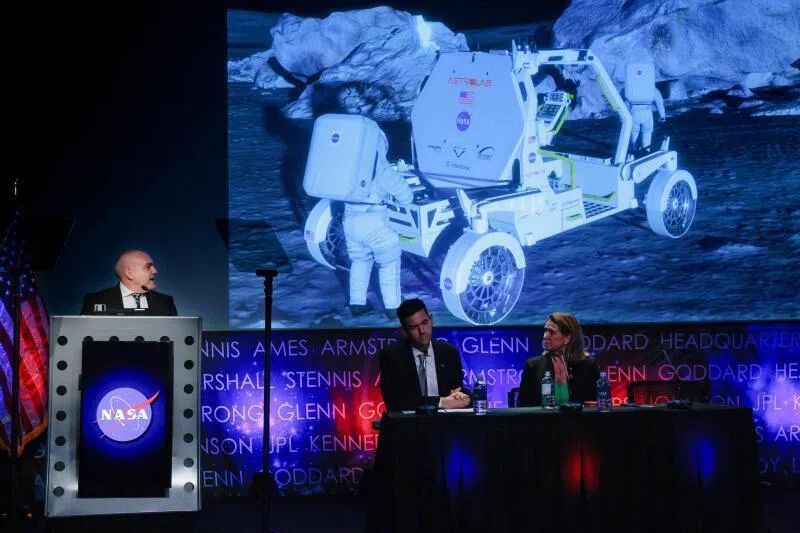
The US space agency awarded Lunar Outpost and Astrolab contracts worth US$220 million (S$281 million) each for building rovers that can both travel autonomously on the moon and that future astronauts could navigate across the lunar terrain.
The agency also announced that Blue Origin will be tasked with delivering these rovers to the moon’s surface using the aerospace firm’s uncrewed cargo moon lander, called Mark 1.
Each landing and delivery of a rover is worth US$234 million each for Blue Origin, NASA said.
Mr Carlos García-Galan, a NASA programme executive, said Firefly Aerospace’s Elytra spacecraft will be transporting the first drones to the moon under the agency’s Moonfall programme, which will use autonomous vehicles to image the surface of the moon and build a map for prospective landing and base sites.
The awards mark the first concrete steps of NASA Administrator Jared Isaacman’s push to kickstart the agency into creating a moon base on the lunar surface, a key component of President Donald Trump’s national space ambitions.
Shares of Texas-based Intuitive Machines, which was not selected to build a future rover, plunged on the news, though the company holds multiple contracts to send its landers to the moon for NASA.
Intuitive Machines became the first company to land a commercial spacecraft intact on the moon’s surface in 2024, but its lander tipped over during its descent, limiting its overall mission on the surface. A second landing attempt by the company in March of 2025 also tipped over and cut the mission short.
In March, Mr Isaacman laid out the agency’s plans to invest more than US$20 billion over the next seven years to build out a base on the moon, where astronauts could live and work. The framework entailed launching a fleet of landers, rovers, drones, power generators and other critical hardware across the next decade.
The first phase will entail 25 launches, 21 landings and will deliver four metric tonnes of cargo to the surface of the moon, Mr García-Galan said.
“We have been working to align all the agency resources across NASA to basically deliver on this objective of building a moon base,” Mr García-Galan said during a press conference on May 26.
The plan is also wrapped into NASA’s ongoing Artemis programme, which aims to send humans back to the moon within the next few years. With its Artemis II mission in April, the agency successfully sent a crew of four astronauts around the moon to test out spacecraft hardware that will be used to land people on the moon as early as 2028.
The announcement comes after NASA unveiled a reorganisation of its internal structure on May 22, combining various departments and promoting officials into new positions, in order to focus “resources on the most pressing objectives only NASA is capable of undertaking,” Mr Isaacman said in a statement. BLOOMBERG