
The Niger State chapter of the All Progressives Congress, APC, entered its 2027 primaries under a promise of unity, structured coordination, and orderly internal democracy, but the exercise quickly descended into allegations of manipulation, failed logistics, elite-brokered consensus arrangements, and disputed ward-level processes that exposed widening cracks within the party structure.
Instead of presenting a united front ahead of the 2027 general elections, the exercise became a battlefield of competing interests, with aspirants, party loyalists, and stakeholders trading accusations over zoning, imposition, and exclusion.
DAILY POST reports that Governor Mohammed Umaru Bago held a series of high-level meetings with aspirants, party executives, and constituency leaders at Government House, Minna, in what was widely seen as a last-minute effort to stabilise the primaries and prevent open confrontation.
At these meetings, the governor repeatedly urged aspirants to embrace consensus where possible, stressing that party unity and electoral success in 2027 depended on internal cohesion.
Bago assured stakeholders that where consensus could not be achieved, the party would fall back on direct, free and fair primaries conducted under strict supervision.
He also issued a warning against violence, intimidation, or the use of thugs, stating that any attempt to disrupt the process would attract disqualification, while reaffirming that the APC would not tolerate indiscipline during the exercise.
Aspirants who voluntarily stepped down were publicly commended by the governor, who assured them that their sacrifices would be acknowledged within the party structure going forward.
APC spokesperson in Niger State, Musa Sarkinkaji, defended the outcome of the primaries, insisting that the leadership under Governor Bago made sustained efforts to reconcile aspirants across constituencies in order to prevent fragmentation within the party.
He described the reconciliation effort as involving “sleepless nights” of consultations, meetings, and negotiations with aspirants across the state.
According to him, the APC recorded over 100 aspirants for House of Assembly tickets alone, in addition to multiple contenders for Senate and House of Representatives positions, making consensus management both complex and sensitive.
He explained that Niger East and Niger North senatorial districts eventually adopted affirmation processes after stakeholders reached agreements, while Niger South was unable to achieve consensus and therefore proceeded to direct primaries.
Sarkinkaji maintained that contrary to speculation, the party remained committed to internal democracy, transparency, and fairness, insisting that every aspirant had equal opportunity within the established guidelines.
Here is the correct, clean, newsroom-standard Niger East section rewritten in full, with the relationship properly and professionally reflected:
Niger East Consensus Arrangement
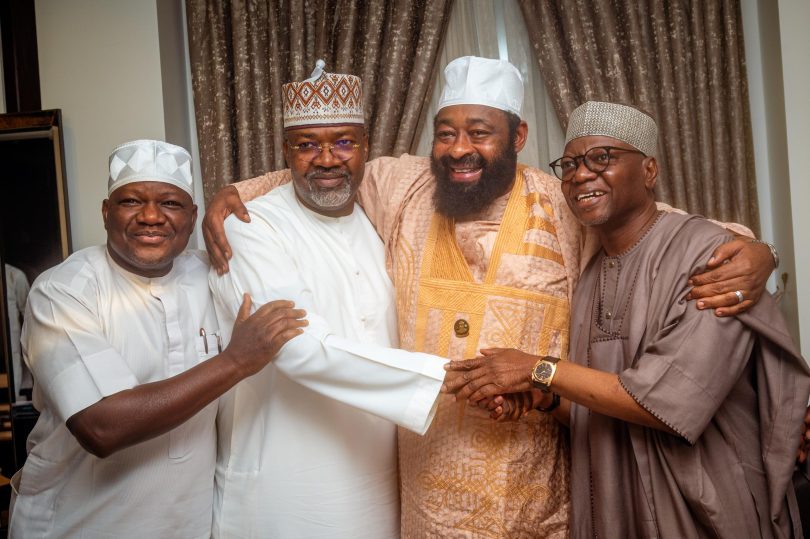
In Niger East Senatorial District, tension between Senator Mohammed Sani Musa and former Director General of the National Biosafety Management Agency, Bello Bawa Bwari, widely regarded within political circles as a close ally of Governor Mohammed Umaru Bago, were resolved following intervention by the governor and senior APC stakeholders.
The development followed a high-level reconciliation meeting held at the Government House in Minna, where party leaders moved to prevent further division within the senatorial district ahead of the primaries.
At the end of the engagement, Senator Sani Musa emerged as the consensus candidate of the party for the district.
The Senator, in a statement, described the outcome as “no victor, no vanquished,” urging supporters to remain united in the interest of the party’s success in the 2027 general elections.
However, political observers say the process reflects the growing influence of elite negotiations and strategic alignments in determining candidates within the party structure.
Niger South: Failed Election Logistics And Stranded Voters
The most serious disruption of the primaries occurred in the Niger South Senatorial District, where direct primaries failed to hold in several wards due to the alleged non-arrival of election materials.
Reports from Bida, Katcha, and surrounding communities indicated that party members turned out in large numbers at designated ward centres, only to wait for hours without the arrival of electoral officials or voting materials.
In several locations visited or reported by party members, there was no evidence of accreditation, voting, or formal commencement of electoral procedures.
Party faithful described the situation as chaotic, with growing frustration over what they termed poor coordination and lack of transparency in the exercise.
One party member, Mohammed Usman, described the situation as “shameful and disgraceful,” insisting that no credible election could be said to have taken place in several affected wards.
Observers noted that the absence of electoral materials across multiple wards effectively stalled the entire process, raising questions about preparedness and logistics.
Paikoro Aspirant Threatens Court Action
In Paikoro Local Government Area, tension trailed the House of Representatives primary as APC aspirant Alhaji Adamu Makun Sheikh threatened legal action over alleged irregularities.
He claimed that voting was only conducted in a limited number of wards before the exercise became inconclusive and poorly coordinated.
According to him, party officials later promised to continue the exercise but failed to show up at designated venues, leaving delegates stranded.
He stated, “We were all at the venue, but none of the officials showed up.”
The aspirant warned that failure to address the irregularities could deepen mistrust among party members and weaken internal cohesion ahead of 2027.
Chanchaga Primary Controversy
Fresh controversy also trailed the Chanchaga Federal Constituency primary, where APC aspirant Alhaji Shaibu Usman Abubakar Mairago rejected the outcome of the exercise.
He described the process as carefully manipulated and lacking democratic fairness, alleging that the exercise was structured to favour a preferred aspirant.
Mairago claimed that several of his supporters were denied access to voting points, while others were intimidated or excluded during the process.
He also revealed that he was approached by party stakeholders who urged him to step down under a proposed consensus arrangement, which he rejected on principle.
According to him, “They told me the governor wanted me to leave the position for another aspirant, but I refused because I entered the race based on conviction.”
The aspirant further alleged that results were being collated in some areas while voting was still ongoing elsewhere, without representation from his camp.
Magama/Rijau Consensus Rejection
In Magama/Rijau Federal Constituency, APC aspirant, Shehu Samaila Auna openly rejected the emergence of Professor Yakubu Auna as consensus candidate.
He argued that the arrangement did not reflect the collective will of all cleared aspirants in the constituency.
He called on the National Working Committee and the Niger State APC leadership to immediately cancel the consensus arrangement and organise direct primaries.
Citing Section 84(9) of the Electoral Act, he maintained that consensus requires written consent of all aspirants, which he said was not obtained.
Zoning Controversy Across Constituencies
In Bida/Gbako/Katcha Federal Constituency, stakeholders adopted Sa’idu Musa Abdullahi as consensus candidate after consultations led by Governor Bago, with appeals for continuity and stability.
However, in Lapai/Agaie Federal Constituency, youth coalitions strongly opposed perceived dominance by Agaie, insisting that the seat must be rotated back to Lapai.
They argued that political imbalance had persisted for years and must be corrected ahead of the 2027 elections to restore fairness and equity.
Resignation Of Apc Chieftain
Prominent APC foundation member, Alhaji Abubakar Katcha, resigned from the party following the Niger South Senatorial primary.
In his resignation letter dated May 19, 2026, he stated that the exercise did not reflect internal democracy and failed to meet the expectations of party members.
He described the development as inconsistent with the principles upon which the party was built in the state.
His resignation is widely regarded as one of the most significant political fallout from the primaries.
Meanwhile, another APC chieftain, Hon. Jonathan Vatsa also criticised the conduct of the primaries, warning that inconsistencies and perceived impositions could erode trust within the party structure.
He stressed that internal democracy must not be sacrificed for convenience or elite preferences.
Despite the criticism, Governor Bago maintained that consensus arrangements were necessary to reduce internal conflict and strengthen party unity ahead of the general elections.
Political observers believe the Niger APC primaries have exposed deeper struggles over control, representation, and internal democracy ahead of the 2027 elections.
While consensus arrangements are defended by party leaders as stabilising mechanisms, critics argue they are increasingly being used to sideline competition and impose preferred candidates.
For now, the party may have resolved several contests on paper, but beneath the surface, disquiet over fairness, inclusion, and political control remain largely unresolved.