
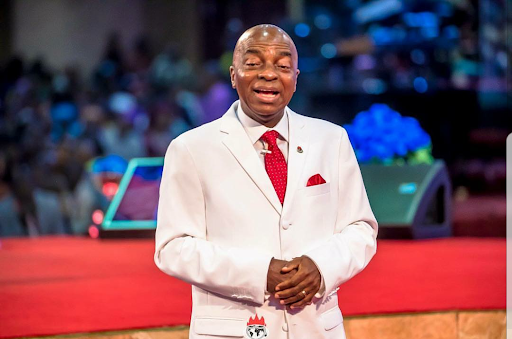
David Oyedepo is not influential because he holds public office. He is influential because he built institutions that reach millions of people every week.
His power does not depend on elections, cabinet appointments or political campaigns. It rests on a vast network of churches, schools, universities, books, media platforms, leadership programmes and charitable work. That is what makes him one of Nigeria’s most influential non-political figures.
PrimeTimes estimates his weighted influence score at 91.0/100, positioning him among Nigeria’s top public figures whose soft power has helped shape the country’s culture, global image and creative economy.
This scorecard is an editorial estimate based on seven indicators: current power and institutional control, reach and visibility, impact, soft power, relevance to 2026, generational influence, and national and international recognition.
Oyedepo is the Founder and President of Living Faith Church Worldwide, also known as Winners’ Chapel International. Covenant University says his ministry reaches 140 nations across six continents, with more than 20,000 branches in Nigeria and several thousand more worldwide. Its headquarters, Faith Tabernacle in Canaanland, Ota, seats 50,000 worshippers, while the ministry is also building The Ark, a planned 100,000-seat sanctuary.
That scale matters. In Nigeria, influence is not only about who speaks loudest. It is about who has structures that continue working every day. Oyedepo has built a system that teaches, gathers, publishes, trains and organises people across generations.
His strongest area of influence may be education. He is the Founder and Chairman of the Board of Regents of Covenant University and Landmark University, two private institutions linked to his wider vision for leadership and human development. Covenant University describes him as an educationist whose work has pushed private higher education in Nigeria and beyond.
This gives Oyedepo a different kind of power from many public figures. A politician may influence voters for one election cycle. A university influences students for life. Through Covenant University, Landmark University, Faith Academy and other education-linked platforms, his ideas reach young people before they enter business, ministry, public service, media, science and family life.
His publishing arm also strengthens his reach. Church-linked sources describe him as an author and publisher with more than 90 titles, while Dominion Publishing House has reportedly recorded millions of prints in circulation. This means his message does not end after a sermon. It moves through books, study groups, homes, offices and churches outside Nigeria.
Oyedepo’s soft power comes from the consistency of his message. For decades, he has spoken about faith, discipline, prosperity, personal responsibility, giving, hard work and excellence. Supporters see him as a builder who teaches people to think beyond poverty and limitation. Critics may disagree with parts of his theology, but even critics cannot ignore the scale of his network.
His influence also enters public life indirectly. Many of those shaped by his institutions and teachings become professionals, employers, pastors, public servants, parents and community leaders. This is why his power is not only spiritual. It is social and cultural.
There is also a welfare dimension. Covenant University says the David Oyedepo Foundation supports scholarships, youth empowerment, community development and regular supplies to orphanages, displaced persons’ camps, homes for the elderly and other vulnerable groups. These efforts add another layer to his public standing, especially in a country where many citizens depend on non-state institutions for education, hope and support.
In 2026, Oyedepo remains relevant because Nigeria’s biggest questions still include education, leadership, youth development, poverty, values and national direction. These are the same spaces where his institutions operate. At a time when many Nigerians distrust public systems, religious and private educational institutions often become alternative centres of order and aspiration.
His international recognition also matters. Winners’ Chapel branches operate across Africa, Europe, North America and other regions, projecting Nigerian Pentecostal culture beyond the country’s borders. That global network gives Oyedepo influence among diaspora communities and places him within the wider story of African Christianity’s global expansion.
Still, any serious assessment must include balance. Oyedepo’s influence attracts scrutiny. Large religious organisations in Nigeria often face questions about wealth, accountability, doctrine and the relationship between faith and money. Some Nigerians admire the scale of his work; others are uncomfortable with the power held by major religious institutions in a poor country.
But influence is not the same as popularity. It is measured by reach, structure, results and the ability to shape behaviour. On those measures, Oyedepo remains one of Nigeria’s most consequential figures.
His supporters see a man who turned conviction into institutions. His critics see a powerful religious leader whose wealth and authority should be examined. Both views point to the same conclusion: he matters.
David Oyedepo’s influence is not built on noise. It is built on structure. He has created a network that enters worship centres, classrooms, bookshelves, homes, digital platforms and diaspora communities.
For a country where power often fades after office, Oyedepo’s strength lies in something more durable: a system that keeps shaping minds, families and communities long after the sermon ends.