
By Emmanuel Ado
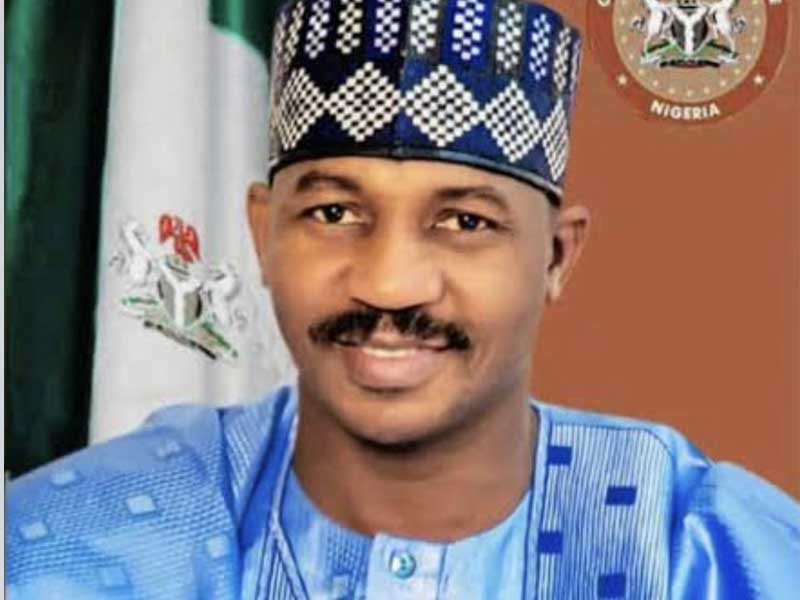
“Our commitment to the health of our people is a sacred trust. We inherited a system in distress, and we are very determined to make a fundamental difference.” — Governor Ahmed Aliyu
Governor Ahmed Aliyu has more than demonstrated his commitment to transform healthcare in Sokoto State through strategic investments in the training of medical professionals and the modernization of both urban and rural health facilities. His vision is to build a healthcare system where the principle that “health is wealth” becomes a lived reality for every resident of the state, regardless of their social or economic status. Central to his ambition is the belief that healthcare is a right, and not a privilege, and that no mother should be forced to give birth under unsafe conditions or any citizen denied access to quality medical care.
Guided by his transformative 9-Point Smart Agenda, Governor Aliyu seeks to establish a healthcare system that is efficient, inclusive, and capable of meeting the needs of the people across Sokoto State. He reinforced this direction with the appointment of Dr. Faruk Umar Abubakar — a seasoned medical professional and former Registrar/CEO of the Nursing and Midwifery Council of Nigeria — as Commissioner for Health. The appointment also signaled the administration’s determination to strengthen healthcare delivery through experienced leadership and institutional reform.
While the narrative of the healthcare system in Sokoto State has drastically changed in the last three years,it doesn’t seem like the governor is going to slow down. At the centre of the governor’s reforms is a simple principle: access to healthcare should be universal; readily accessible to all. This is a remarkable development, unlike the eight years of former governor Aminu Tambuwal’s administration, were many healthcare facilities across Sokoto State were poorly equipped, suffered from manpower shortages, unreliable electricity, and inadequate maternal care services. As a result many primary healthcare centres operated under extremely difficult conditions.
When Dr. Faruk Umar Abubakar assumed office, he famously described the healthcare sector as being in the “Intensive Care Unit (ICU),” a stark metaphor for a system that was facing deep-rooted structural challenges. Beyond deteriorating infrastructure, many facilities were severely understaffed, especially in rural areas – where the majority of the population resides and access to qualified personnel remained limited.
Against the troubling backdrop of a collapsed system that he inherited from Aminu Tambuwal, the critical question now is; what tangible difference has the administration of Governor Ahmed Aliyu made in reversing the decline and restoring confidence in the state’s healthcare system?
From the outset, the administration conducted a comprehensive assessment of health facilities across the state to determine the scale of infrastructural decay, equipment shortages, and staffing gaps. The findings revealed non-functional wards, inadequate diagnostic tools, and severe shortages of essential consumables in many facilities, providing the basis for subsequent reforms and targeted interventions.
From the outset, Governor Aliyu’s first priority was to stabilize the healthcare workforce, recognizing that infrastructure alone cannot save lives without trained professionals to deliver the much needed care. The administration restructured the state’s health salary scale to match and, in some instances, exceed the federal government’s scale. This strategic policy had an immediate cooling effect on the “brain drain,” with many doctors and nurses withdrawing their resignation letters.
Beyond retention, the administration is investing in a long-term pipeline of skilled personnel. More than 270 medical students are currently on the state payroll, alongside pharmacy and medical laboratory students. By placing these students on Level 07 salaries while still in school, the government has not only reduced the financial pressure on their families, but has also secured their future service through bonding arrangements that require beneficiaries to serve the state for two years after graduation.
Perhaps the most transformative aspect of Governor Aliyu’s health policy is the “Rural Posting Policy.” To bridge the gap between urban and rural care, the State Executive Council approved the compulsory posting of every medical professional sponsored by the Sokoto State Government to serve in a rural health facility for a minimum of two years. This has also been supported by a 10% basic salary increment as an incentive. By ensuring that qualified personnel are posted to work in places like Bodinga and Gudu, the administration is equally ensuring that the referral system actually works— that the Specialist Hospital Sokoto focuses on treating major cases and being the advanced tertiary hospital it was designed to be. The policy is already making a huge difference in several communities that previously lacked qualified healthcare personnel and that can now boast of doctors and nurses.
The Governor Aliyu administration has also focused on restoring basic functionality to healthcare facilities through targeted infrastructure upgrades. An initial batch of 240 hospital beds, mattresses, and stands was distributed to several facilities, while solar power systems were installed in labour wards, operating theatres, and neonatal units to ensure uninterrupted service delivery. In Sokoto State power failure is no longer a death sentence for patients. Diagnostic equipment, including ultrasound and X-ray machines, has also been distributed across the three senatorial zones to improve access to medical services in rural communities. Boreholes have been installed and sanitation systems have equally been rehabilitated to improve hygiene and water access in healthcare centres. For many residents, these changes are not only visible,but are being taken for granted.
These interventions have significantly restored the functionality of facilities that had effectively ceased to operate under Aminu Tambuwal.
Another critical area of intervention has been governance and accountability within the health sector. The Ministry of Health has introduced strategic planning mechanisms requiring the various healthcare facilities to justify funding requests through implementation plans and performance assessments. Oversight of drug procurement and medical supplies has also been strengthened through the State Drug and Medical Supply Agency to improve transparency and reduce the circulation of counterfeit medicines.
The government has further expanded maternal and child healthcare services by increasing access to free obstetric care, including caesarean sections, under health insurance arrangements. Antenatal services have also been intensified in several facilities, with some clinics increasing attendance days from once weekly to multiple sessions per week in an effort to improve early detection of pregnancy-related complications and reduce maternal mortality.
Immunization campaigns have similarly received renewed attention through collaboration with the traditional institution – Sultanate Council – and religious leaders. According to health officials, intensified advocacy campaigns and grassroots engagement have contributed to a significant reduction in vaccine rejection rates within affected communities. According to health officials, vaccine rejection figures dropped from over 4,000 cases to below 1,000 in a single immunization cycle following intensified advocacy campaigns and grassroots engagement.
Under Governor Aliyu, disease surveillance and emergency response systems have been reinforced. Rapid response teams and epidemiological monitoring units are known to be quickly activated to address outbreak detection and containment of public health emergencies such as measles and hepatitis outbreaks. For instance within hours, epidemiologists were deployed to villages in Tambuwal LGA to identify and isolate a measles outbreak, thus preventing what could have been a statewide epidemic.
Dr. Faruk Umar Abubakar’s position that the healthcare system first required urgent stabilization before broader reforms could succeed has significantly shaped the administration’s policy direction. His extensive professional background and experience within Nigeria’s health sector appear to have influenced the emphasis on institutional rebuilding, workforce retention, and phased implementation of rehabilitation programmes.
While conditions in some facilities remain far from ideal, the reforms undertaken since 2023 represent an attempt to move the sector away from years of institutional decline toward a more functional and accountable healthcare system. The scale of the challenge remains substantial, given the size of the state’s healthcare network and the depth of longstanding structural problems.
Although significant challenges remain, the Governor Aliyu’s approach of prioritizing phased rehabilitation, and systemic reform rather than biting more than it can chew represent a clear strategic departure from years of total neglect of the health sector. Investments in infrastructure, workforce retention, maternal healthcare, rural access, and disease surveillance are gradually improving public confidence in government healthcare facilities.
While the transformation remains a work in progress, the administration has succeeded in stabilizing the collapsed system that was once dysfunctional. In many rural communities where childbirth once took place in darkness, deliveries now take place with steady power supply.
The road to full recovery remains long, but the Sokoto State healthcare system is no longer on life support. For many communities whose healthcare facilities were long abandoned by Aminu Tambuwal, the signs of recovery are finally visible because the reforms championed by Governor Aliyu are addressing both the immediate service delivery gaps and the deeper structural issues that had long affected the system.