
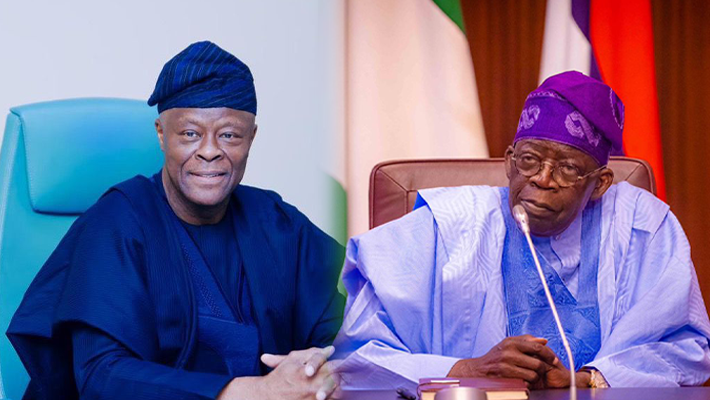
President Bola Ahmed Tinubu removed Wale Edun as finance minister after months of mounting pressure over budget delays, unpaid contractor claims, and internal disagreements over fiscal policy, marking a decisive shift in control of Nigeria’s economic management.
What was presented as a “minor reshuffle” was, in reality, the final step in a gradual process that had already stripped Edun of key powers inside the finance ministry.
A memo signed by the Secretary to the Government of the Federation, George Akume, confirmed Edun’s exit alongside Ahmed Musa Dangiwa. Taiwo Oyedele was elevated to Minister of Finance and Coordinating Minister of the Economy, while Muttaqha Rabe Darma was named minister-designate for housing. All handovers are to be completed by April 23, 2026.
Concerns about Edun’s performance did not emerge overnight. Presidency sources trace the unease back to 2024, when early doubts surfaced over the pace and coordination of fiscal reforms.
By 2025, those concerns had deepened. The implementation of the national budget slowed, and a backlog of unpaid federal contractors grew. Businesses dependent on government projects reported cash-flow problems, stalled work, and rising debt.
A contractor involved in federal infrastructure projects said:
“We had completed jobs but waited months for payment. Some firms had to lay off workers just to survive.”
opposition and civil society groups also raised alarms, warning that delayed payments were hurting economic activity and undermining trust in public finance.
The situation reached a critical stage when the contractor backlog required direct intervention from the presidency. According to officials, payments were eventually processed only after the issue was escalated to Bola Ahmed Tinubu, exposing gaps in coordination within the finance ministry.
At the same time, Nigeria faced wider fiscal pressure, with rising public debt and persistent revenue shortfalls, as debt servicing continued to consume a large share of government revenue, limiting spending flexibility.
Even before his removal, sources within the presidency revealed that Edun’s authority had begun to shrink. Key responsibilities such as contractor payments and revenue mobilisation had been gradually reassigned.
Those functions shifted largely to Doris Uzoka-Anite, signalling a quiet but decisive transfer of power. One senior official described it as “a controlled transition to stabilise fiscal operations without creating public tension.” By early 2026, Edun remained in office but no longer controlled the core levers of fiscal policy.
Edun’s tenure was shaped by efforts to enforce fiscal discipline, strengthen revenue collection, and advance structural reforms. Supporters argue that these policies were necessary to stabilise the economy.
However, insiders say his approach was often seen as rigid, with slow implementation and limited coordination across government agencies.
There were also reports of disagreements over financial decisions requiring presidential approval, further straining confidence.
Despite these tensions, Tinubu moved cautiously. Edun is a long-time ally, dating back to their work in Lagos State. Rather than an abrupt dismissal, the presidency opted for a phased reduction of his authority.
The appointment of Oyedele signals a shift in strategy. A tax reform expert, he previously led the committee that produced Nigeria’s new tax framework, which took effect in January 2026.
The reforms include tax relief for low-income earners and incentives for small businesses, alongside measures to improve compliance and increase government revenue.
APC chieftain in the UK, Hon. Lanre Agbebi, noted: “His strength is revenue reform. The expectation is that he will focus on improving cash flow and making the system more efficient.”
Markets and business groups are watching closely. Changes in finance leadership often influence investor confidence, particularly at a time when Nigeria is seeking to stabilise its economy.
For businesses, faster contractor payments could ease financial pressure and restart stalled projects. For households, improved revenue collection and fiscal management may affect taxation, public services, and the cost of living. The reshuffle also signals tighter presidential oversight of economic policy, with a focus on execution rather than just reform design.
The question is whether Oyedele can translate reform ideas into results, and whether tighter control from the presidency will bring stability to Nigeria’s finances—or create new challenges.