
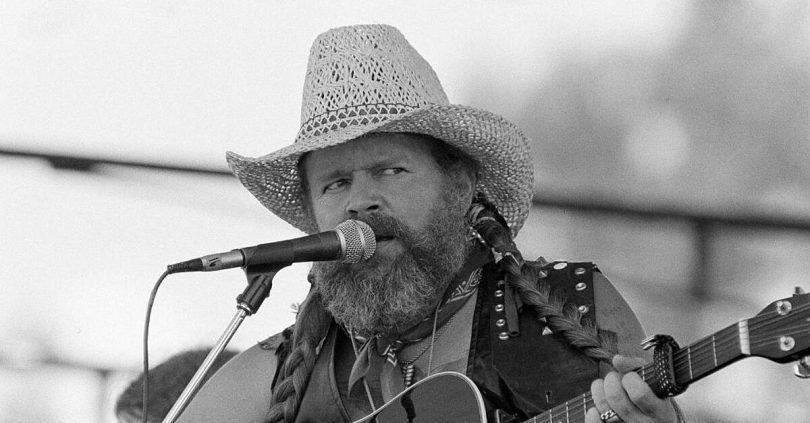
David Allan Coe, the country singer-songwriter who wrote the working class anthem Take This Job and Shove It and had hits with You Never Even Called Me By My Name and The Ride among others, has died aged 86.
Coe’s wife, Kimberly Hastings Coe, confirmed the US performer’s death to Rolling Stone on Wednesday.
She described him as one of the best singers and songwriters of our time.
“My husband, my friend, my confidant and my life for many years. I’ll never forget him and I don’t want anyone else to ever forget him either,” she told the publication.
A statement from a Coe representative to People said he died on Wednesday afternoon. The cause of death was not disclosed.
Whether he was labelled outlaw or underground, Coe was clearly an outsider in Nashville’s music establishment, even throughout his successes as an in-demand songwriter and singer.
He eventually developed a core following around his raw, often obscene lyrics and a chequered and somewhat mysterious past.
Coe’s wife posted on Facebook in September 2021 that he had been taken to hospital with Covid-19, and he made few appearances since then.
He took part in concert tours with Willie Nelson, Kid Rock, Neil Young and others.
The singer wrote Take This Job And Shove It, a hit for Johnny Paycheck in 1977, and Would You Lay With Me (in a Field of Stone), a hit for Tanya Tucker in 1974.
Coe was also the first country singer to record Tennessee Whiskey, penned by Dean Dillon and Linda Hargrove, that has since become a genre standard and provided hits for George Jones and Chris Stapleton.
His own country hit recordings included You Never Even Call Me by My Name, written by Steve Goodman and an uncredited John Prine; The Ride; and Mona Lisa Lost Her Smile.
I’d have never made it through prison without my music
Coe also appeared in a handful of movies, including Stagecoach and Take This Job And Shove It, which was named after his song.
Born in Akron, Ohio, Coe spent time in reformatories as a youngster, and served time in an Ohio prison from 1963 to 1967 for possession of burglary tools.
He also said he spent time with the Outlaws motorcycle club, but some of the tales about his prison time and his personal life are said to have been wildly exaggerated over the years.
“I’d have never made it through prison without my music,” he said in an AP interview in 1983. “No-one could take it (music) away from me. They could put me in the hole with nothing to do but I could still make up a song in my head.”
Coe, heavily tattooed and sporting long hair, claimed a diverse fan base that included bikers, doctors, lawyers and bankers. His last record, released in 2006, was a collaboration with Dimebag Darrell and other former members of the heavy metal group Pantera.
He released two controversial albums, 1978′s Nothing Sacred and 1982′s Underground Album, that he sold via biker magazines.
The songs on these albums have been criticised for being racist, homophobic and sexually explicit. He told Billboard magazine in 2001 that author and songwriter Shel Silverstein convinced him to record the songs he had written, something he had come to regret.
“Those were meant to be sung around the campfire for bikers, and I still don’t sing those songs in concert,” he said.